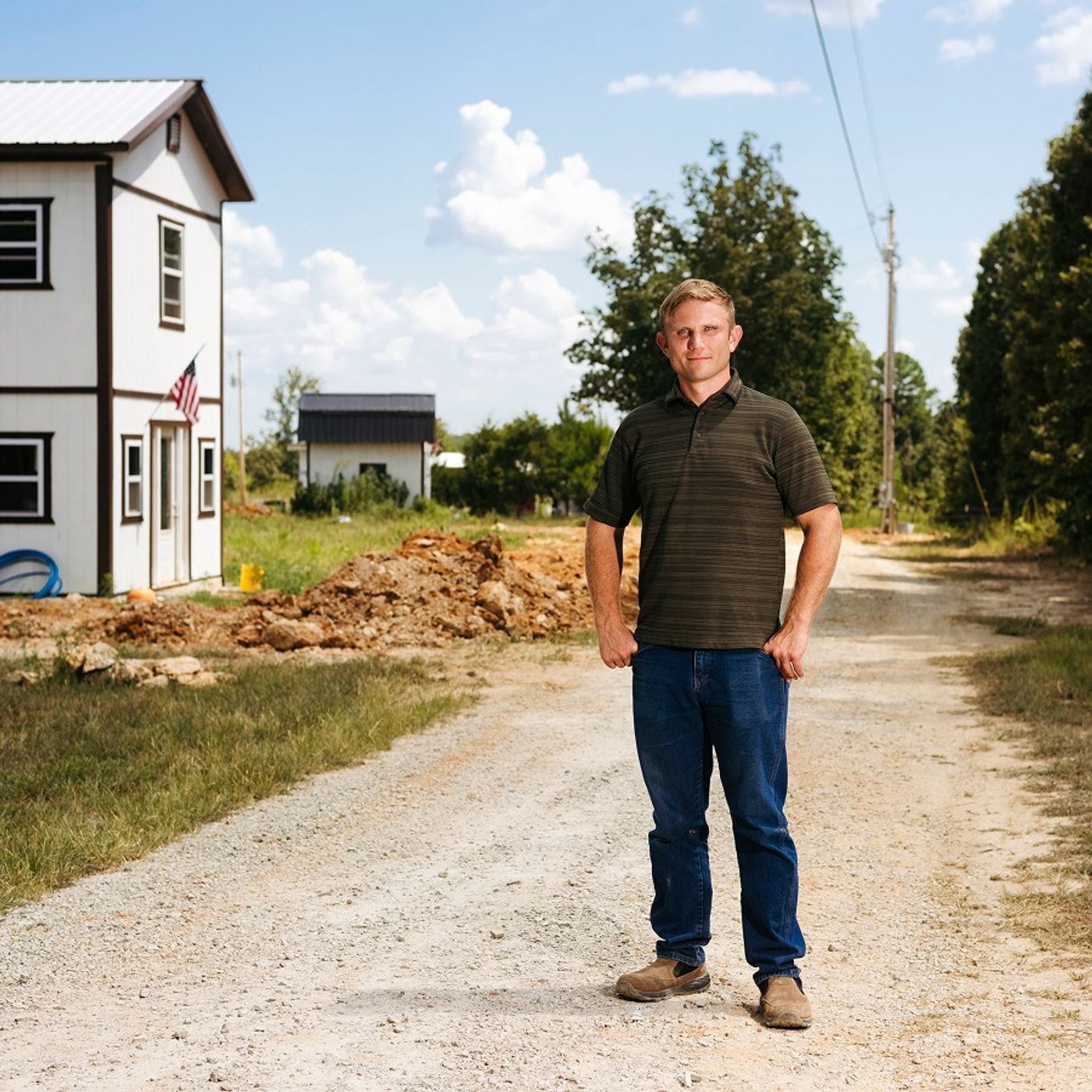
Overview of One Town's Blueprint for Resegregating America
This episode of The Daily investigates Return to the Land, a small Arkansas community founded by white nationalists who say they found a legal workaround to create a whites-only residential compound. The story centers on a lawsuit brought by a real estate investor who applied to buy in the community, was rejected, and is now challenging the group under civil rights and housing law. The episode argues that the case could become a major test of whether the U.S. still has the legal and institutional power to stop modern segregation.
What Return to the Land Is
A whites-only community in Arkansas
- Located in the Ozark Mountains near Ravenden, Arkansas
- Built on rough, rural land with a few cabins, trails, and self-made roads
- Roughly 40 residents, including children who are homeschooled
- The community describes itself as:
- homesteading
- conservative
- Christian
- “living off the land”
- In practice, it is explicitly intended for straight white people only
The founders’ worldview
- The two central figures are Eric Orwoll and Peter Seery
- Their beliefs are rooted in:
- white identity politics
- the Great Replacement conspiracy theory
- fear of “white genocide”
- They point to Orania in South Africa, a whites-only Afrikaner community, as a model
The Legal Theory Behind It
Their claimed loophole
Return to the Land says it is not selling real estate as landlords. Instead, it claims to be:
- a private membership association
- structured as an LLC
- selling membership shares, not land itself
In their telling:
- members buy shares for about $6,600
- those shares come with access to three acres of land
They argue that the Fair Housing Act allows certain housing arrangements for members of private associations, and that this protects them from anti-discrimination law.
Why that argument matters
- The Fair Housing Act is a foundational civil rights law
- It prohibits housing discrimination based on race, religion, sex, and other protected categories
- Return to the Land is trying to use a narrow legal exception meant for legitimate associations, not segregationist communities
The founders also say they consulted lawyers and used ChatGPT in developing their structure.
The Screening Process
How they decide who is “white enough”
The community’s application process is not just about ancestry. It asks about:
- family background and ethnicity
- religion
- political beliefs
- views on gay marriage
- abortion
- vaccines
- multiculturalism
- even how often applicants think about the Roman Empire
Their own explanation is that they want people with the “right mindset,” not just the “right” ancestry.
The Lawsuit
Who sued them
The plaintiff is Michelle Walker, a real estate broker from St. Louis with more than 20 years of investing experience.
Why she applied
Walker saw the community as a deal:
- land there was far below market value
- she wanted it as an investment property, likely for something like an Airbnb
She is:
- white-passing
- Jewish by family background
- married to a Black man
- mother to biracial children
She applied as an individual investor, but the community rejected her after the application and interview process.
Why her case is strong
Legal experts quoted in the episode say her lawsuit is strong because it relies on:
- the Fair Housing Act
- older civil rights laws dating back to the 1800s
Her suit argues that the community is unlawfully discriminating in housing, despite its private-association framing.
Why This Case Is So Important
The broader stakes
If Return to the Land wins or survives legally, it could:
- encourage similar whites-only communities elsewhere
- weaken anti-discrimination protections in housing
- provide a template for modern segregation
Why housing segregation matters
The episode emphasizes that housing determines:
- school quality
- job access
- food access
- exposure to heat and climate risk
- long-term social mobility
So this is not just about choosing neighbors; it is about who gets opportunity.
The Enforcement Problem
Weakening guardrails
The episode says there are fewer institutions left to stop discriminatory housing practices:
- State level: the Arkansas attorney general has not acted decisively
- Local level: fair housing nonprofits have lost funding and capacity
- Federal level: HUD’s Fair Housing Office has been heavily cut and constrained
The result is that private lawsuits like Michelle Walker’s may become the main way to challenge discrimination.
Main Takeaways
- Return to the Land is attempting to create a legally protected whites-only enclave using a membership-association model.
- The founders believe they found a Fair Housing Act loophole.
- The community’s screening process is openly discriminatory in practice, even if it uses coded language.
- Michelle Walker’s lawsuit is a major test of whether that legal theory can stand.
- The episode frames the case as part of a larger erosion of fair housing enforcement in the U.S.
- If the community succeeds, it could become a blueprint for segregation far beyond Arkansas.
Bottom Line
This episode is a warning about how extremist ideology, legal engineering, and weakened enforcement can combine to threaten one of the core promises of civil rights law: that housing in America should not be segregated by race, religion, or identity.