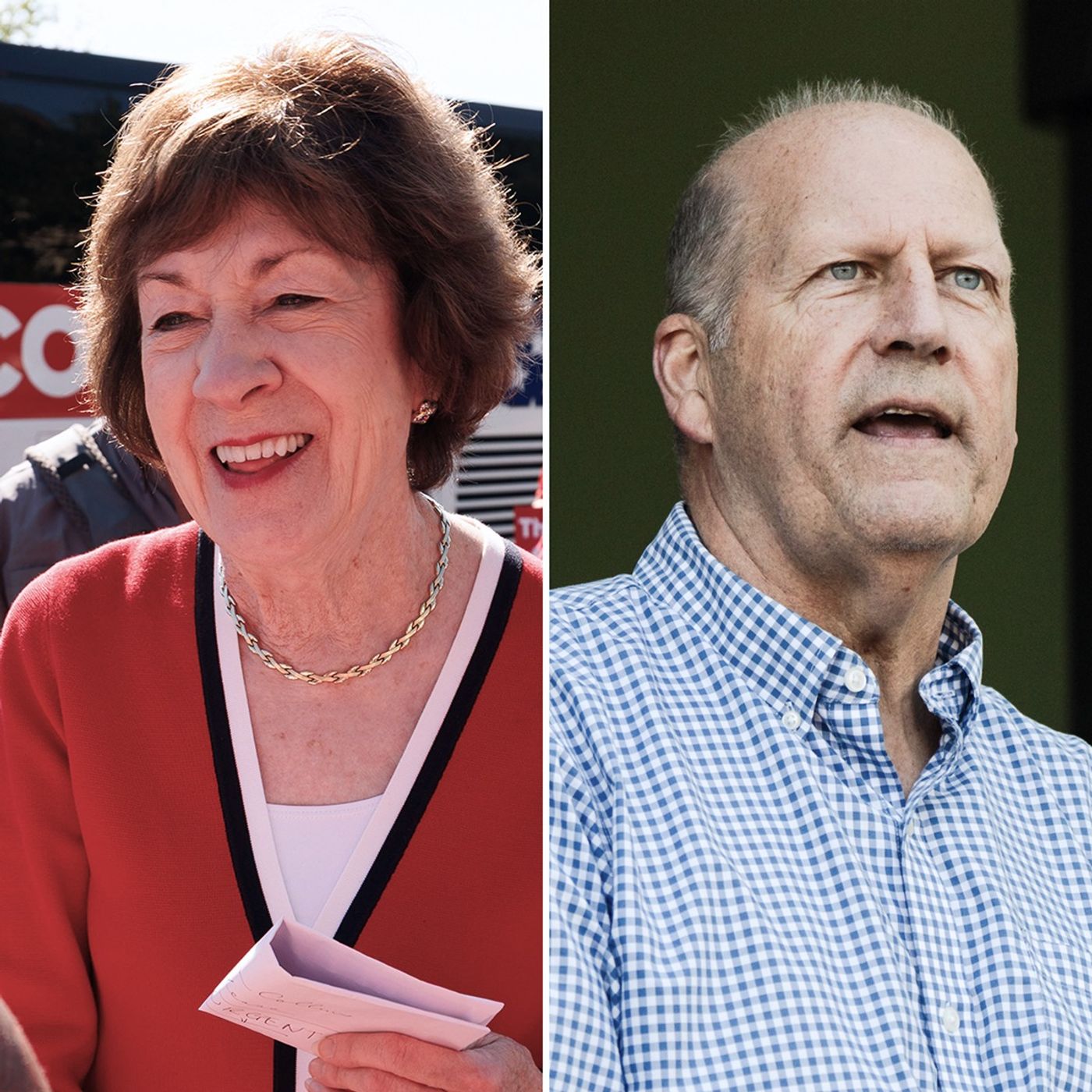
Overview of The Daily episode: Is Running From Trump Enough to Save Republicans on Tuesday?
This episode examines whether Republican candidates can still win in closely contested races by distancing themselves from Donald Trump, rather than embracing him. The central argument is that a more old-school, moderate, and locally focused brand of Republican politics may still be viable in some states—especially where Trump is unpopular—but that this strategy only works for a limited number of candidates with strong personal brands, long records, or unique local appeal.
Main argument
- The Republican Party has spent the Trump era rewarding loyalty to Trump and punishing independence.
- But in the current political moment, several GOP candidates are testing a different formula:
- criticize Trump or avoid tying themselves closely to him
- emphasize moderation, independence, and constituent service
- appeal to independents, anti-Trump Republicans, and some Democrats
- The episode asks whether that strategy is actually enough to win—or whether it is too little, too late.
Susan Collins as the model case
Susan Collins is presented as the clearest example of a Republican who may benefit from running a more independent, pre-Trump style campaign.
Why Collins remains competitive
- She has a long-established reputation as a pragmatic, moderate Republican.
- She built her brand on:
- bipartisanship
- “bringing home the bacon” for Maine
- working across party lines
- focusing on governance rather than ideology
- In a state that has leaned Democratic in federal elections, she remains viable because she is seen by many voters as a familiar, independent-minded figure.
The catch
- Democrats argue that Collins is not as independent as she claims.
- Her critics point to votes like:
- confirming Brett Kavanaugh
- advancing key Trump agenda items, even when she voiced concerns
- The episode highlights the gap between Collins’s image as a maverick and the reality that she often still helped enable Trump’s agenda.
John E. Sununu and the New Hampshire test
The show also looks at John E. Sununu, who is trying to reclaim a Senate seat in New Hampshire by making a similar anti-Trump, independence-first case.
His strategy
- He explicitly distances himself from Trump.
- He emphasizes:
- opposition to tariffs
- skepticism about military conflict
- a focus on New Hampshire priorities
- His message is essentially: this race is about the future, not Trump.
Why it matters
- New Hampshire is a state where Democrats have recently done well in Senate races.
- Sununu’s competitiveness suggests that even a Republican with Trump at arm’s length can remain in the game in a blue-leaning state.
Other Republicans trying to copy the formula
The episode broadens out to show that Collins and Sununu are not isolated examples.
Ashley Hinson in Iowa
- Previously cast herself as Trump’s strongest ally.
- Now she is trying to emphasize bipartisanship and working across the aisle.
Maria Elvira Salazar in Florida
- In a district with a large Hispanic population, she directly criticized Trump’s immigration approach.
- Her argument: some of Trump’s enforcement policies are going too far and are alienating key voters.
Roger Marshall in Kansas
- A strong Trump ally, but even he has begun making subtle breaks with Trump on issues like tariffs and an ICE raid.
- At the same time, he still tries to preserve his pro-Trump credibility, showing how hard this balancing act is in deep-red states.
Why this strategy is difficult
The episode makes clear that not every Republican can pull this off.
- Trump loyalty has become central to Republican identity in many places.
- For many candidates, supporting Trump is how they win primaries.
- But that same loyalty can become a liability in a general election, especially when Trump’s approval is weak.
- Candidates trying to distance themselves often still need to avoid alienating Trump voters too much.
The bigger picture: a possible post-Trump Republican Party
The discussion ends by asking what these races might mean for the future of the GOP.
If independents win
If candidates like Collins hold on and Trump-aligned candidates in places like Texas lose, it could signal:
- voters are rewarding distance from Trump
- Republicans have permission to move away from him
- a new post-Trump coalition may be possible
But Trump still matters
Even as a lame duck, Trump would still retain:
- fundraising power
- influence over the party apparatus
- strong sway over the Republican base
So the episode leaves open a larger question:
- Is this the return of the old Republican Party?
- Or the beginning of a new, post-Trump version?
Key takeaway
The episode’s main takeaway is that anti-Trump or Trump-distance campaigns can be competitive, but only in certain places and often only when paired with a strong personal brand or a long record of moderation. The bigger lesson is that the Republican Party may be entering a transitional phase: still shaped by Trump, but with some candidates quietly trying to prepare for what comes after him.