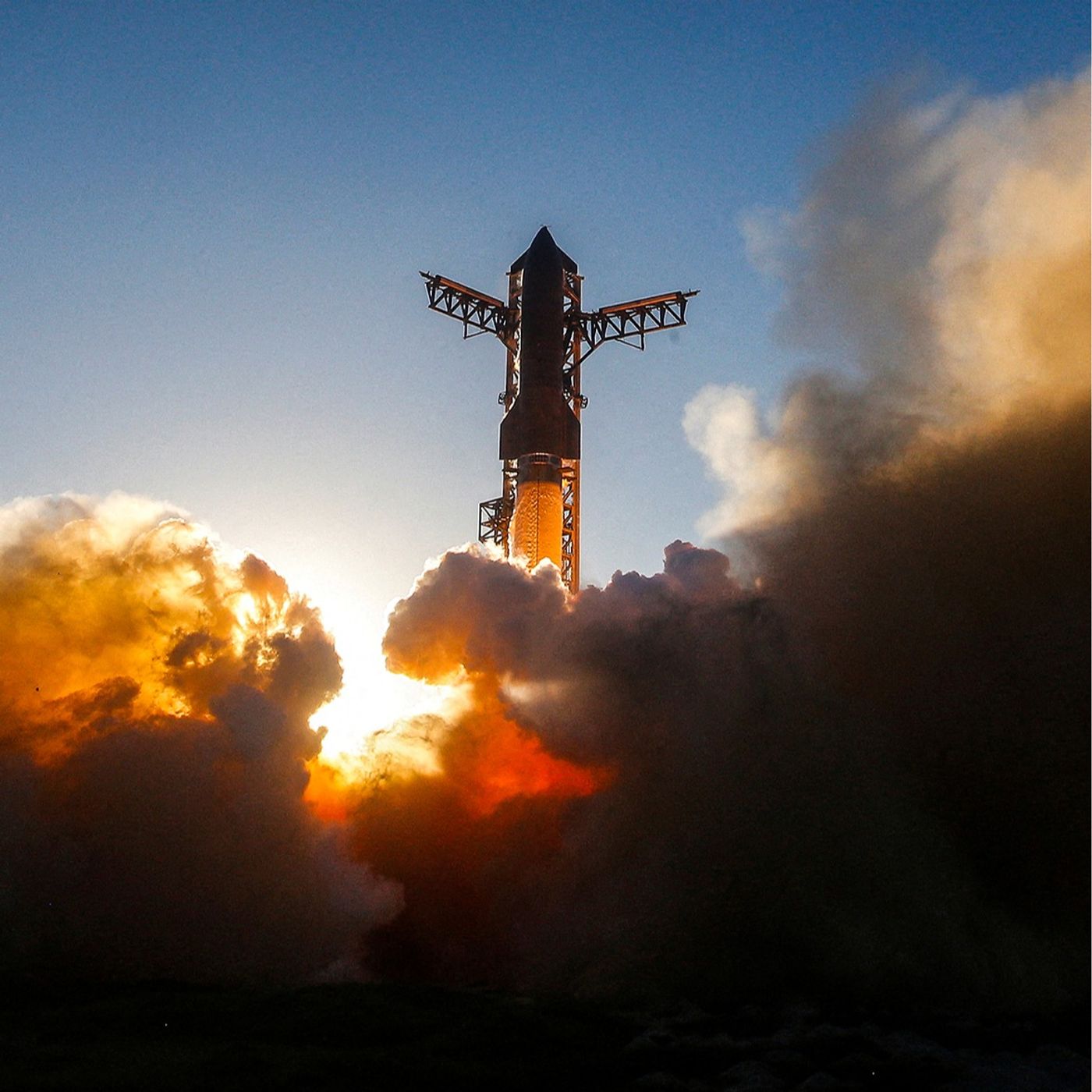
Overview of The Daily — “How Elon Musk Engineered the World’s Biggest I.P.O.”
This episode examines the coming SpaceX initial public offering, which could be the largest IPO in history and potentially value the company at more than $1 trillion. The conversation with business reporter Ryan Mac explores why Elon Musk is pursuing this move now, how it could make him the world’s first trillionaire, and why the IPO is unusual: it’s being designed to pull in an enormous number of retail investors and even reshape how major indexes include newly public companies. The episode also weighs whether SpaceX’s current business can justify the hype, especially given its expensive AI ambitions and Musk’s outsized control over the company.
Why This IPO Matters
A historic capital raise
- SpaceX is expected to raise roughly $50 billion to $75 billion.
- If successful, it would be the largest IPO ever.
- The listing could push SpaceX’s valuation above $1 trillion.
Why Musk is doing it now
- SpaceX has been private for over 20 years.
- Musk wants access to public-market capital to fund long-term goals:
- AI-related space infrastructure
- data centers in orbit
- lunar industry and manufacturing
- Mars missions and a multi-planet civilization
Why investors care
- The IPO is being marketed as a chance to buy into a once-in-a-generation founder’s company.
- It has strong appeal not just to large institutions, but also to retail investors using platforms like Robinhood or Schwab.
How the Rules Are Changing
More access for everyday investors
- Typical IPOs reserve about 5%–10% of shares for retail buyers.
- SpaceX may allow around 30% to go to retail investors, a much larger share than usual.
Faster inclusion in major indexes
- The Nasdaq 100 is easing its usual waiting period.
- Instead of waiting about three months after an IPO, SpaceX could be added after just 15 days of trading.
- That would force index-tracking funds and retirement accounts to buy SpaceX shares, increasing demand and liquidity.
Why this is controversial
- Experts worry that index rules are being relaxed to avoid missing out on a huge moment.
- The episode frames this as a major departure from normal market discipline and a sign of how much pull Musk now has.
What the S1 Reveals About SpaceX
The strengths
- Starlink is the company’s crown jewel:
- about 10 million users
- roughly $4.4 billion in profit last year
- SpaceX dominates rocket launches:
- estimated to handle more than 85% of mass launched into orbit from Earth
The concerns
- SpaceX’s AI push is expensive and risky.
- Musk merged SpaceX with his AI venture xAI, betting on future “AI in space” synergies.
- That strategy has driven costs sharply higher:
- capital expenditures reportedly doubled to $20.7 billion in 2024
- the company recorded a $4.3 billion loss in 2025
The valuation problem
- SpaceX is asking investors to buy into a future built on:
- orbital data centers
- lunar industry
- Mars colonization
- Its own filings describe a $28.5 trillion total addressable market, an almost unimaginably large figure meant to justify the valuation.
Elon Musk’s Track Record: Success and Risk
Why believers trust him
- Tesla is the clearest example of Musk’s success:
- it transformed electric cars into a mainstream global industry
- early investors saw massive returns
- His reputation for turning bold ideas into valuable companies is a major reason people want in on SpaceX.
Why skeptics are worried
- His Twitter/X deal was financially messy.
- Musk has also faced criticism for:
- distractions from other companies
- political fights, including with Donald Trump
- concerns about drug use reported by The Times
- The episode argues that investing in Musk is not ordinary market risk — it is a bet on a singular, unpredictable person.
Governance and Accountability Risks
Musk’s control is unusually strong
- He holds super-voting shares with 10-to-1 voting power.
- He controls about 85% of the voting power.
- He effectively controls the board and faces little internal challenge.
Why that matters
- Public shareholders normally have tools to pressure management.
- At SpaceX, those tools are mostly absent.
- If the company underperforms, investors may have little recourse besides selling.
Main Takeaways
- The SpaceX IPO could be a defining event for markets and for Musk’s fortune.
- It broadens access to ordinary investors, but also spreads risk more widely.
- The company’s real strengths are in Starlink and rocket launches, but its AI ambitions are dragging down finances.
- The IPO is less a conventional stock offering than a bet on Elon Musk’s vision, charisma, and ability to keep defying gravity.
- If the company succeeds, many investors benefit; if it fails, the fallout could be unusually broad.
Notable Line of Thinking
- The episode repeatedly returns to one idea: SpaceX is not just a company, but a Musk-led ecosystem that ordinary investors may now be forced to share through markets and indexes.
- One memorable conclusion: there may be “no way off the rocket ship” because Musk’s success or failure is increasingly tied to the broader financial system.
Additional Headlines Mentioned at the End
- Pete Hegseth blocked promotions of top U.S. Navy officials, in a move that disproportionately affected women and minority officers.
- The White House appears to be backing away from a proposed fund to compensate victims of government weaponization, after court and congressional resistance.