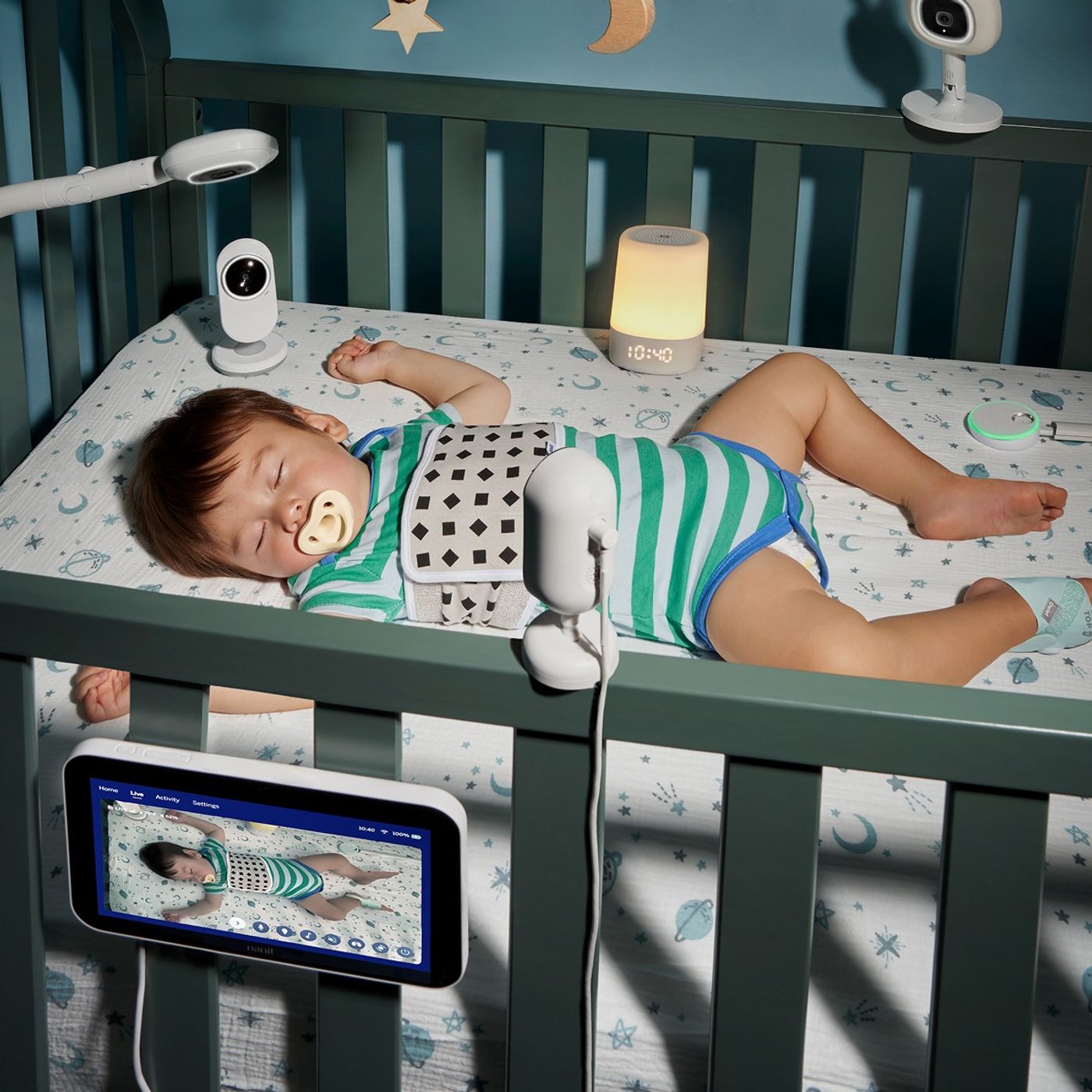
Overview of Health Trackers Are Everywhere. Do Babies Need Them, Too?
This New York Times Daily episode explores the rapid spread of health-tracking technology — from smart rings and watches to baby monitors powered by AI — and asks whether these devices are genuinely helping families or simply turning normal life into something to optimize and worry over. Reporter Sapna Maheshwari shares how products like Nanit entered her own home and changed how she thought about parenting, sleep, and data-driven advice.
What the Episode Is About
The conversation centers on two overlapping trends:
- Adult wellness tracking: wearables like Apple Watch, Whoop, and Oura that measure sleep, recovery, activity, and more
- Baby monitoring tech: products like Nanit and Owlet that track infant sleep, breathing, movement, temperature, and diaper/feeding data
The episode argues that both categories tap into the same emotional need: reassurance, especially when people feel uncertain, sleep-deprived, or responsible for someone else’s well-being.
Baby Tech: Why Parents Use It
What Nanit does
Nanit is presented as a Wi-Fi-enabled baby monitor that:
- streams video to a phone app
- tracks sleep and wake patterns
- logs how often parents check on the baby
- creates sleep summaries and cute video montages
- increasingly uses AI to offer advice, not just data
Why parents are drawn to it
The episode emphasizes that baby trackers appeal because they promise:
- better sleep for exhausted parents
- alerts for safety concerns
- answers to the constant question: “Is this normal?”
- personalized guidance based on the baby’s actual behavior
Maheshwari describes how the technology gradually became part of her family routine, even though she did not initially seek it out.
The Company’s Pitch: More Data, Better Parenting
Nanit’s CEO, Anushka Salinas, argues that early childhood is under-observed despite being crucial to development:
- most brain development happens between ages 0 and 5
- pediatric checkups are brief and infrequent
- continuous data could reveal patterns parents and doctors miss
The company’s broader vision is to expand beyond sleep into:
- child development tracking
- milestone prediction
- long-term health insights
A striking claim in the episode: Nanit imagines a future where parents may keep the device in a child’s room until age 10, and eventually use lifetime data from “zero to 100.”
The Concerns: Anxiety, Surveillance, and Lost Intuition
The episode also highlights the downside of tracking:
Overstimulation and anxiety
Maheshwari’s mother reacts strongly against the constant alerts and monitoring, saying it feels like too much information and too much control.
Turning parenting into optimization
Her mother pushes back on the idea that babies need to be managed like systems:
- room temperature set to a “perfect” range
- sleep schedules optimized
- every movement interpreted as data
Her view: babies are not robots, and parenting should include instinct, flexibility, and trust in one’s own judgment.
The deeper worry
A pediatrician and the reporter both raise a broader question:
- Are parents relying too much on apps and AI?
- Are we losing the ability to read our children ourselves?
- Does tech strengthen parenting, or weaken human intuition?
Adult Wearables: The Same Pattern, Just for Grown-Ups
The episode connects baby tech to the huge adult wearables market:
- roughly half of Americans use some form of health-tracking device
- the market is approaching $100 billion
- devices now do far more than count steps
Examples discussed
- Whoop: gives daily recovery scores and a “Whoop Age”
- Oura: tracks sleep and readiness
- Apple Watch: less detailed, but still a common health tracker
Why these devices work
The episode suggests they are persuasive because the feedback is:
- personalized
- immediate
- quantifiable
- harder to ignore than generic advice
Maheshwari shares the story of a friend whose Whoop Age motivated major lifestyle changes, including earlier gym sessions, better sleep habits, and cleaner eating.
Key Tension: Helpful Data vs. Constant Judgment
A major theme is that these devices can feel both useful and annoying:
- They can reward good habits and encourage healthier behavior.
- They can also create a sense of being watched or judged.
- In relationships, the data can spill over into shared moods and guilt after drinks, bad sleep, or unhealthy meals.
The episode frames this as a broader cultural divide:
- people who believe data improves life
- people who want to unplug and trust themselves
Privacy and Data Use
The episode briefly addresses data privacy:
- Nanit says it does not sell user data
- it also says it does not target ads based on the data
- the subscription model is presented as proof that the user, not the data, is the product
Still, the larger question remains: if these companies collect intimate data from babies and families, what happens as the industry grows?
Broader Takeaways
- AI is making health tracking more persuasive by turning raw data into advice.
- Parents and consumers often want reassurance more than precision.
- These tools may reduce anxiety for some people, but increase it for others.
- The long-term effect of constant monitoring may be less about data and more about changing behavior and self-trust.
- The episode ultimately asks whether we are outsourcing too much of our instinct to technology.
Bottom Line
The episode presents health trackers as neither purely good nor bad. For some families, they offer peace of mind, better sleep, and useful guidance. For others, they create pressure, surveillance, and dependence on algorithms. The deeper question is not whether the data is accurate, but whether relying on it makes us better caregivers — or less attuned to ourselves and each other.