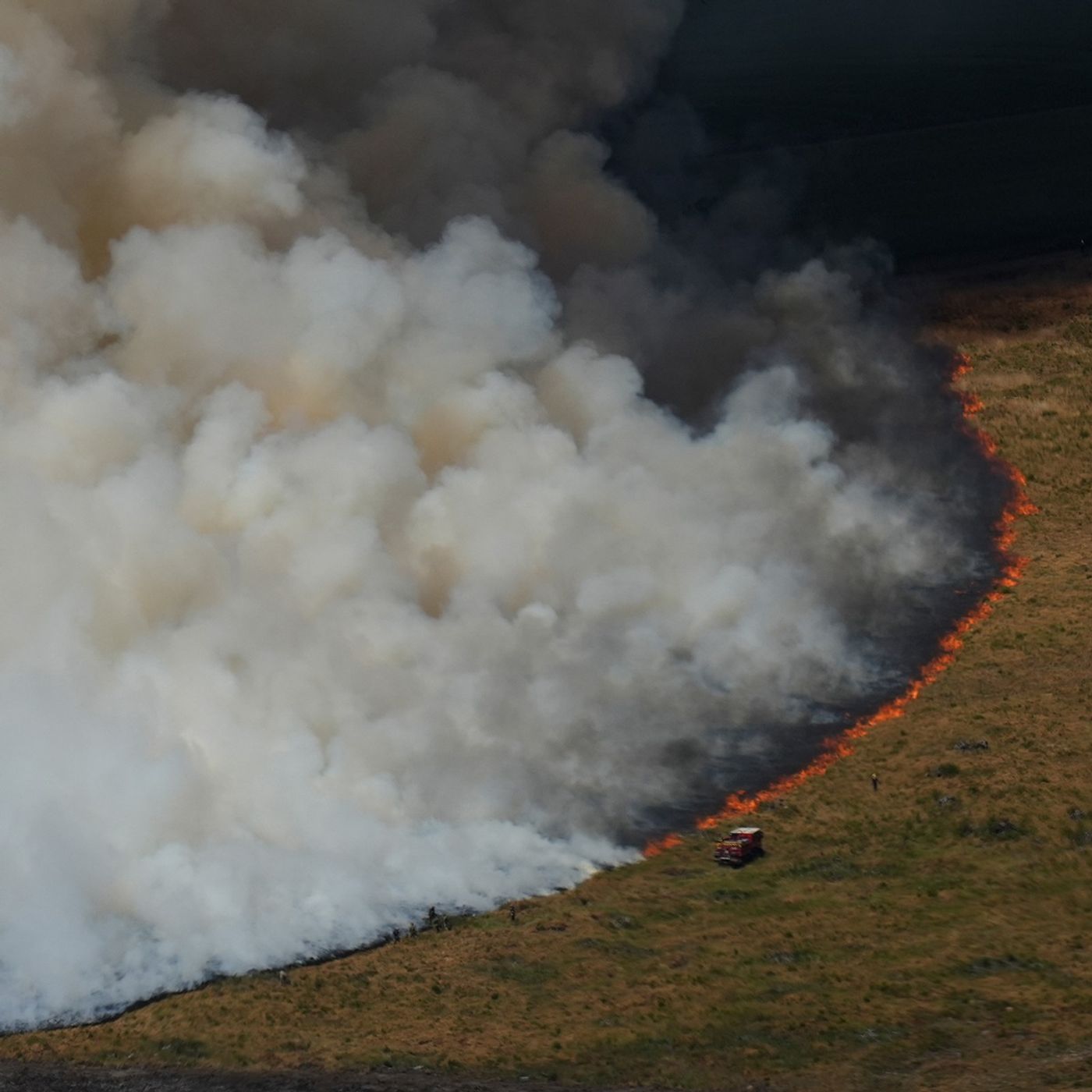
Overview of Europe Is Burning by The New York Times
This episode of The Daily examines the record-breaking heat waves and wildfires devastating France and Spain, with a focus on how Europe’s climate, infrastructure, and politics are all being stress-tested at once. Reporter Chico Harlan explains the long-term climate and land-use factors driving the fires, while Mark Landler reports from Bordeaux on the immediate human toll, the scale of evacuations, and the growing realization that Europe may need to adapt much faster to a hotter future.
Key Takeaways
- Europe is in the midst of an unusually severe fire season, with major wildfires burning near Bordeaux in France and in Spain at the same time.
- The fires are being fueled by prolonged extreme heat, not just a single hot day, but weeks of punishing temperatures that dry out land and make fires harder to contain.
- Climate change is the central driver, and Europe is warming especially quickly because of its proximity to the rapidly warming Arctic.
- The death toll from the heat is staggering, with estimates of thousands to tens of thousands of excess deaths across Western Europe this summer.
- Europe’s buildings and cities were designed for a cooler climate, and many homes are poorly suited to survive long heat waves, especially where air conditioning is limited.
- The crisis is forcing a debate about adaptation, especially whether countries like France will have to accept widespread home air conditioning and other climate-resilience measures.
- There is also a political paradox: even as climate impacts worsen, support for ambitious net-zero policies is weakening in parts of Europe because of economic anxiety and energy insecurity.
Why These Fires Are So Destructive
A perfect storm of heat and landscape
Chico Harlan explains that this fire season is especially dangerous because the heat has lasted for weeks, not just days. That long stretch of dryness makes forests and brush far more flammable.
Human land use made things worse
The episode notes that some areas now burning were once swampland. In the 19th century, the French government planted pine forests there, creating large monoculture stands that are more vulnerable to fast-moving fires than mixed landscapes.
Europe wasn’t built for this climate
A major theme of the interview is that much of Europe’s housing stock, urban design, and land management reflect a cooler past. As temperatures rise, those older assumptions are increasingly out of date.
What It Looks Like on the Ground in Bordeaux
Mark Landler describes arriving in Bordeaux under a sky turned yellow-orange by smoke, with ash in the air and the sun obscured. He reports from large evacuation centers filled with people who were forced to flee overnight.
Human stories from the evacuation centers
- Residents were awakened by police and told to leave immediately.
- Some could see the wall of flames from their balconies.
- Many are now worried about whether their homes will still be standing when they return.
Scale of destruction
- More than 100,000 acres have burned.
- Entire villages have been damaged.
- One village near Bordeaux, La Teste-de-Buch / La Porge area in the transcript’s reporting, suffered catastrophic losses, including homes destroyed.
- The evacuation was described as one of the largest peacetime evacuations in modern French history.
The Bigger Climate and Political Debate
Europe’s adaptation challenge
The episode argues that Europe is moving from a question of prevention alone to a question of adaptation:
- How do cities stay livable during extreme heat?
- How do people protect the elderly and vulnerable?
- How do countries redesign buildings and infrastructure for a hotter world?
Air conditioning becomes a flashpoint
France has historically resisted widespread home air conditioning, partly due to cost, design limitations, and a cultural preference against it. But the guests suggest that repeated summers like this may force a shift in attitudes.
Climate policy meets economic anxiety
Even as the crisis becomes more visible, political support for aggressive climate policy is weakening in parts of Europe because:
- economic growth is sluggish,
- energy security is a concern after the war in Ukraine,
- and green targets can feel like a luxury in an unstable economy.
Still, leaders such as Spain’s prime minister are using the fires to call for renewed climate urgency.
Other Notable Points
Firefighting resources are substantial, but not enough
France has invested in aircraft, crews, and support from neighboring countries, but the fires remain difficult to control.
Bordeaux’s wine industry is at risk
The vineyards themselves have not been directly burned, partly because of geography and because vineyards can act as fire breaks. But smoke exposure could damage the grapes and potentially ruin the vintage, creating a major economic hit for the region.
Some sensitive facilities are in the fire zone
The reporting notes that factories producing components and propellant related to France’s nuclear missile arsenal lie in or near the threatened area, raising the stakes for authorities.
Brief News Roundup at the End
The episode closes with quick updates on two unrelated headlines:
- Anthony Fauci invoked the Fifth Amendment in a contentious Senate hearing with Senator Rand Paul, amid their ongoing feud over Fauci’s pandemic testimony and Paul’s accusations.
- The U.S. launched new strikes involving Iran, escalating broader regional conflict after attacks on U.S. forces.
Bottom Line
The episode frames Europe’s wildfires not as isolated disasters, but as a warning about a continent confronting a new climate reality. Heat, smoke, evacuation, and economic disruption are all converging, and the guests argue that Europe must now do two things at once: adapt immediately to survive this summer, and rethink its long-term climate strategy for the decades ahead.