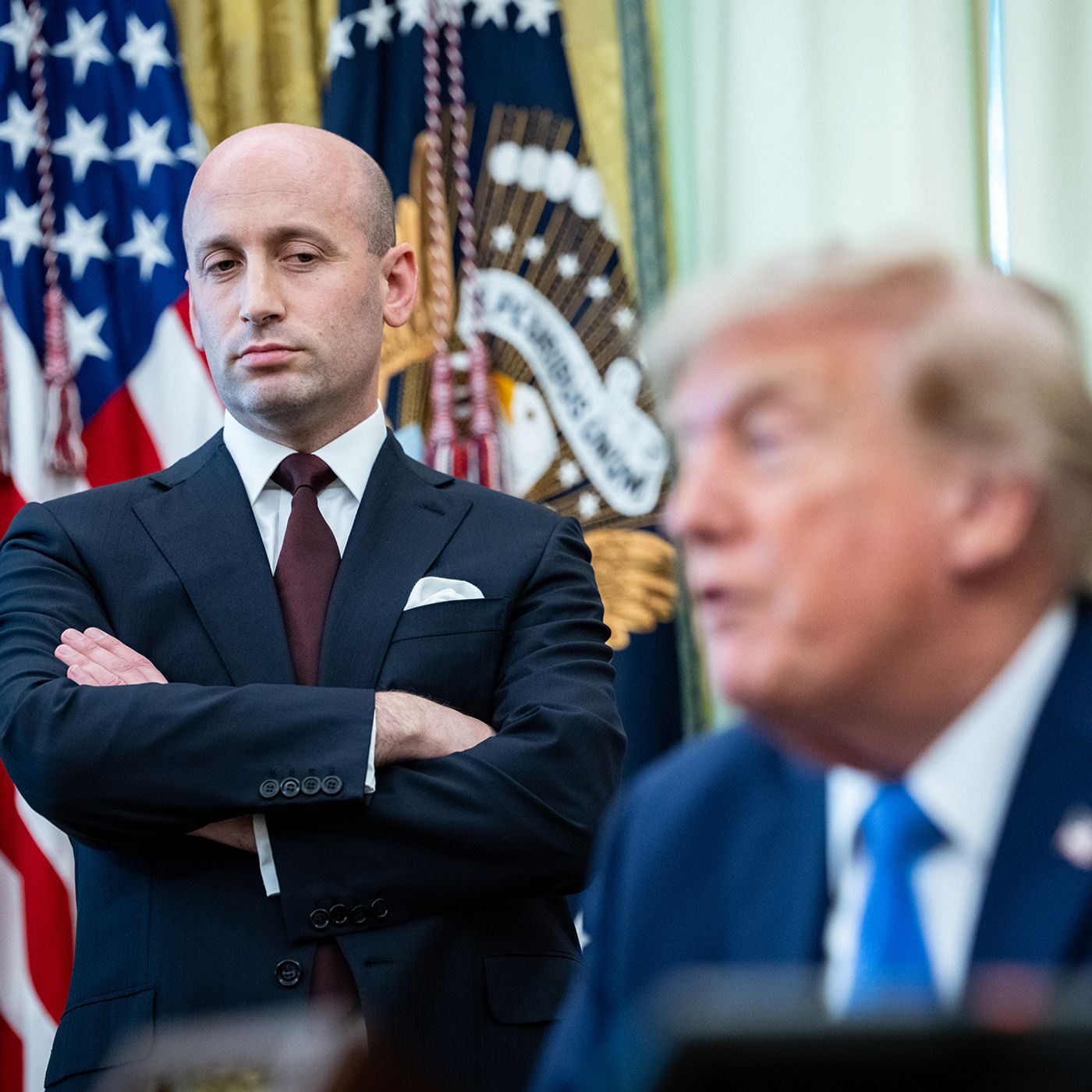
Overview of After a Crushing Defeat, Trump Doubles Down
This episode of The Daily examines how President Trump responded to a severe midterm rebuke by moving further to the right rather than moderating. The central development is his decision to elevate Stephen Miller to White House chief of staff, a move that signals a more ideological, combative second-half-of-term strategy focused on energizing Trump’s base, doubling down on immigration, and rejecting any real turn toward bipartisanship.
What the episode is about
Rachel Abrams speaks with New York Times reporters Maggie Haberman and Jonathan Swan about:
- Why Trump replaced Susie Wiles with Stephen Miller
- What Miller’s promotion says about Trump’s priorities
- How the White House is interpreting the midterm losses
- Whether Trump is likely to change course on immigration, the Iran war, or his broader political strategy
Main takeaways
Miller’s promotion signals confrontation, not compromise
- Jonathan Swan argues that Miller’s elevation should be read as a clear sign Trump has little interest in bipartisan governance.
- Miller is described as the most ideological senior aide in Trump’s orbit and someone who sees politics as a war footing, not a negotiation.
Trump is trying to reassemble the MAGA base
- Miller’s pitch for the job was essentially that he could help rebuild Trump’s coalition after the midterms.
- The plan appears to be a “base, base, base” strategy:
- harder line on immigration
- more culture-war politics
- less concern with broad public appeal
Susie Wiles was useful, but not a true gatekeeper
- Wiles was seen as a stabilizing force, but the guests explain that Trump does not really allow traditional chief-of-staff gatekeeping.
- In Trump’s White House, major decisions often bypass formal staff channels, making the role less powerful than it would be in a normal administration.
Trump is angry about the election, but not publicly recalibrating
- Privately, Trump was furious about the losses and worried about wasted money and bad press.
- Publicly, he continued to act as though things would be fine, focusing on vanity projects and symbolic wins rather than electoral repair.
Policy directions discussed
Immigration will likely become even harder-line
- Miller is most closely associated with aggressive immigration enforcement.
- The episode suggests the administration may lean further into crackdowns, even though that stance is politically narrow and broadly unpopular outside Trump’s base.
The “Maha” agenda may gain more influence
- Miller and allies also framed him as supportive of the “Make America Healthy Again” movement:
- skepticism of vaccines
- distrust of Big Pharma
- opposition to big ag and industry influence
- Part of the appeal is that Miller is presented as someone less open to lobbyists and special interests than Wiles was.
The Iran war remains a political liability
- The episode emphasizes that the war in Iran was a major factor in the midterm backlash.
- Miller is not described as the central architect of the war, but his allies say he understands it has become a political disaster.
- Still, the hosts caution against reading his promotion as proof Trump intends to wind the war down.
What the loss means for Trump and Republicans
Trump’s priority is Trump
- Maggie Haberman emphasizes that Trump’s main concern is not the future of the Republican Party, but:
- his own power
- his legacy
- his name and monuments
- his wealth and status
- The point is that Trump wants to be remembered as the defining figure of his era, not as a caretaker of the party’s long-term future.
The GOP is stuck with Trump for now
- Jonathan Swan notes there is no real “post-Trump” era yet because Trump remains the dominant figure in the party.
- That creates a dilemma for ambitious Republicans, especially those eyeing 2028, like J.D. Vance.
Vance’s position is especially tricky
- The episode highlights Vance’s post-midterm remarks blaming the Iran war, which created some distance from Trump.
- But any Republican hoping to run in 2028 still needs Trump’s endorsement or at least his approval.
Important context from the episode
- Trump’s team had private polling for months showing weakness on:
- immigration
- the economy
- the Iran war
- The midterm defeat was not a total surprise internally.
- Even so, Trump did not respond like a president trying to rebuild a coalition; he kept leaning into the persona and projects he already cares about.
Bottom line
The episode’s central argument is that Trump’s response to political failure is not moderation but escalation. By promoting Stephen Miller, Trump is signaling that he intends to double down on the politics of grievance, immigration restriction, and base mobilization—while keeping his own personal power and legacy at the center of everything.
Notable final note
In a later clip, Trump publicly acknowledged that the immigration crackdown may have hurt politically, and he suggested openness to some kind of compromise on undocumented immigrants without violent records. But the episode treats that as a limited, possibly tactical concession rather than a true strategic shift.