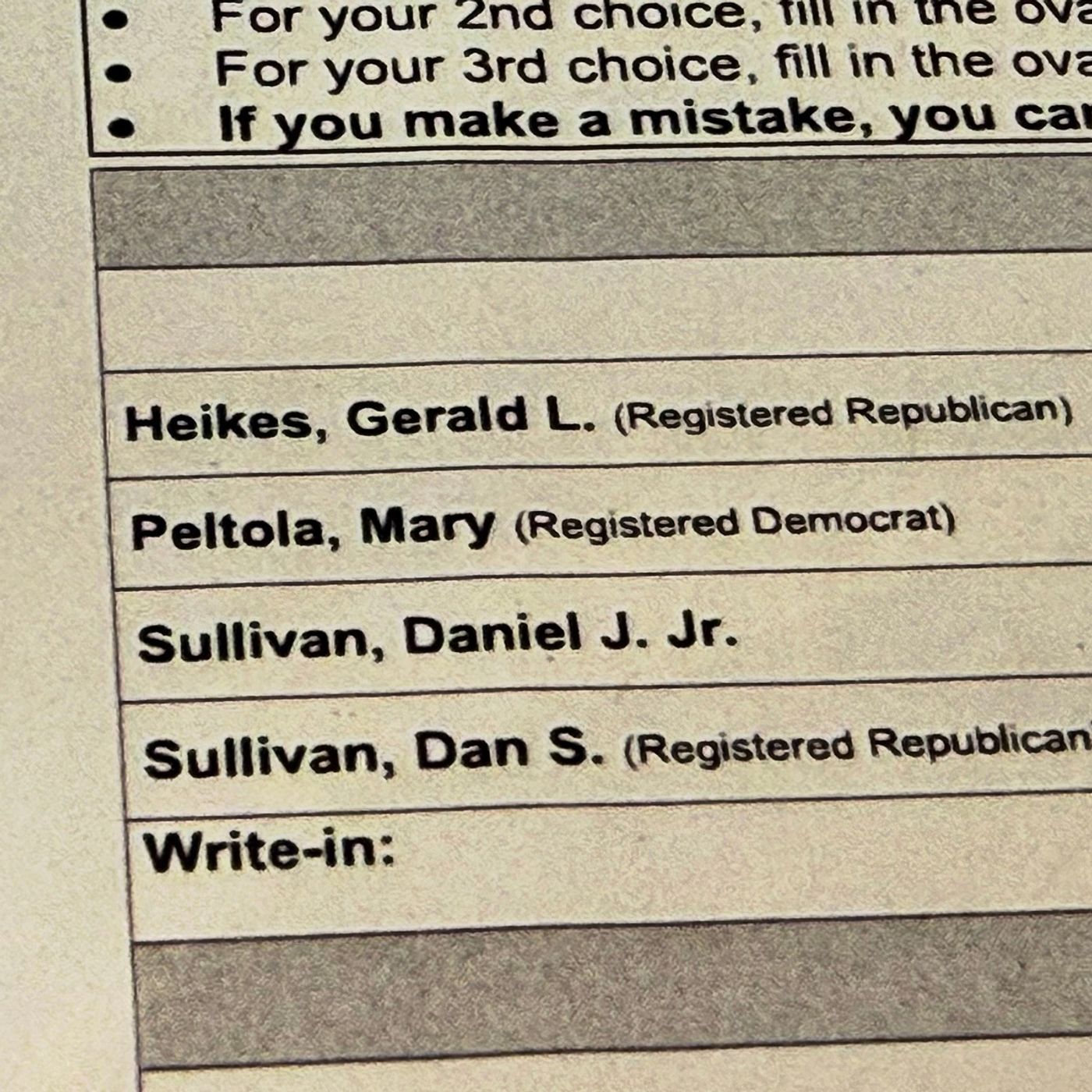
Overview of The Daily episode: “A Plan for Two Dans: How Democrats Manipulated Alaska’s Ballot”
This episode centers on a New York Times investigation into Alaska’s high-stakes U.S. Senate race and a surprising ballot scheme involving two candidates named Dan Sullivan. Reporter Kellen Browning explains how Democrats connected to Mary Peltola’s campaign and the national party secretly worked to recruit an alternate Dan Sullivan to run, hoping to split or confuse Republican voters and improve Peltola’s chances in a race that could determine control of the Senate.
What the investigation found
- The widely repeated Republican claim that the second Dan Sullivan appeared on the ballot as part of a Democratic plot was, according to the Times reporting, true in substantial part.
- Democratic operatives tied to Mary Peltola’s campaign and national Democratic allies were involved in a secret effort to recruit candidates who could weaken incumbent Republican Senator Dan Sullivan.
- The effort was not limited to one person: the campaign appears to have tried to “pack the ballot” with candidates who could siphon votes away from the Republican incumbent.
How the scheme worked
Recruiting “Dan Sullivan”
- A Democratic operative, Jared Kurtz, was brought in to help find and recruit candidates.
- Kurtz used pseudonyms while contacting potential candidates, including a man named Dan J. Sullivan in Petersburg, Alaska.
- Browning’s reporting suggests Kurtz nudged this Dan Sullivan toward running, with the understanding that his candidacy could help Peltola by hurting the incumbent Republican.
Wider ballot-stacking effort
- The recruitment drive may have included other candidates as well.
- Browning says there is reason to believe Kurtz also helped recruit Gerald Heikes, another candidate whose presence could affect the race.
- The strategy was essentially to split Republican attention and votes by creating ballot confusion or dilution.
The role of Dan J. Sullivan
- Dan J. Sullivan portrayed himself as:
- a longtime Petersburg resident,
- a retired teacher and volunteer firefighter,
- a moderate Republican dissatisfied with the incumbent senator and the direction of the GOP.
- He said he ran on his own initiative and denied being coordinated by Democrats.
- However, he also acknowledged:
- prior votes for Democrats,
- small donations to Mary Peltola,
- and reluctance to discuss his connection to Democratic consultant Amber Lee, who helped with filing.
Why this matters for the Senate race
- Alaska’s Senate contest is extremely close and may help decide Senate control.
- The ballot structure matters because:
- both Dan Sullivans appear on the same ballot,
- the names are similar enough to potentially confuse some voters,
- and Republicans argue that could cost the incumbent votes.
Ranked-choice voting complicates the impact
- Alaska uses ranked-choice voting, which can reduce the effect of vote-splitting.
- Even if voters rank the wrong Dan Sullivan first, the incumbent could still benefit if voters rank him second.
- Still, the scheme could create confusion, which is exactly what Republicans fear.
Legal and ethical implications
- The Times found no clear evidence of illegal conduct.
- Ballot-stacking tactics have been used by both parties in the past.
- The Alaska Supreme Court already ruled that having both Dan Sullivans on the ballot was permissible, and election officials took steps to distinguish them.
- The bigger issue may be ethical, not legal:
- Is it acceptable to manipulate ballot composition to influence an election?
- Does this cross a line for a U.S. Senate race?
Political fallout
- The story appears to strengthen Republican attacks on Democrats, especially as Trump and his allies argue Democrats are trying to “steal” elections.
- Trump quickly used the reporting to claim Democrats had “illegally” recruited a Dan Sullivan, though the legality is disputed.
- Browning suggests:
- Democrats may see this as hardball politics in the Trump era,
- Republicans will likely use it to energize outrage,
- and many voters may still focus more on day-to-day issues like the economy and gas prices.
Key takeaway
This episode reveals a highly unusual and strategically aggressive campaign tactic: Democrats, while publicly denying involvement, appear to have secretly helped put a second Dan Sullivan on Alaska’s Senate ballot to weaken the Republican incumbent. The revelation adds a late-campaign scandal to one of the most consequential races in the country, even if the legal consequences remain unclear.
Extra context from the episode
- Mary Peltola, a former congresswoman and the Democratic nominee, is described as a rare Alaska political figure with broad appeal.
- The reporting also detours into staff turmoil inside the Peltola campaign, which helped lead Browning to former campaign manager Elisa Rios, whose account helped confirm the ballot scheme.
- The episode ends by emphasizing that the revelation was something Democrats did not want exposed just before Election Day.