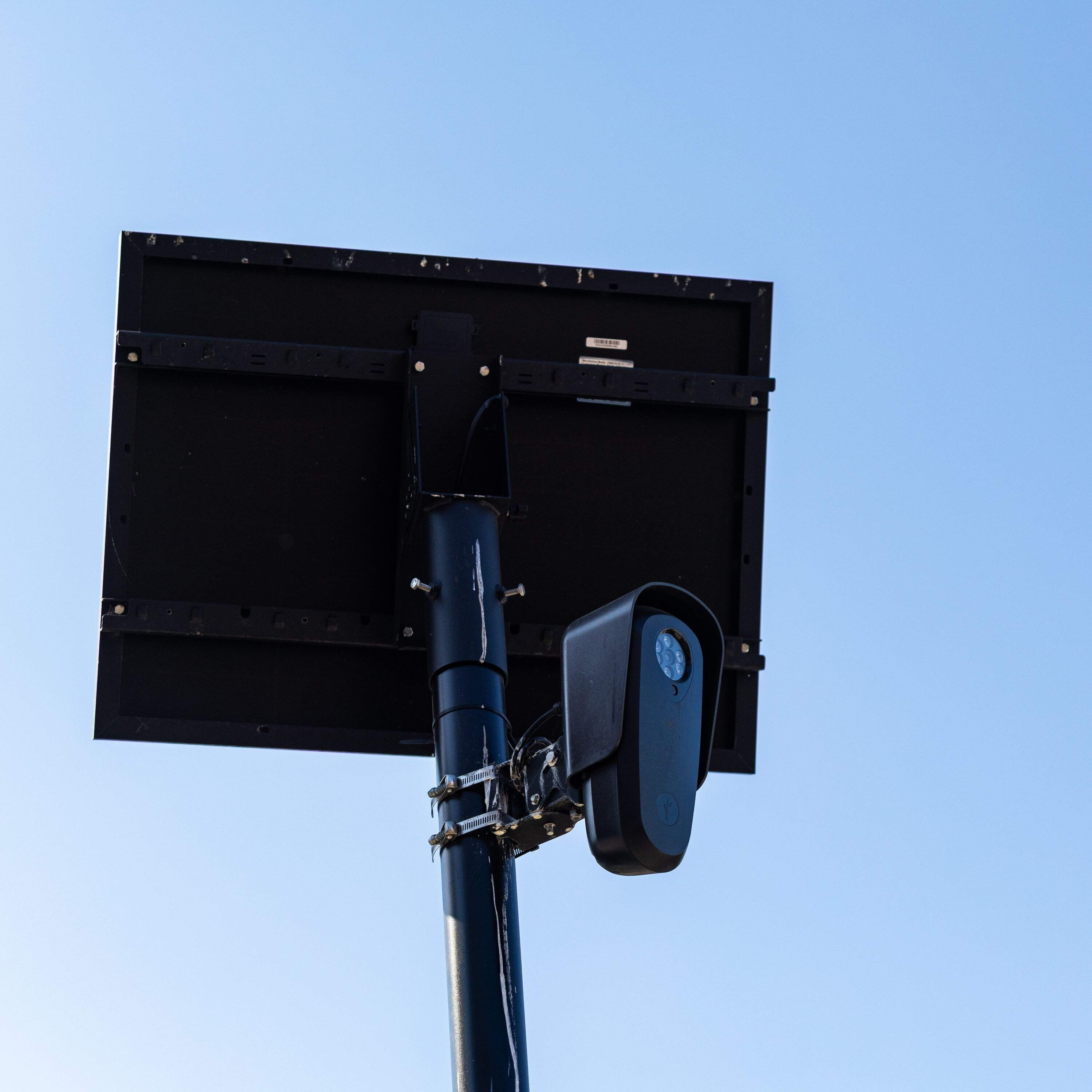
Overview of What Flock cameras really see – and how
This NPR Shortwave episode examines Flock Safety’s expanding surveillance network and what its cameras actually capture. Through reporting from 404 Media’s Joseph Cox, the discussion explains how Flock cameras go beyond simple license plate reading to collect vehicle details, detect people, and make searchable surveillance data available to law enforcement nationwide without a warrant. The episode also explores the privacy risks, legal challenges, and growing public push to map and understand where these cameras are installed.
What Flock cameras do
How the cameras work
- When a vehicle passes, Flock cameras take a burst of images very quickly.
- The system typically captures around 28 images per vehicle, and sometimes up to 100 to ensure usable shots.
- It identifies and boxes in key features like:
- license plates
- vehicle color
- make and model
- visible damage
- stickers, flags, and other identifying marks
Beyond license plates
- Flock markets itself as an ALPR system, but it functions as a broader surveillance tool.
- Law enforcement can search the database using:
- a license plate number
- descriptive “free form” queries, such as “red Toyota with a Trump sticker” or “blue Fiat with an American flag”
- This makes the system useful even when officers do not have a plate number, such as in hit-and-run cases or witness descriptions.
What the reporting revealed
A rare look inside the system
- Joseph Cox and Wired’s Dhruv Marotra analyzed data obtained after a hacker collective removed a Flock camera and copied its contents.
- The analysis showed the system is designed for constant surveillance, not occasional snapshots.
- The cameras track not only vehicles but, in some cases, people as well.
People detection and Condor cameras
- Some Flock systems can detect and track individuals, including people on motorbikes.
- Flock also sells Condor cameras, which are more focused on live video and human tracking.
- In a prior investigation, exposed live camera feeds showed the system zooming in closely enough to see what people were doing on their phones.
How police use the data
Easy access, little oversight
- Officers access Flock through a web portal.
- They can search by plate, vehicle description, or even person description.
- No warrant or court order is generally required to query the system.
- Flock says searches are logged and audited, and officers must provide a reason for each search.
Examples of use and misuse
- Search logs have included:
- missing persons
- carjackings
- murders
- shootings
- DUI investigations
- immigration-related queries
- The episode highlights reported uses that raise civil liberties concerns, including:
- local police searching for ICE/HSI purposes
- a Texas officer searching for a woman who self-managed an abortion
- cases where officers allegedly searched for ex-partners or other personal reasons
The larger controversy
Surveillance without consent
- Critics argue that blanketing communities with these cameras creates a new level of warrantless mass surveillance.
- Because the network is national, searches can cross city and state boundaries, widening the scope of monitoring far beyond a single jurisdiction.
Facial recognition concerns
- Flock itself does not offer facial recognition.
- But another company, Vidismo (spelling uncertain in transcript), is reportedly trying to add that capability.
- The discussion emphasizes that even if one company draws a line, another may try to cross it.
Legal and policy questions
What comes next
-
Some lawmakers want to restrict or ban Flock-style surveillance, but the reporting suggests that is unlikely due to law enforcement demand.
-
Civil liberties groups including:
- the EFF
- the ACLU
- the Institute for Justice
are litigating the issue.
Main legal argument
- The central question is whether police should need a warrant to search Flock data.
- Advocates argue that widespread camera coverage fundamentally changes the nature of surveillance and should trigger Fourth Amendment protections.
Why people are mapping Flock cameras
- Communities want to know whether these cameras are in their neighborhoods.
- Public maps help residents understand:
- if they are being surveilled
- whether family members or neighbors are being swept into the system
- how much surveillance infrastructure exists locally
- The mapping effort is framed as a transparency and informed-consent issue for communities.
Key takeaway
Flock cameras are not just license plate readers — they are part of a large, searchable surveillance network that captures extensive vehicle data and can sometimes track people as well. The episode argues that the system’s scale, ease of use, and lack of warrant requirements raise serious privacy and civil liberties concerns, which are now being challenged in court and debated publicly.