Overview of NPR Shortwave’s “Spacing Out” Episode
This NPR Shortwave episode is a space-news roundup covering three major topics: NASA’s search for volunteers for a year-long Moon/Mars simulation, the discovery of a sugar molecule in interstellar space, and the reawakening of the New Horizons spacecraft near the edge of our solar system. The conversation blends curiosity, humor, and real scientific implications about long-duration space travel, the origins of life, and the structure of the solar system.
NASA’s Year-Long Mars/Moon Simulation
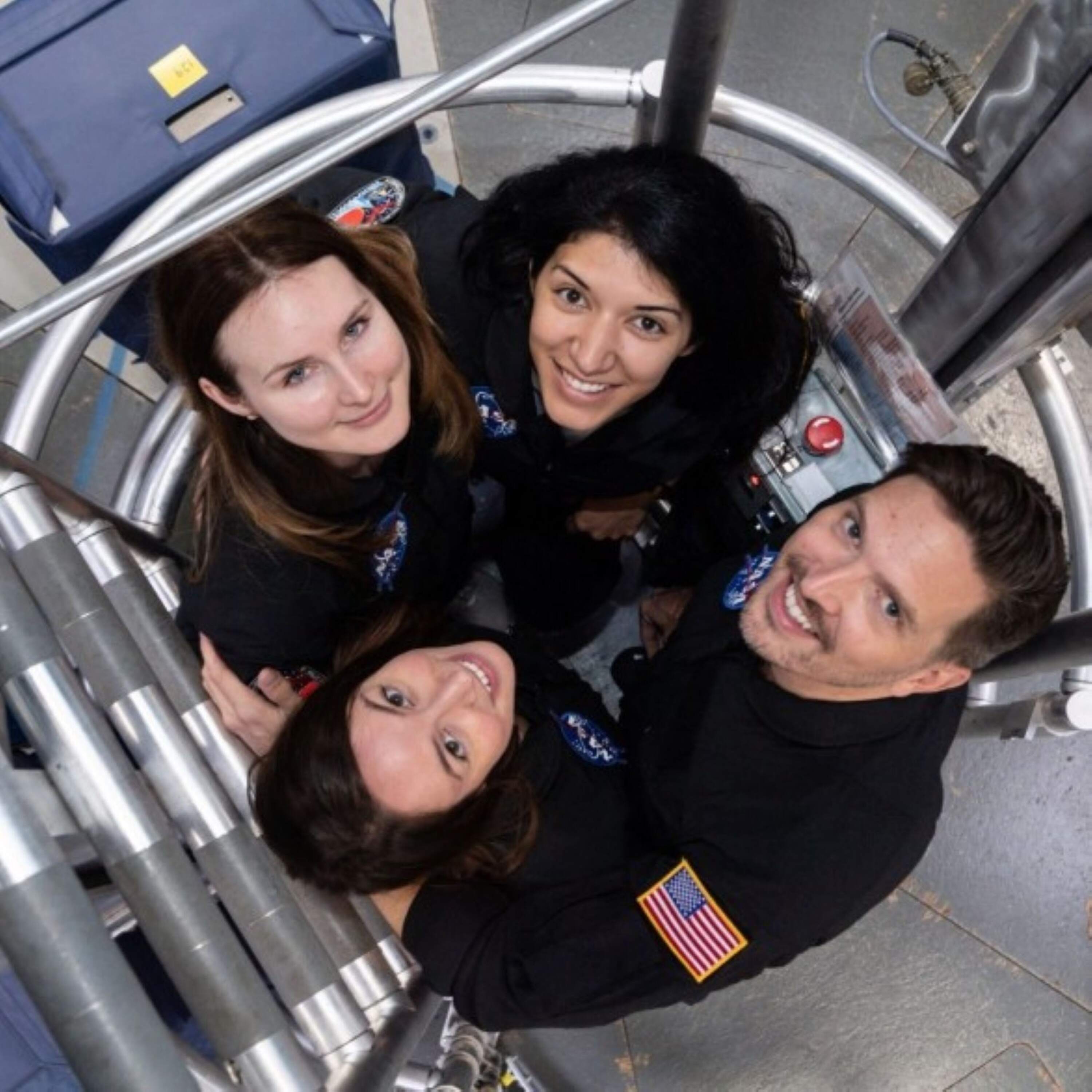
NASA is recruiting volunteers for a year-long, four-person simulated mission to the Moon and Mars, to be conducted at the Johnson Space Center in Houston.
What the simulation involves
- Participants will spend most of the year in a small, isolated enclosure.
- For two months, they’ll move into a slightly larger “Mars surface” habitat.
- The habitat includes:
- sleeping quarters
- recreation and work areas
- medical and food spaces
- an airlock
- a crop-growing area
- The crew will perform science experiments and test protocols for long-duration deep-space living.
What NASA wants to learn
- How people handle:
- isolation
- stress
- team dynamics
- separation from loved ones
- communication delays with Earth
- The episode highlights that a real Mars mission would involve significant communication lag—potentially 20 minutes each way depending on orbital position.
Who NASA is looking for
- People generally 30 to 55 years old are preferred, though exceptions may be considered.
- Applicants should have:
- science backgrounds
- strong psychological and physical fitness
- resilience
- ability to work independently and collaboratively
Key takeaway
NASA’s goal is less about pretending to go to Mars and more about understanding the human challenges of deep-space living before a real mission ever happens.
Sugar Molecules Found in Space
The episode next turns to a discovery in the interstellar medium—the space between stars—where scientists detected erythrose, a four-carbon sugar.
Why this matters
- Researchers are trying to understand how the ingredients for life formed and reached Earth.
- The interstellar medium contains dust and ices that can act as a chemical factory for organic molecules.
- The discovery suggests sugars may have formed before stars or planets existed, inside molecular clouds.
How the sugar was found
- Scientists used two telescopes in Spain to scan the center of the Milky Way.
- They looked for radio signals associated with molecules.
- The result: evidence of erythrose, a sugar found in raspberries and important in the broader chemistry of life.
Broader implications
- These molecules could be incorporated into asteroids or other space rocks.
- Such rocks may have impacted early Earth, possibly delivering key ingredients for life.
- Scientists believe this strengthens the idea that life elsewhere in the universe may use similar chemistry.
Key takeaway
The discovery adds support to the idea that the building blocks of life are widespread in space, not unique to Earth.
New Horizons Wakes Up at the Edge of the Solar System
The final segment covers NASA’s New Horizons spacecraft, best known for its historic close-up images of Pluto.
Where it is now
- New Horizons is traveling through the Kuiper Belt, the region beyond Neptune where Pluto resides.
- It recently emerged from about 11 months of hibernation, used to conserve power.
- It is now roughly 6 billion miles from Earth.
Why this mission matters
- New Horizons is helping scientists study the outer boundary of the solar system.
- The solar system is surrounded by the heliosphere, a protective bubble created by the Sun.
- Scientists still want to better understand how that heliosphere works and what it protects us from.
Communication with Earth
- Even at that distance, New Horizons can communicate via NASA’s Deep Space Network:
- one dish in California
- one in Spain
- one in Australia
- These massive dishes allow Earth to stay in contact with spacecraft far beyond the planets.
Key takeaway
New Horizons continues to extend humanity’s knowledge of the solar system’s outer reaches and the Sun’s protective cosmic bubble.
Main Themes and Takeaways
Human endurance in space
The episode emphasizes that future space exploration is not just a technical challenge—it’s also a psychological and social one.
The chemistry of life
Finding sugar in interstellar space suggests that the ingredients for life may be common throughout the galaxy.
Exploring the solar system’s boundaries
New Horizons is still making important contributions, showing that even an old mission can reveal new things about the outer solar system.
Notable Moments
- The hosts joke about whether they would volunteer for a year-long fake Mars mission, highlighting how extreme the isolation would be.
- The discovery of erythrose is framed as exciting evidence that life’s ingredients may exist before planets are even formed.
- New Horizons is portrayed as a long-lived symbol of human ingenuity and the continuing value of deep-space exploration.
Practical Note
If you’re interested in the NASA simulation, the episode notes that applications are open ongoing through NASA’s website.