Overview of The terrifying physics of prehistoric sea monsters
This NPR Short Wave episode explores how scientists are using physics and comparative biology to understand extinct animals, starting with the fast, fearsome mosasaurs of the Cretaceous ocean. It then zooms out to show how animal death can shape ecosystems, using elephant carcasses in South Africa as a case study, and closes with new research suggesting that the microbiomes in the respiratory tracts of people with long COVID may differ depending on symptom type and severity.
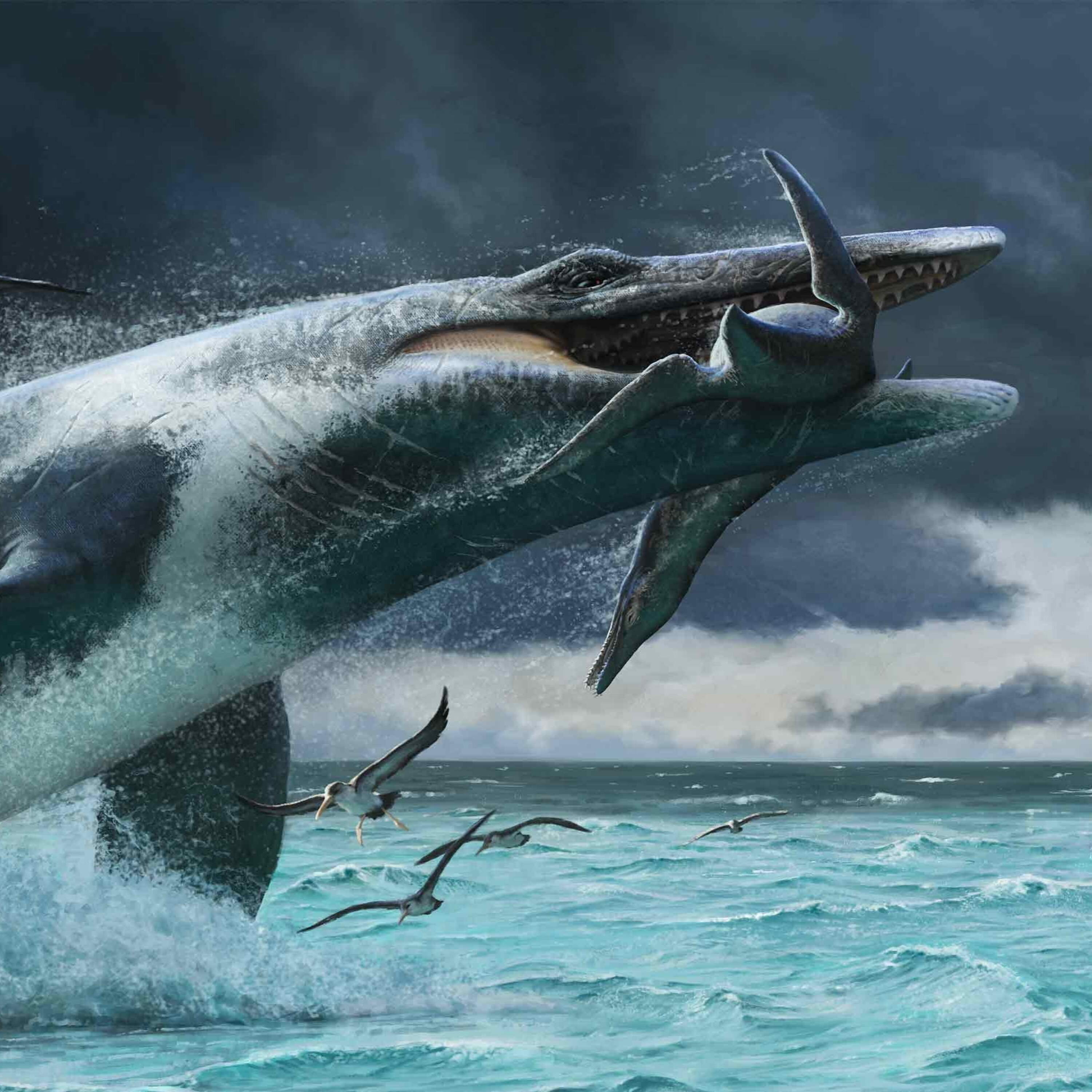
Mosasaurs: prehistoric marine predators built for explosive speed
The first segment focuses on mosasaurs, which were not dinosaurs but giant marine lizards that lived during the late Cretaceous, around the same time as T. rex.
Key points
- Some mosasaurs grew to bus size and were major ocean predators.
- A new study in Current Biology suggests that longer-tailed mosasaurs may have used a rapid acceleration strategy called a “slam start”.
- That movement could have allowed them to reach speeds of about 15 miles per hour in short bursts.
- The study helps support the idea that mosasaurs were ambush predators, not just slow-moving giants.
Why it matters
Researchers used physics-based models and comparisons with living relatives like snakes and monitor lizards to infer how mosasaurs moved. The episode highlights how modern modeling is helping paleontologists reconstruct extinct animal behavior in much greater detail than fossil bones alone can provide.
Elephant carcasses as ecosystem engineers
The second segment examines what happens when elephants die in the wild, based on research from Kruger National Park in South Africa.
Key findings
- Researchers tracked elephant carcasses ranging from freshly dead to remains that had been exposed for nearly eight years.
- Right after death, carcasses create “cold spots” where biodiversity drops and the landscape is flattened.
- Over time, however, they become nutrient-rich hotspots that attract plants and animals.
- Other species, like impala, were observed selectively grazing on the greener, nitrogen-rich grass near carcass sites.
Why it matters
The study, published in PNAS, suggests elephants shape ecosystems not just in life but also after death. That strengthens the case for elephants as powerful ecosystem engineers whose ecological importance extends far beyond their lifetimes.
Long COVID and the respiratory microbiome
The final segment turns to human health and asks whether the microbes living in and around the lungs may be linked to long COVID symptoms.
Key findings
- The study, published in the European Respiratory Journal, looked at the respiratory microbiome in people recovering from COVID.
- Patients with the worst symptoms six months after infection had the least diverse respiratory microbiomes.
- Different symptom patterns seemed associated with different microbial profiles:
- more respiratory symptoms in some people
- more brain fog in others
Important caveat
The researchers emphasize this is association, not proof of cause. It’s not yet clear whether:
- people had different microbiomes before infection, making them more vulnerable, or
- COVID changed the microbiome afterward.
Still, the result is promising because microbiomes are potentially modifiable, making them a possible future target for long COVID research and treatment.
Main takeaways
- Mosasaurs were fast, specialized ambush predators, and new modeling tools are helping scientists estimate how they moved.
- Dead elephants still shape ecosystems, creating long-lasting nutrient hotspots that influence plant and animal life.
- Long COVID may involve changes in the respiratory microbiome, but more research is needed to determine whether those changes are a cause or effect of the illness.
Notable concept
Paleontology is increasingly becoming a science of behavior, not just bones.
That idea runs through the episode: by combining fossils, physics, ecology, and microbiology, researchers are learning not only what ancient or living systems looked like, but how they worked.