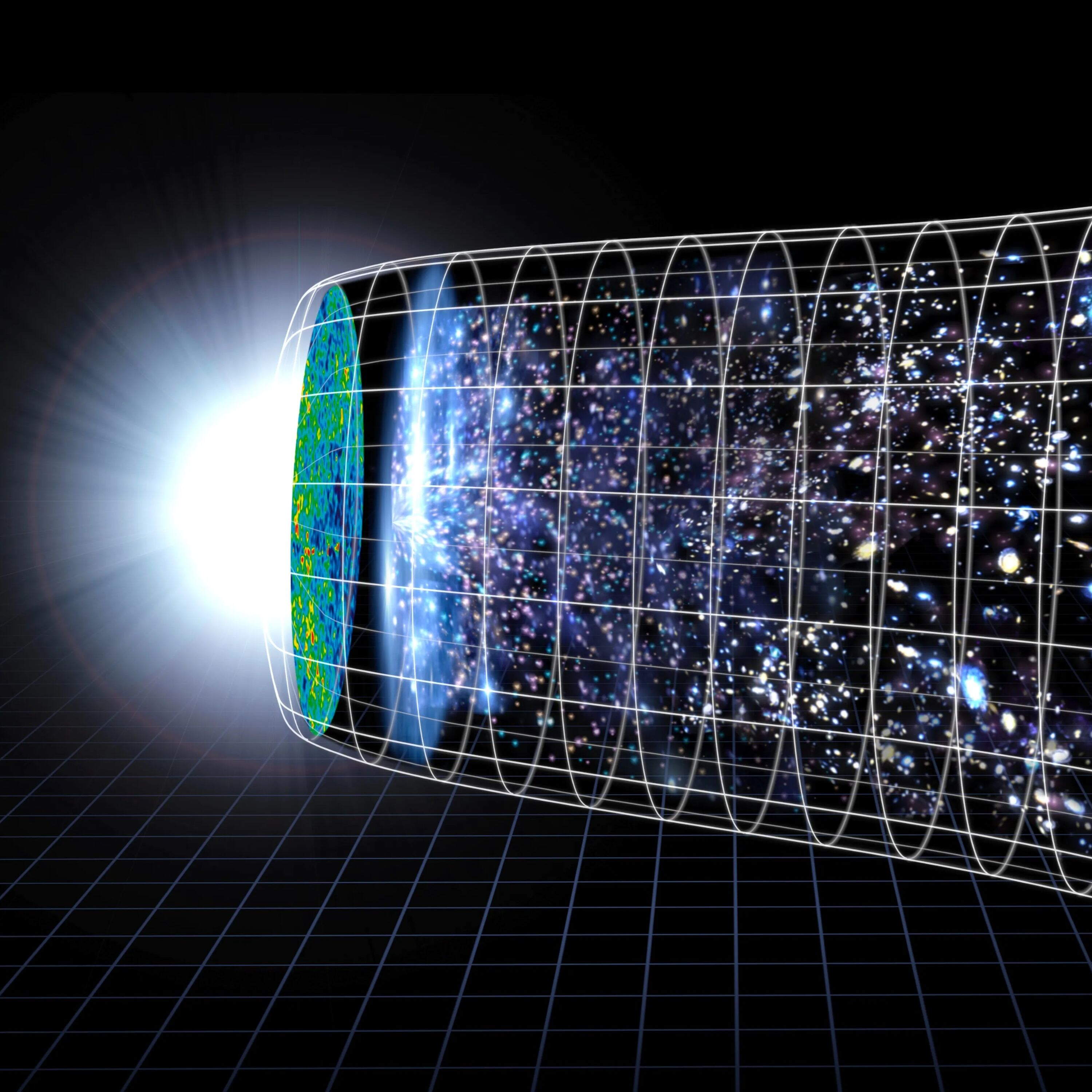
Overview of The battle between matter and antimatter
This NPR Shortwave episode explores two very different but equally cosmic stories: new theoretical work on why matter came to dominate antimatter in the early universe, and the efforts to rebuild and upgrade Ukraine’s damaged UTR-2 radio telescope amid the war. The conversation blends particle physics, astronomy, and wartime resilience, ending on a note of optimism about scientific progress despite major setbacks.
Matter vs. antimatter in the early universe
The core scientific question
- Scientists still do not fully know why the universe ended up made mostly of matter instead of equal parts matter and antimatter.
- In the earliest moments after the Big Bang, matter and antimatter should have existed in nearly equal amounts and annihilated each other.
- The fact that anything remains suggests a tiny imbalance formed extremely early — within milliseconds of the universe’s birth.
The new theoretical twist
- The episode focuses on right-handed neutrinos, hypothetical heavy particles that may have existed in the early universe.
- A recent paper argues that an often-ignored third heavy right-handed neutrino could matter more than previously thought.
- The researchers suggest that including this particle changes how the universe evolved and may explain why matter gained the upper hand sooner than expected.
Why this matters
- This is still a theoretical idea, not something directly observed.
- Scientists cannot currently detect these heavy neutrinos in the lab, and may not be able to with future technology either.
- However, researchers think their effects could eventually be inferred indirectly through cosmic observations.
Ukraine’s UTR-2 radio telescope
What the telescope is
- The Ukrainian T-shaped Radio Telescope, Model 2 (UTR-2) is described as the largest decameter radio telescope in the world.
- It observes very low-frequency radio waves and has been used to study:
- Radio bursts from planets like Jupiter
- Lightning on Saturn
- Other low-frequency astronomical phenomena
Damage from the war
- The telescope is located at an observatory near the Russian border.
- During the Russian occupation in early 2022:
- Many buildings were heavily damaged
- Two were destroyed
- Computers were stolen
- The grounds were mined
- Although the antennas were mostly left intact, the site remains unsafe and difficult to work at.
Rebuilding and modernization plans
- Rather than waiting for the war to end, the team is using the disruption as an opportunity to redesign and modernize the system.
- Planned upgrades include:
- Expanding the range of radio wavelengths the telescope can observe
- Allowing observation of multiple sky regions at once
- Better shielding equipment from weather and environmental damage
- The upgraded telescope could help researchers look for gas from the early universe.
Key takeaways
- The matter-antimatter imbalance remains one of physics’ biggest mysteries.
- A new theoretical model suggests an overlooked neutrino could have played a role in tipping the balance toward matter.
- Direct experimental confirmation is currently out of reach, but future space-based or indirect observations may help.
- Ukraine’s UTR-2 telescope, though damaged by war, is being viewed as a candidate for a major scientific comeback.
- The episode emphasizes scientific persistence: even in damaged systems and incomplete theories, researchers keep building toward the future.
Notable quote / sentiment
- The most memorable note from the telescope segment is the sense of determination:
- “We not need wait for end of war. We start now.”
- That spirit captures the episode’s broader theme: science continues, even under extraordinarily difficult conditions.
Bottom line
This episode connects the deep past of the universe with the present-day resilience of scientific infrastructure. It shows how cosmology and astronomy both rely on bold ideas, difficult measurements, and long-term patience — whether the question is why matter exists at all, or how to restore a telescope damaged by war.