Overview of NPR's “'Super' El Niño is coming. What should you expect?”
This NPR Shortwave episode explains why the current El Niño is being described as “supercharged” or even “Godzilla”-level, what El Niño actually does to global weather, and how new coral-based research suggests climate change is making El Niño events more intense. Climate scientist Julia Cole of the University of Michigan argues that this event is already stronger than any on record and that warming is amplifying its impacts around the world.
Key Takeaways
-
This El Niño is unusually strong
- The World Meteorological Organization described it as “literally off the charts.”
- Julia Cole says it is stronger than any El Niño for which scientists have good data.
-
El Niño affects weather far beyond the Pacific
- It shifts atmospheric circulation and can influence floods, droughts, temperature swings, tropical storms, and wildfire conditions across multiple continents.
-
New coral data suggest human-caused warming is intensifying El Niño
- Coral records from the Galápagos show that ocean temperature variability there has been 36% higher in the last 40–50 years than in the pre-industrial period.
- The increase is driven by stronger warm events, not colder ones, pointing to stronger El Niño episodes.
-
Climate change is not erasing natural variability
- El Niño still has a lot of internal ups and downs.
- But the baseline warming from greenhouse gases appears to be making the strongest events more intense.
-
The consequences are already visible
- Examples mentioned include:
- Tropical storms affecting Hawaii
- Severe drought and wildfires in Indonesia
- Greater risk of extreme global temperatures and coral bleaching
- Examples mentioned include:
How El Niño Works
The basic mechanism
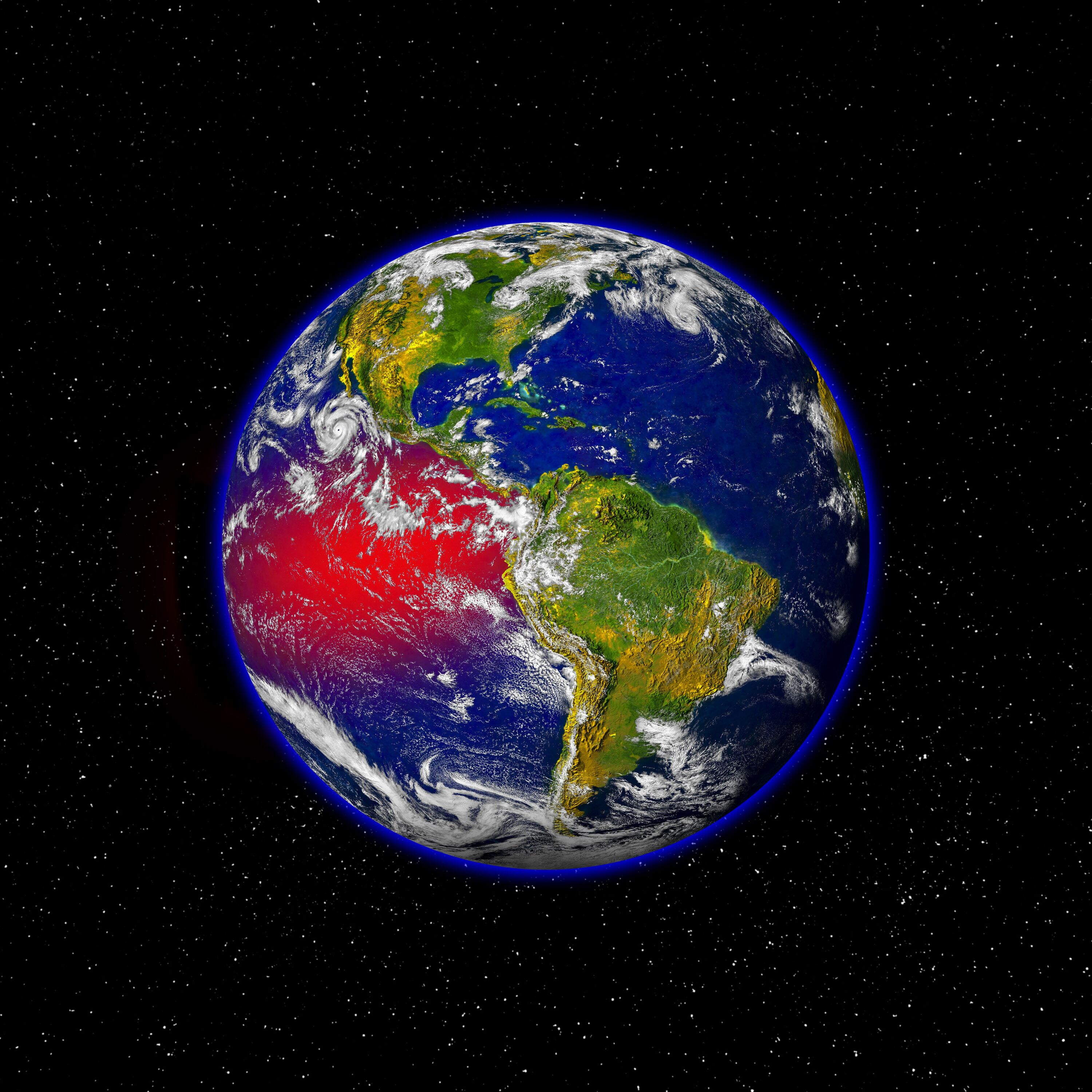
- During El Niño, the equatorial Pacific Ocean warms.
- That warm water heats the air above it.
- Rising warm air changes atmospheric circulation patterns.
- Those changes can “export” weather anomalies into North America, South America, and beyond.
Why scientists study the Galápagos
- The eastern Pacific near the Galápagos is highly sensitive to El Niño.
- Coral there preserves a chemical record of past ocean temperatures.
- By sampling coral cores millimeter by millimeter, researchers can reconstruct monthly temperature history going back decades or longer.
What the Research Found
- The coral record showed that recent decades are different from the pre-industrial era.
- The increase in variability was driven by more intense warm phases.
- When plotted against global temperature, the pattern looked like a “hockey stick”, closely tracking human-caused warming.
- Cole says this is strong evidence that climate change is already affecting El Niño intensity.
Why This Matters
- Strong El Niño years tend to produce the largest climate shocks.
- If those strong events happen more often, communities and ecosystems have less time to recover.
- Examples:
- Coral reefs may face bleaching events too frequently to bounce back.
- Flood-prone areas may need repeated emergency preparation.
- Drought- and wildfire-prone regions may face more severe and frequent threats.
Practical Preparation Advice
Cole emphasizes that adaptation must be local and impact-specific:
-
Flood-prone areas
- Clear culverts and drainage systems
- Prepare for heavier rainfall and runoff
-
Hot, dry, wildfire-prone areas
- Fire-harden homes
- Consider burn restrictions and emergency readiness
-
General community planning
- Review local El Niño risks now
- Strengthen infrastructure and response plans before impacts arrive
Notable Insight
“We’re not saying that global warming has taken over control of El Niño… But the trend we’re seeing is real and happening.”
That is the central message of the episode: El Niño remains naturally variable, but climate change appears to be raising the odds and intensity of the most disruptive events.
Bottom Line
This episode argues that the current El Niño is likely to be one of the strongest on record, and that human-driven warming is making El Niño-related extremes more damaging. The key takeaway is not that every future El Niño will be stronger than the last, but that the worst events are becoming more intense in a warming world, increasing climate risk for people, ecosystems, and infrastructure worldwide.