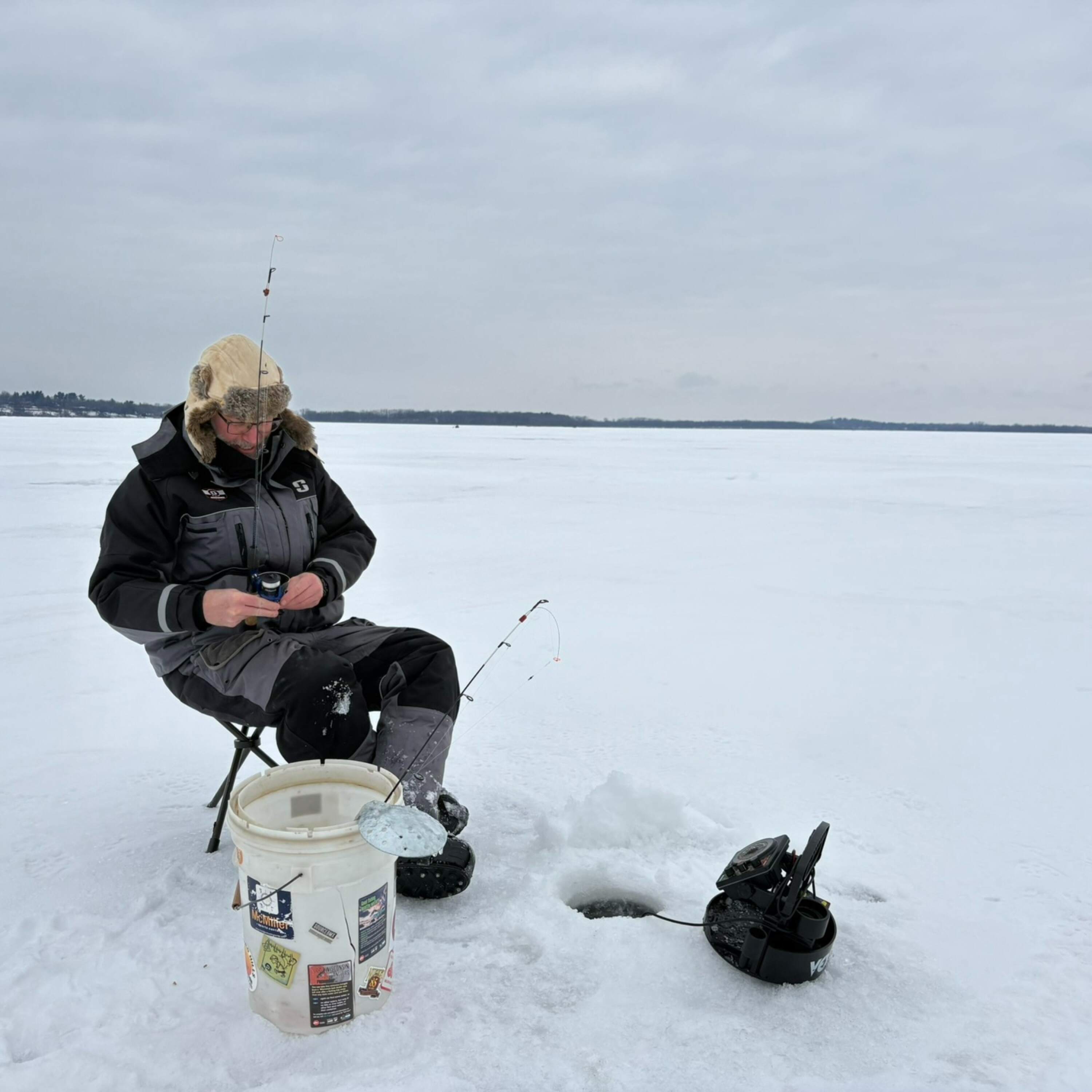
Overview of Shortwave — "Spring ice is thawing earlier in lakes. What does that mean for life below the surface?"
This Shortwave (NPR) episode follows reporter Burley McCoy as she joins fisheries biologist Zach Feiner on an ice‑fishing trip in Madison, Wisconsin, to explore how earlier and more variable spring ice thaw is affecting lake ecosystems — particularly food webs and fish like walleye — and what that means for anglers and lake management.
Key takeaways
- Spring thaw timing for some lakes has become highly variable (examples given: earliest recent thaw mid‑March, latest mid‑May), producing multi‑week to multi‑month differences year‑to‑year.
- That timing is critical: spring thaw triggers algae blooms → zooplankton growth → food for young fish. Large variability can "decouple" these linked events, reducing survival of juvenile fish.
- Empirical observation: years with big swings in thaw timing correlate with fewer young walleyes the following fall; long‑term warming has already shortened ice‑fishing seasons (an angler reports ~6 weeks lost since the 1980s).
- Some fish species (bluegill, crappie, largemouth bass) are more tolerant of warmer, less icy conditions and may fare better than cool‑water species like walleye.
- Management dilemmas include whether to continue stocking (transcript uses "stalking" but the intended term is stocking) species that may face increasingly inhospitable conditions, or shift strategies toward species/habitats more resilient to warming.
Topics discussed
- How variable ice melt disrupts seasonal food‑web timing (algae → zooplankton → juvenile fish).
- Local reporting from Lake Wabisa: on‑ice observations, gear used (sonar/underwater camera), and catches (bluegill, crappie).
- Socioeconomic/cultural impacts: ice fishing is a popular activity (the episode cites ~1.7 million ice fishers in the U.S.) and supports local economies; changing seasons affect traditions and livelihoods.
- Fisheries management responses: stocking practices, harvest decisions, habitat protection, and shifting angler behavior/preferences.
Field reporting notes
- Reporter and biologist fished at night on Lake Wabisa; used an insulated tent, sonar, and underwater cameras.
- They caught warm‑water species (bluegill, crappie) rather than the target walleye — used as an on‑the‑water illustration of changing species composition.
- Personal perspectives highlighted: longtime angler David Van Lannen describing the shortening ice season; ecological explanations from Zach Feiner about recruitment failures in walleyes.
Notable quotes
- David Van Lannen: "We've lost a good six weeks off of our ice fishing season since I started back in the 1980s. We used to start in December, end in April. Now we start in January, end in March."
- Zach Feiner (paraphrased explanation): spring thaw is a domino effect — if timing shifts, "your food web gets delinked or decoupled," leading to fewer young fish surviving.
Implications
- Ecological: Increased interannual variability and earlier thaw can reduce recruitment for cold‑water and seasonally spawning species (e.g., walleye), alter community composition, and lower biodiversity.
- Economic/cultural: Recreational fisheries and traditions (ice fishing seasons, local economies) could shrink or shift toward different target species.
- Management: Continued stocking of vulnerable species may become less effective or unsustainable; managers face tradeoffs between preserving historical fisheries and adapting to new ecological realities.
Practical recommendations (for anglers, community members, and managers)
- For anglers: monitor local fisheries reports; consider adjusting harvest practices (keep fewer vulnerable species); be open to targeting species more resilient to warming.
- For managers: evaluate stocking effectiveness under changing thermal/ice regimes; prioritize habitat protection that supports vulnerable life stages; incorporate interannual variability into recruitment models.
- For communities and citizens: participate in local monitoring/citizen science programs that track ice timing and fish recruitment; support policies and practices that reduce watershed stressors (e.g., habitat protection, water quality improvements) and broader climate mitigation.
Bottom line
Shifts in the timing and duration of lake ice are not just an outdoor recreation inconvenience — they cascade through lake food webs and fish populations, forcing ecological change and difficult management decisions. Anglers and communities are already noticing changes, and adapting both behavior and policy will be increasingly important as lakes warm.