Overview of Shortwave from NPR
This episode explains what “shooting stars” actually are, separating space-travel myths from the science of meteors, meteoroids, meteorites, asteroids, and comets. Hosted by Emily Kwong and scientist-in-residence Regina Barber, with planetary scientist Melissa Rice from NASA, the conversation turns a familiar skywatching image into a compact lesson on how space rocks move, burn up, and sometimes reach Earth.
Key Science Explained
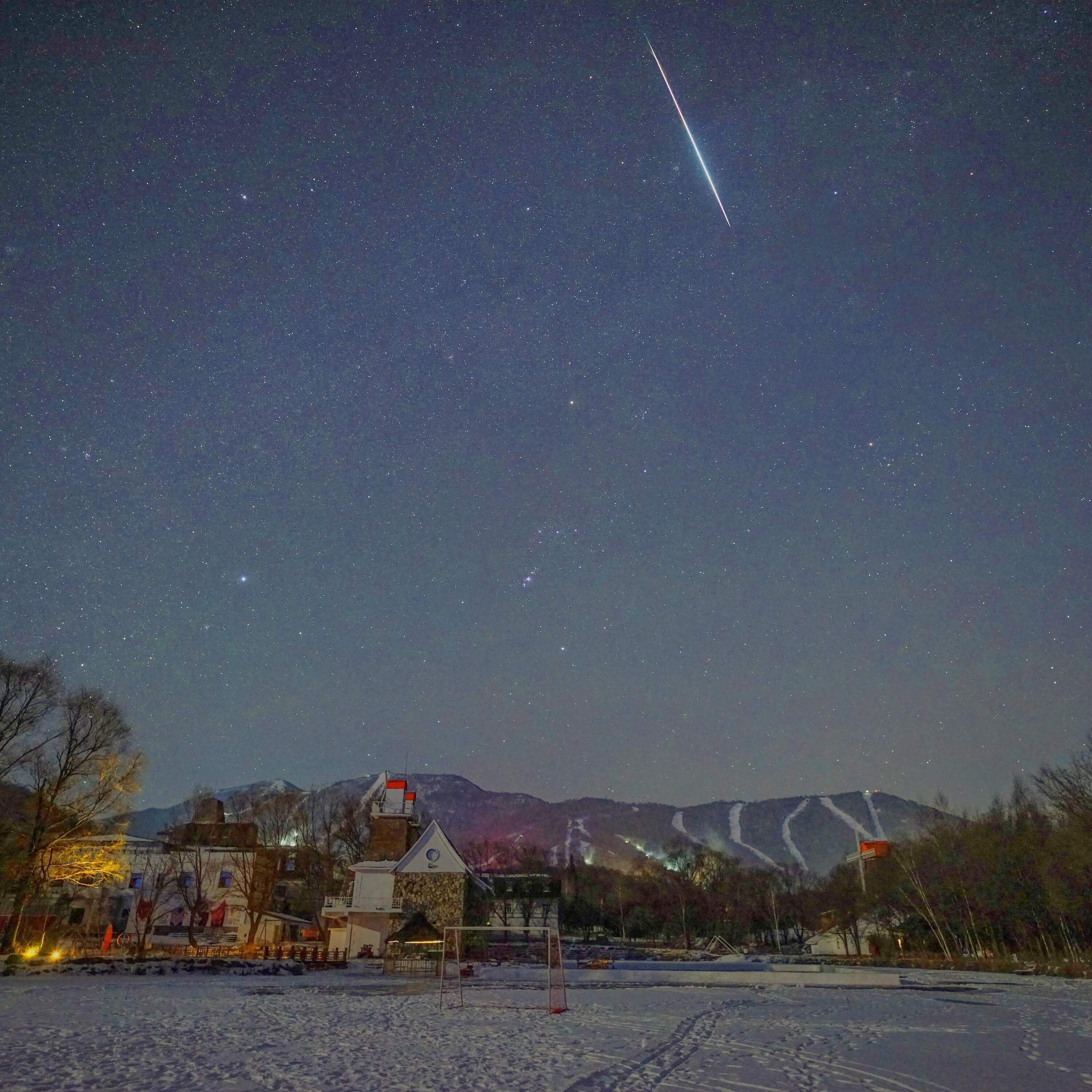
“Shooting stars” are not stars
- A shooting star is usually a tiny piece of rock entering Earth’s atmosphere at high speed.
- Most are pea-sized or smaller.
- The bright streak is caused by friction and heating as the object collides with atmospheric molecules.
Meteoroid vs. meteor vs. meteorite
- Meteoroid: the object while still in space.
- Meteor: the bright streak seen when it enters the atmosphere.
- Meteorite: the piece that survives and lands on the ground.
Asteroids and comets are different
- Asteroids are rocky bodies.
- Comets are made of ice and dust—basically “dirty snowballs.”
- Comets can develop dramatic tails when they get close to the Sun and their icy material turns to gas.
Main Takeaways
Earth is still “growing” in a sense
- Space rocks continually fall into Earth’s atmosphere.
- Most burn up, but they still add material to the planet’s atmosphere and, over deep time, reflect the broader process by which planets formed through accumulating rock.
Impact craters are real evidence of cosmic collisions
- The episode notes how scientists debated the origin of lunar craters for centuries.
- By the Apollo era, it became widely accepted that many craters are caused by impacts from space rocks.
- The discussion also touches on the Chicxulub impact, with some debate about whether it may have been caused by a comet rather than an asteroid.
Meteorites can be found on Earth
- Many meteorites are recovered in Antarctica, where they stand out clearly against the ice.
- Scientists can also use magnets to detect iron-rich meteorites.
Safety and Real-World Odds
- Meteorites can fall through houses, and there have been dramatic near-misses, but the episode emphasizes that human fatalities from meteorite impacts are essentially unrecorded.
- There has been at least one confirmed case of a meteorite killing a dog, but for people, the risk is extremely low.
Notable Ideas and Insights
- The segment reframes shooting stars as something even more fascinating than the myth: they are ancient pieces of the solar system flashing through Earth’s sky.
- Melissa Rice’s explanation highlights that these objects have been traveling since the solar system formed.
- The episode also points out how science knowledge has evolved: even crater formation on the Moon was disputed until relatively recently.
Bottom Line
A “shooting star” is not a star at all, but a fast-moving speck of rock from space that burns up in Earth’s atmosphere. The episode uses that simple fact to explore the bigger story of how the solar system formed, how planets grow, and how scientists distinguish among meteors, meteorites, asteroids, and comets.