Overview of Plot twist: We're probably way undercounting insects on Earth
This NPR Shortwave science roundup covers three new studies: a major revision upward in the estimated number of insect species on Earth, the discovery of 31 extremely old quasars with ESA’s Euclid telescope, and a DNA-based look at what California wolves are eating. The common thread is how new data and methods are revealing just how much scientists still don’t know about the natural world.
Insects: Earth may have far more species than we thought
The big finding
- A new study in Proceedings of the National Academy of Sciences suggests there may be 14 to 20 million insect species on Earth, far more than the long-cited estimate of about 6 million.
- That means the previous number may have been undercounting by up to 3x.
How researchers estimated it
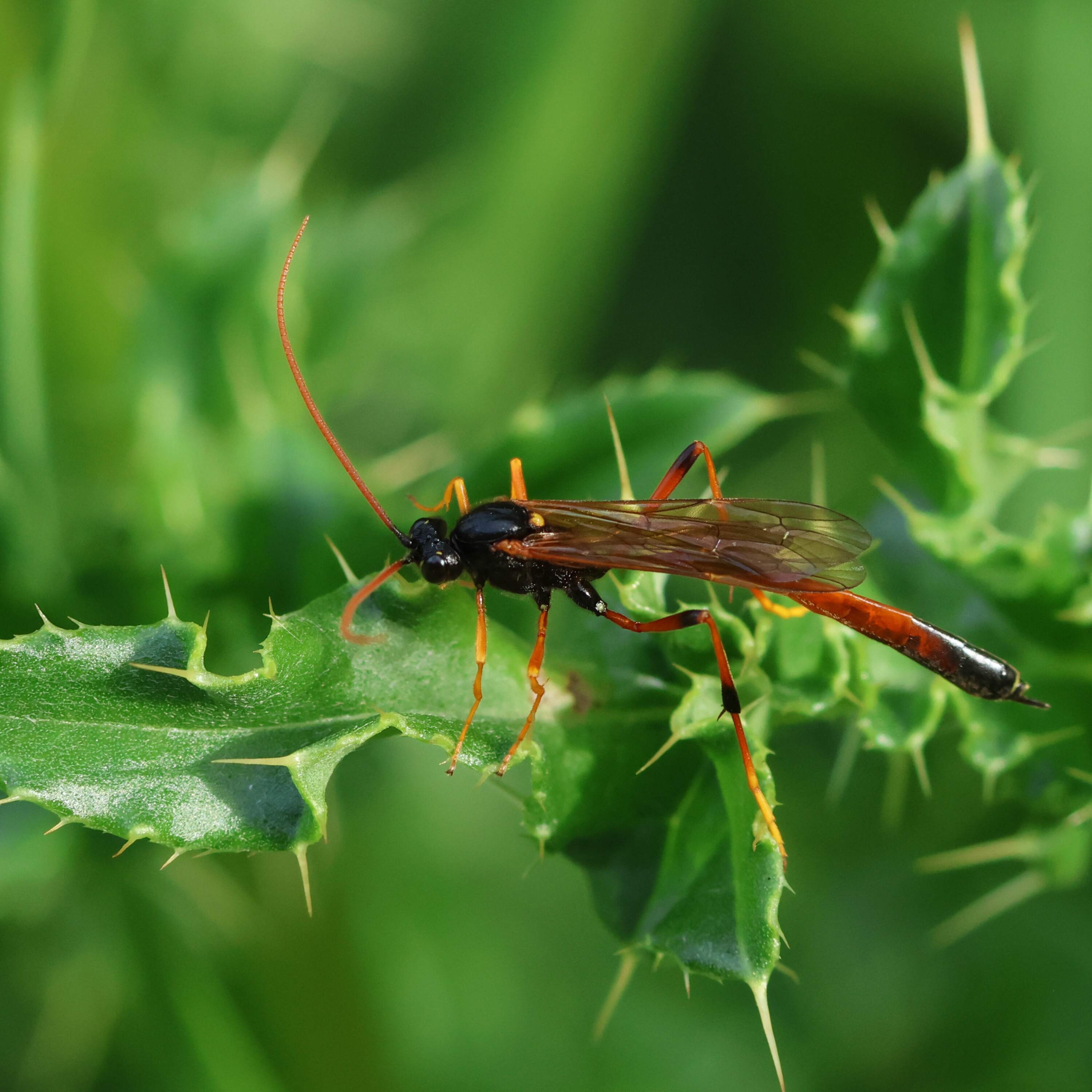
- Scientists focused on parasitoid wasps in a protected area in Costa Rica.
- These wasps are tiny and difficult to distinguish visually, so researchers used:
- DNA sequencing
- modeling
- They estimated 3,400 species of one subfamily of parasitoid wasps in that reserve, then scaled the approach to broader insect diversity.
Why it matters
- Only about 1 million insect species have been formally described, so a huge amount of biodiversity remains undocumented.
- The study highlights how little is still known about insect life and how much work remains for taxonomy and biodiversity science.
Quasars: Euclid finds 31 of the oldest ever seen
What quasars are
- Quasars are the bright centers of galaxies powered by supermassive black holes actively feeding on gas and dust.
- They’re essentially black holes “caught in the act” and glowing brightly because of the material spiraling into them.
The discovery
- A study in the Journal of Astronomy and Astrophysics reports 31 newly found quasars, among the oldest known.
- These were discovered using the European Space Agency’s Euclid telescope, launched in 2023.
Why Euclid is useful
- Euclid is not as powerful as Hubble or JWST, but it scans huge portions of the sky, making it ideal for finding rare objects.
Scientific importance
- These quasars formed soon after the Big Bang, yet are already much larger and brighter than expected.
- Studying them may help answer:
- How supermassive black holes grew so quickly
- What conditions existed in the early universe
- How the first stars and galaxies formed
California wolves: What they’re eating is shaped by the landscape
The study
- Researchers at UC Davis analyzed wolf scat DNA from two California wolf packs in 2022 and 2023.
- They found that the wolves’ primary food source was cattle.
Why that’s notable
- In many states, wolves mainly eat wild prey.
- In California, however, wolves are returning to a landscape with limited natural prey, so they’re more likely to target livestock.
Broader takeaway
- Experts say this shows the challenge of reintroducing carnivores to ecosystems that have changed drastically.
- Reducing conflict may require rebuilding more complete ecosystems, including:
- More mule deer
- More elk and other wild game
- That kind of ecological restoration would take time, but it could help reduce livestock predation.
Key takeaways
- Biodiversity is still badly undercounted, especially for insects.
- Rare astronomical objects like ancient quasars can reveal how the early universe evolved.
- Wildlife management is inseparable from habitat health: if predators return but prey populations are low, conflict with humans becomes more likely.
Notable insight
- One researcher described the insect results as humbling, emphasizing how much of life on Earth remains undiscovered.
- The wolves story underscored that conserving predators requires more than protecting the predators themselves—it often means restoring the entire food web.