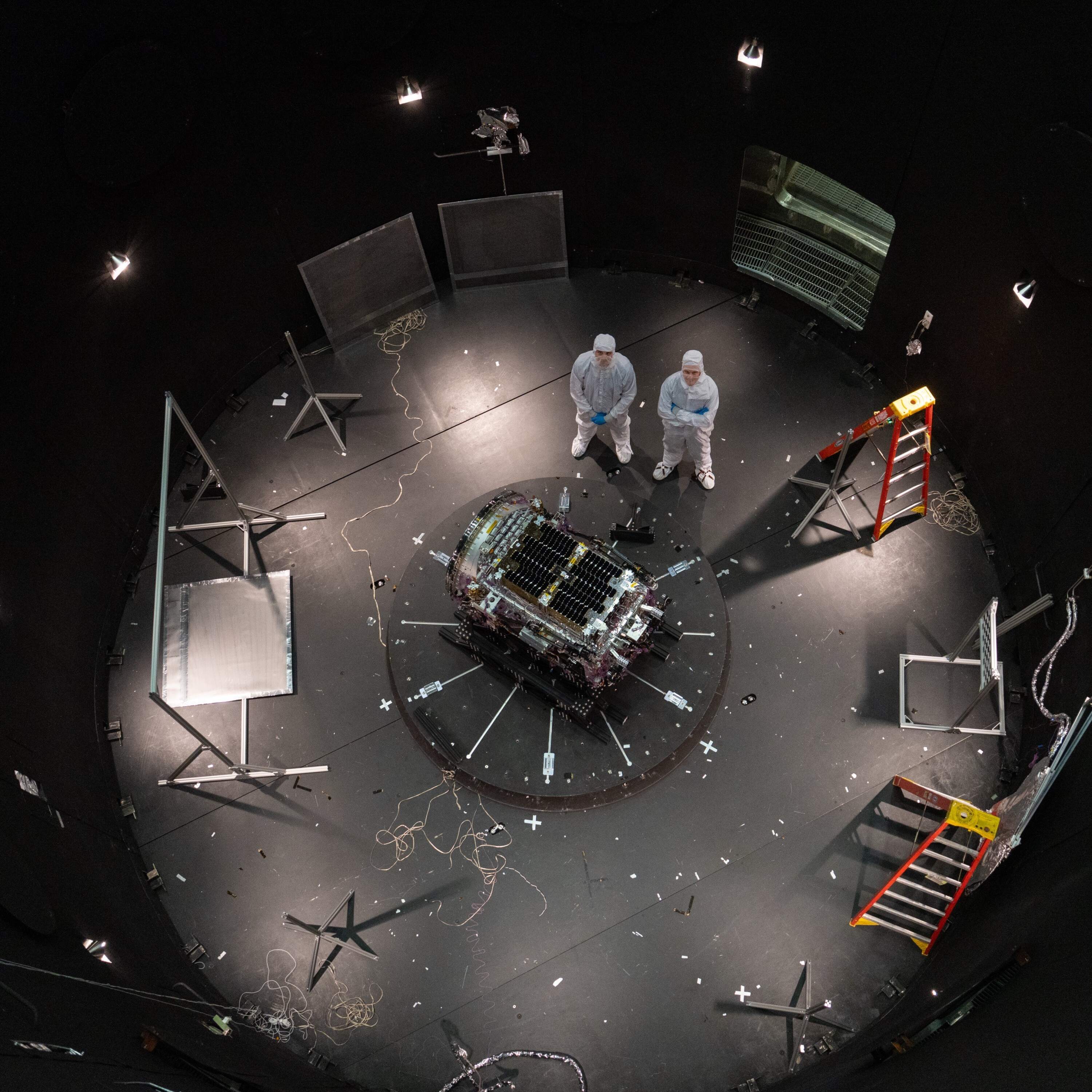
Overview of NPR’s Shortwave: NASA's race against time to rescue a falling satellite
This NPR Shortwave episode covers NASA’s urgent effort to save the Swift gamma-ray observatory, a decades-old telescope that is descending toward Earth faster than expected because of increased atmospheric drag from heightened solar activity. To extend the mission’s life, NASA is testing a first-of-its-kind robotic satellite rendezvous and boost using a commercial spacecraft called LINC. The episode explains the science, the technology, and why this mission could reshape how satellites are maintained in low Earth orbit.
Why Swift Is in Trouble
The problem: atmospheric drag is increasing
- Swift has been in low Earth orbit since 2004.
- Satellites that low still encounter a thin upper atmosphere, which slowly slows them down and causes them to fall.
- In recent years, the sun has become more active, heating and “puffing up” Earth’s atmosphere.
- That extra atmospheric expansion has increased drag on Swift, accelerating its descent.
The urgency
- Scientists once expected Swift could keep operating into the 2030s.
- New calculations suggest that if nothing is done, it could reenter the atmosphere by the end of this year.
The Rescue Mission
What NASA launched
- NASA partnered with an Arizona-based startup, Catalyst, to build and launch a small robotic spacecraft named LINC.
- LINC launched on a rocket carried by airplane from the Marshall Islands.
- It is now in orbit near Swift and operating normally.
How the rescue will work
- After a period of checking systems, LINC will slowly approach Swift over the course of weeks.
- It will attempt to:
- match orbit with Swift,
- move in close,
- grip the telescope with three robotic arms,
- and then use electric propulsion to boost Swift to a higher orbit.
- Once the boost is complete, LINC will detach and eventually burn up in the atmosphere.
Why this is so unusual
- This is the first-ever attempt to autonomously capture and relocate a satellite that was never designed to be serviced.
- Unlike Hubble servicing missions, which were performed by astronauts and designed for that purpose, this mission is:
- fully robotic
- fully autonomous
- and involves a satellite not built for capture
What Makes Swift Special
A uniquely valuable observatory
- Swift can rapidly repoint its X-ray and ultraviolet telescopes to transient events anywhere in the sky.
- That makes it a fast-response observatory, especially useful for observing short-lived phenomena like gamma-ray bursts.
- NASA sees it as worth saving because of its scientific value and unique capabilities.
Why NASA Thinks This Could Change the Future
Beyond one telescope
NASA views this mission as more than a rescue operation. If successful, it could help pave the way for:
- satellite servicing in low Earth orbit
- battery replacement
- instrument upgrades
- potentially a more sustainable orbital environment
- possible defense applications, since the ability to adjust a satellite’s trajectory has strategic value
A new way of working
- The mission was identified and developed on a very short timeline:
- the problem was recognized a little over a year ago
- Catalyst was brought in around September
- LINC was designed, built, tested, and launched in about nine months
- NASA says the compressed schedule forced it to work in new ways and collaborate more closely with commercial partners.
What Happens Next
Near-term milestones
- In about a month, LINC is expected to begin its close approach to Swift.
- Before contact, it will take multiple images of Swift from different angles and lighting conditions.
- Those images are needed for two reasons:
- To verify Swift’s condition after 22 years in orbit
- To train LINC’s onboard computer vision system so the spacecraft can autonomously navigate and grasp the telescope
Outlook
- NASA says it is cautiously optimistic.
- The team believes the mission has a strong chance of success, but acknowledges there are still major technical challenges ahead.
Notable Takeaways
- Solar activity can indirectly endanger satellites by expanding Earth’s atmosphere and increasing drag.
- Robotic satellite servicing is no longer theoretical; NASA is actively testing it.
- If successful, this mission could create a new model for maintaining spacecraft instead of discarding them.
- The episode frames Swift not only as a scientific treasure, but as a test case for the future of orbital infrastructure.