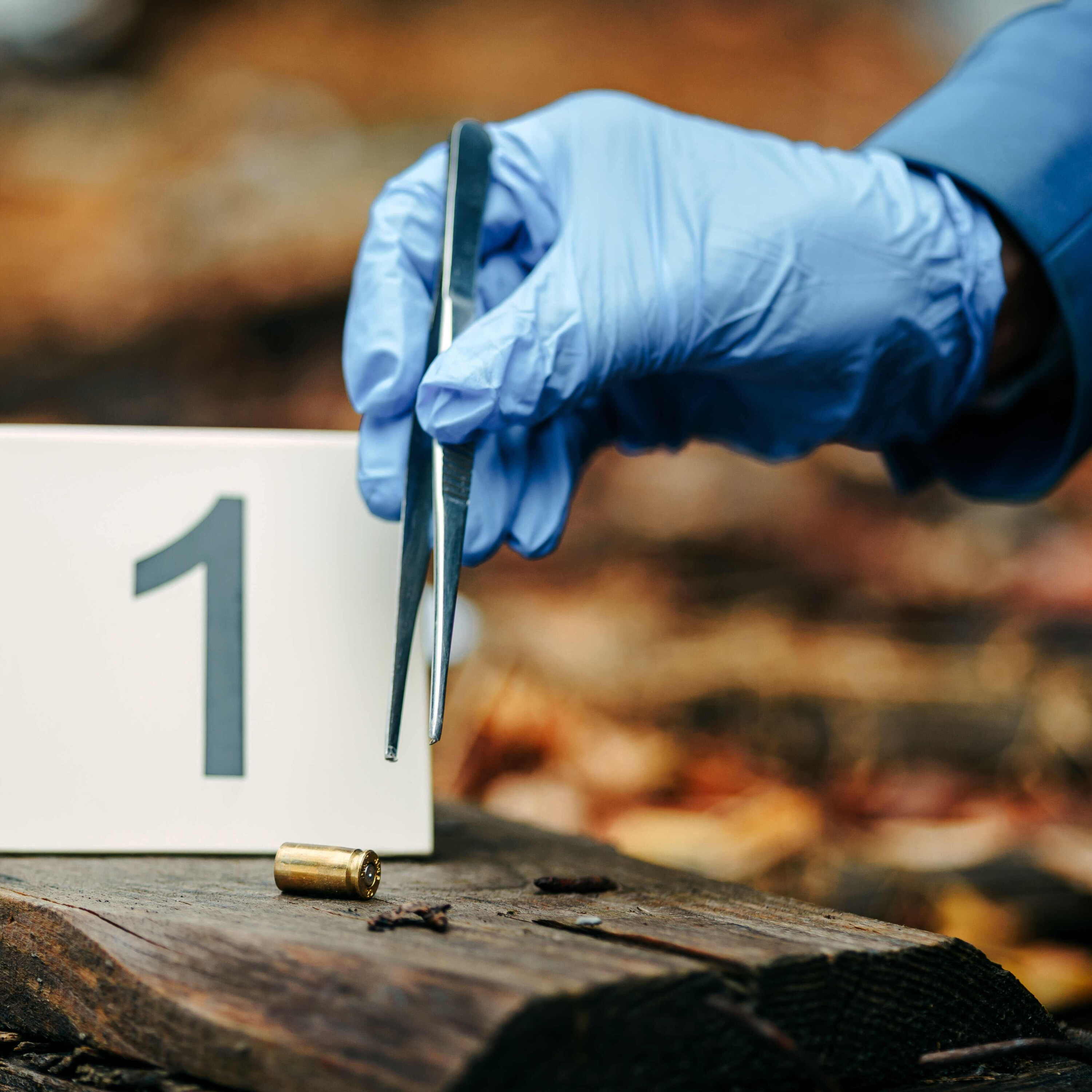
Overview of NPR Shortwave: Is your favorite crime show rooted in fake science?
This episode of NPR’s Shortwave examines how forensic science is portrayed on TV versus how it is actually used in criminal courts. Featuring Chris Fabricant of the Innocence Project, the conversation argues that several widely used forensic methods—like hair microscopy, bite mark analysis, and some forms of blood spatter interpretation—have been overstated, poorly validated, or outright discredited, yet they continue to influence trials and contribute to wrongful convictions.
Key Takeaways
-
A lot of courtroom “science” is not scientifically sound.
Fabricant argues that many forensic methods were developed for law enforcement convenience, not through rigorous scientific testing. -
Legal precedent keeps bad science alive.
Once a technique is admitted in court, it often becomes easier for other courts to accept it, even if the underlying science is weak. -
Wrongful convictions are a major consequence.
The episode notes that more than half of known wrongful convictions are linked to junk science in some form. -
Crime TV has shaped public expectations.
The so-called CSI effect may make jurors overly trusting of forensic evidence, assuming it is objective and infallible. -
The burden falls unequally.
Fabricant says junk science disproportionately harms poor people and Black and brown defendants.
Forensic Techniques Discussed
Hair Microscopy
- Once used to compare questioned hairs from a crime scene with a suspect’s hair under a microscope.
- FBI analysts often presented matches as highly reliable, despite not knowing true error rates.
- The technique was later exposed as misleading in many cases, contributing to dozens of wrongful convictions.
Bite Mark Analysis
- Fabricant describes it as essentially unusable and unreliable.
- Experts often relied on subjective judgment to identify injuries as human bite marks.
- Because bodies decompose and injuries change over time, conclusions could shift dramatically.
Blood Spatter Analysis
- Fabricant says this method can have value when done by highly trained experts with knowledge of trigonometry, fluid dynamics, and physics.
- The problem is that it is often overstated by undertrained analysts who claim to reconstruct entire events from blood patterns.
ShotSpotter / Acoustic Gunshot Detection
- Presented as a digital forensic tool for detecting gunfire.
- Fabricant says it can be unreliable and, without strong scientific validation, can be worse than a coin flip.
What’s Wrong With the System?
-
Forensic experts are often not scientists in the strict sense.
Many are well-intentioned and experienced, but lack formal scientific training. -
The courtroom rewards certainty.
Experts often speak in definitive terms even when the science does not support absolute conclusions. -
There is little pretrial scientific scrutiny.
Fabricant argues that once evidence reaches court, the system is already too late in the process to catch bad methods.
What Chris Fabricant Says Should Change
-
Create a federal or independent agency to vet forensic methods before courtroom use.
He compares it to an “FDA for forensics.” -
Require blind testing to reduce bias.
Analysts should be shielded from case details that could influence their conclusions. -
Force experts to explain uncertainty honestly.
Testimony should include limitations, error rates, and the possibility of alternative explanations. -
Stop using “individualization” language without evidence.
Courts should not hear claims like “this bullet came from that gun” or “this print could only belong to this person” unless the science truly supports that level of certainty.
Notable Insight
“Once you get in the courtroom, the gloves are off.”
This sums up the episode’s central warning: if questionable forensic methods are allowed into trial without proper scientific vetting, they can become powerful tools for reinforcing false certainty and driving wrongful convictions.
Credits and Context
- Guest: Chris Fabricant, director of strategic litigation at the Innocence Project
- Host: Emily Kwong
- Related book: Junk Science and the American Justice System by Chris Fabricant
- Episode focus: How forensic evidence in criminal cases can be unreliable, overstated, or misused despite its reputation on TV and in court