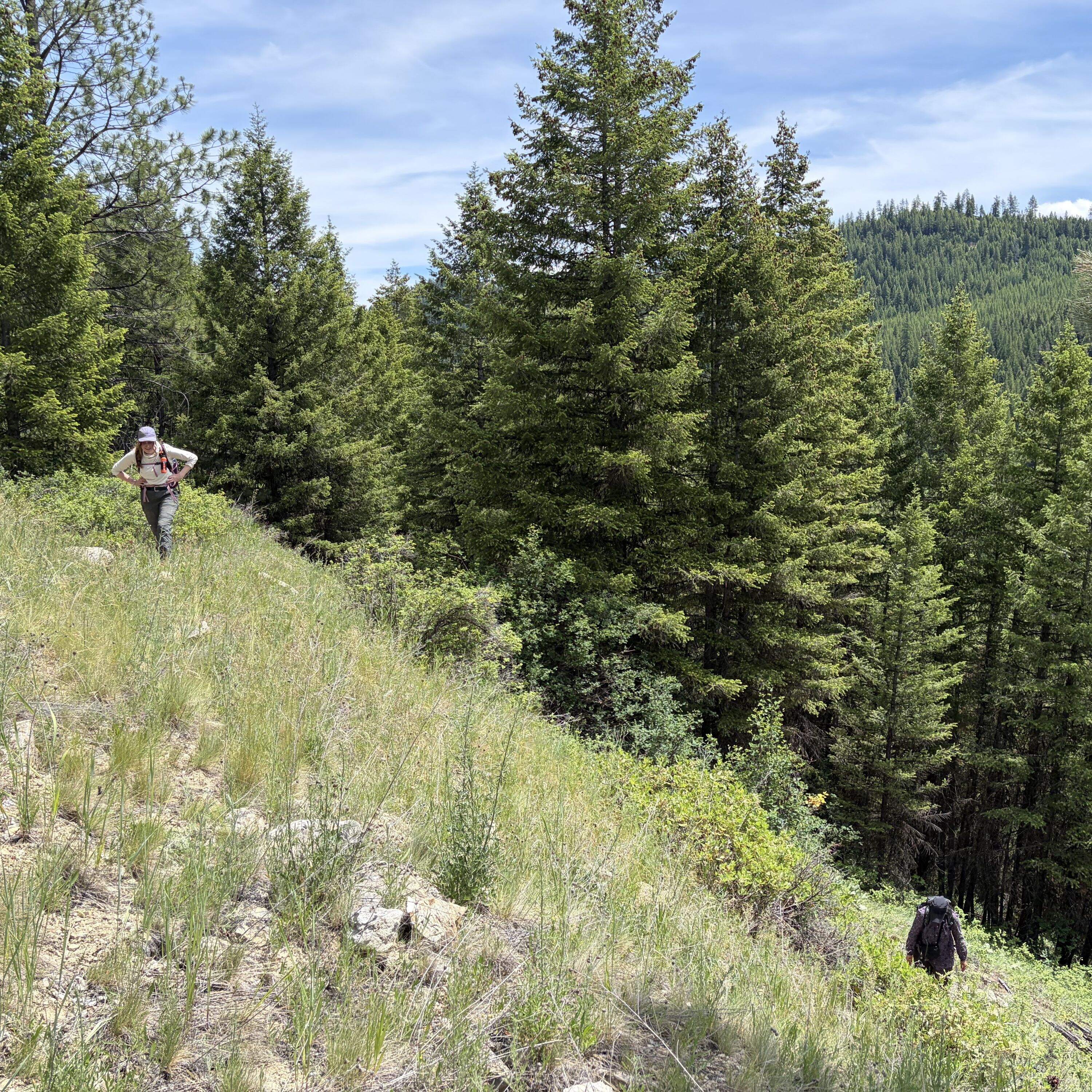
Overview of How much has the U.S.’s wildlife changed since Lewis and Clark?
This NPR Short Wave episode follows a Smithsonian-led effort to resurvey wildlife along the Lewis and Clark Trail more than 200 years after the original expedition. The project uses motion-activated camera traps, public participation, and AI analysis to compare what animals are present today versus what Lewis and Clark documented, while also exploring how wildlife, land use, and human settlement across the western U.S. have changed.
What the episode is about
- NPR visits a field team in western Montana near Lolo, close to the Idaho border.
- The team is part of the Lewis and Clark Resurvey, led through the Smithsonian’s Conservation Biology Institute.
- Wildlife ecologist Bill McShea came up with the idea as a way to commemorate America’s 250th anniversary scientifically.
- The project revisits a route associated with the Lewis and Clark expedition, which was the first systematic natural history survey of the western U.S.
How the resurvey works
Field method
- Teams place motion-activated camera traps along the trail corridor.
- The cameras are set at knee height and left out for about two months in summer and fall.
- Images are uploaded to a public database and processed with AI to identify species and, in some cases, individual animals.
Who is involved
- The episode highlights a team from the University of Montana and a Smithsonian intern.
- The project is designed to include local people, students, and scientists, not just specialists.
Key findings and takeaways
- Lewis and Clark documented at least 178 plant species and more than 120 animal species during their expedition.
- Many of the species they recorded were new to European-American science at the time, though of course they were already known to Indigenous peoples.
- The modern resurvey is expected to show:
- Fewer bison than in the past
- Fewer apex predators like wolves and grizzly bears in many areas
- Major landscape changes, including dammed rivers
- Much greater human presence across the West
- Despite these changes, Bill McShea argues that:
- There is more wildlife out there than many people assume
- Wildlife and people often coexist more successfully than expected
- Some places, especially Native American reservations, may have stronger wildlife communities than surrounding regions
Why this matters
- The project is less about cutting-edge ecology and more about public engagement, historical comparison, and conservation awareness.
- It gives scientists and wildlife managers a way to:
- Understand how species distributions have changed over time
- Identify places where wildlife is thriving
- Learn from landscapes that have conserved biodiversity well, especially Indigenous-managed lands
- The episode emphasizes that the old idea of separating people and wildlife is outdated; many species now live alongside humans.
Notable insight
- Bill McShea’s core message is that the survey is valuable even if it isn’t “cutting-edge” science:
- it helps people notice what wildlife is around them,
- what has declined,
- what has returned,
- and what conservation successes still exist.
Episode framing
- The story is told as a playful field adventure, with the hosts hiking, scrambling uphill, and setting camera traps by hand.
- That on-the-ground reporting reinforces the episode’s main theme: understanding wildlife change requires both history and direct observation.