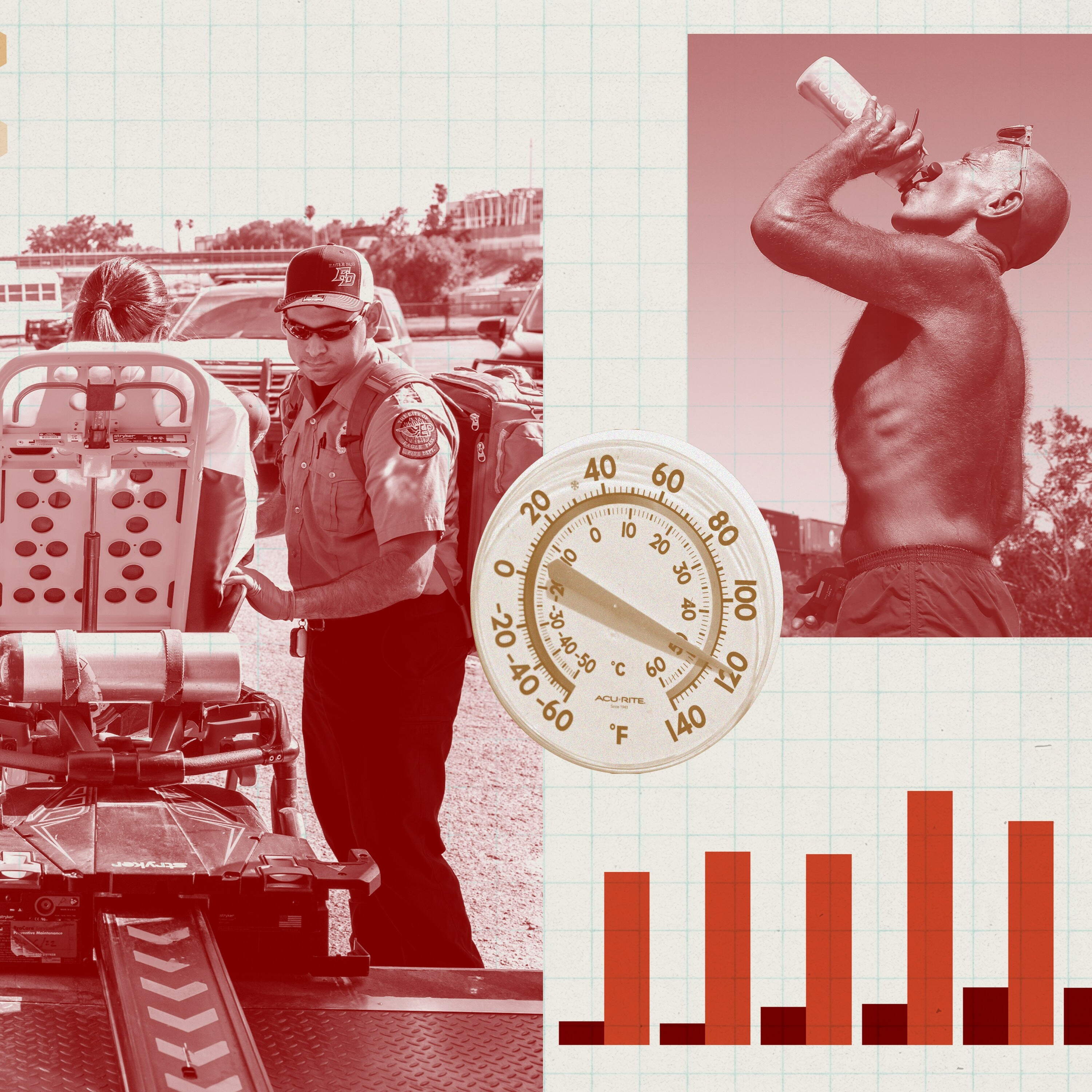
Overview of A new investigation shows heat is even deadlier than we thought
In this NPR Shortwave episode, host Nate Rott speaks with NPR climate correspondent Alejandra Borunda about a major investigation into heat-related mortality in the U.S. The central finding: heat is far deadlier than official statistics suggest. While the CDC has reported roughly 1,700 heat deaths per year on average over the past eight years, Borunda’s analysis, done with epidemiologist Quinn Adams, estimates the true figure is closer to 9,000 deaths annually—about five times higher. The episode explains why heat deaths are so hard to count, why undercounting matters, and what some states and counties are doing to improve tracking and prevention.
Key Findings
-
Official heat death numbers are likely far too low
- CDC figures average about 1,700 deaths per year.
- NPR’s analysis estimates about 9,000 deaths per year from heat and heat-related causes.
- Even that estimate may still be conservative.
-
Heat is often a contributing factor, not the sole cause
- Heat can trigger or worsen conditions like:
- heart attacks
- kidney failure
- other cardiovascular stress
- Because the death certificate may list the immediate medical event rather than heat, many deaths are missed.
- Heat can trigger or worsen conditions like:
-
The undercount is a public health problem
- If heat deaths are not measured accurately, policymakers and the public are less likely to treat extreme heat as a serious threat.
- The episode argues that heat is not just a discomfort issue—it is a major health hazard.
Why Heat Deaths Are So Hard to Count
Inconsistent death reporting
- Death certification varies widely by:
- state
- county
- medical examiner/coroner system
- Some certifiers are better trained than others, and there is no single standard nationwide process for investigating heat-related deaths.
Heat is not always obvious
- Many people do not die from “heat stroke” directly.
- Heat can worsen an existing condition over several days, making the connection harder to prove.
Local conditions matter
- People in different regions are acclimated differently.
- A temperature that is dangerous in one place may be less so in another, but local humidity, infrastructure, and preparedness also matter.
Vulnerability can happen at lower temperatures
- The episode notes that heat-related harm can occur even around 85°F, especially for people:
- taking certain medications
- with chronic health conditions
- without effective cooling at home
How the Investigation Was Done
- Borunda and Adams used excess mortality modeling, similar to approaches used during COVID-19.
- They estimated:
- how many deaths would be expected in a given place and time
- how many deaths actually occurred
- how much of the difference could be linked to heat
- Their county-level model also accounted for:
- geography
- local acclimatization
- temperature-response differences
- lag effects, where heat stress leads to death days later
Human Impact: A Preventable Death
- The episode highlights the story of Sherry Petty in Tucson, Arizona.
- Her daughter described finding her mother on the floor after the home’s swamp cooler failed and blew hot air.
- The story underscores a recurring theme: many heat deaths are tied to broken or unaffordable cooling, making them potentially preventable.
What Places Are Doing Better
Arizona counties
- Maricopa County and Pima County are cited as leaders in heat tracking and response.
- These areas are experimenting with stronger heat safety measures and better mortality tracking.
Policy experiments elsewhere
- New York State and New York City are exploring limits on utility shutoffs during heat waves, similar to winter protections.
- Other examples include rules allowing air conditioners even when landlords object for aesthetic reasons.
Main Takeaways
- Extreme heat is a major but undercounted cause of death in the U.S.
- Official records miss many cases because heat is often an indirect contributor.
- Better data is essential for:
- raising public awareness
- shaping policy
- evaluating whether heat-safety interventions work
- The episode frames heat as a “we problem,” not a “me problem”—a structural issue that requires collective action, not just personal precautions.
Notable Insight
- Scientist Patricia Solis is quoted saying we treat heat as a “me problem” when it is really a “we problem.”
- The episode emphasizes that extreme heat should be approached as a systemic public health and infrastructure challenge.
Suggested Actions / What Needs to Happen
- Improve national standards for tracking heat-related deaths
- Expand access to finer-grained mortality data
- Invest in public cooling and emergency heat-response systems
- Protect residents from power shutoffs during heat waves
- Treat heat planning as a core public policy issue, not an afterthought