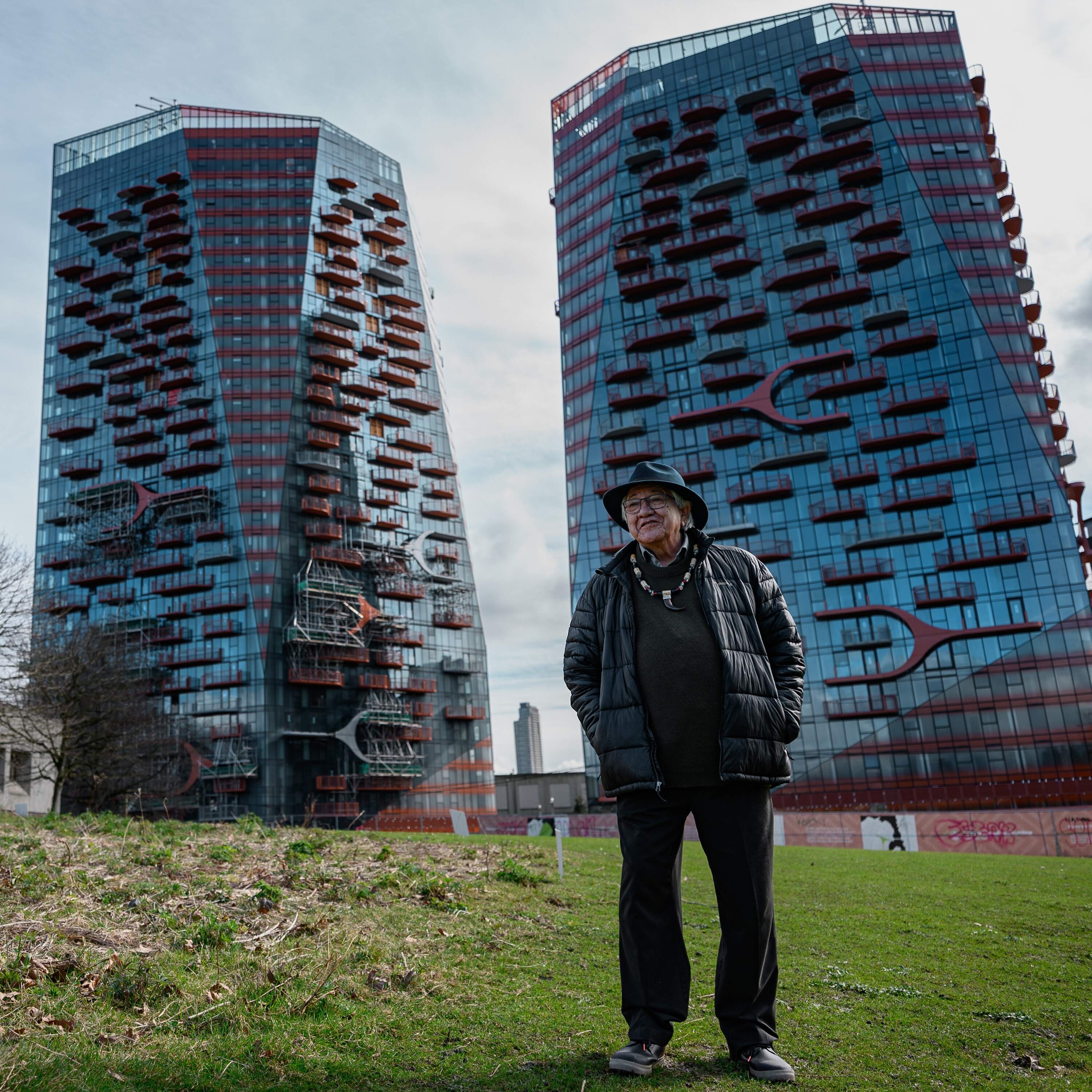
Overview of The skyscrapers that NIMBYs and zoning couldn't stop (Planet Money — NPR)
This Planet Money episode (hosts Alex Mayasi and Jeff Guo) tells the story of the Squamish Nation’s redevelopment of Sinak — roughly 10.5 acres of reclaimed ancestral land next to downtown Vancouver — into Sanak, a large high-rise rental development. Because the land is sovereign reserve territory, the Squamish were not bound by Vancouver’s usual zoning rules. The episode traces internal debate within the Nation, the politics and pushback from nearby homeowners (NIMBYs), cultural design choices, financing and government support, and the broader lessons about zoning, housing supply, and development timelines.
Timeline & key events
- 1913: Squamish people were forced off Sinak (historical context given by Chief Gibby).
- 1977–2003: Legal fight culminates in the Squamish Nation regaining about 10.5 acres in 2003.
- 2003: Initial plan proposed (mid-rise apartments, ~1,500 units); community debate stalls the plan.
- 2013: Wilson Williams elected to Squamish Council; new generation pushes for bigger plan.
- 2019: Squamish membership votes to approve a much larger development (Sanak).
- 2022: Groundbreaking ceremony attended by elders, Vancouver mayor, and Prime Minister Justin Trudeau.
- 2022–present: Construction proceeds quickly; three of 11 towers are up. First phase (~1,400 units) expected to open soon; full project ~6,000 units targeted to finish by 2033.
Main people featured
- Chief Gilbert “Gibby” Jacob — former leader who helped regain the land and wanted a profitable, sustainable project (“I want to do an ATM.”)
- Wilson Williams — council member of a younger generation who pushed for a larger project and framed it in the “seven generations” stewardship ethic.
- Jacob Lewis III — Squamish developer/executive overseeing construction and design integration.
The project: scale, design, and units
- Plan: 11 high-rise towers, tallest ~60 stories; total ~6,000 apartments when complete.
- Phase 1: About 1,400 new rental units (roughly one-third of Vancouver’s new rental production in the referenced year).
- Mix: Mostly market-rate/luxury rentals plus some subsidized units for Squamish members; retail, parks, and public spaces included.
- Design: Modern towers with Squamish cultural elements (trigon motif, orange accents, balcony shapes inspired by traditional design), public art, and landscaping.
Community reaction, politics, and practical changes
- NIMBY pushback: Nearby Kitts Point residents raised concerns about views, traffic, parks, and wildlife; yard signs and public complaints were common.
- Some resistance carried racialized critiques about Indigenous development choices (expectations of “traditional” architecture vs. modern towers).
- Squamish responses: Because the land is reserve territory, they were not subject to Vancouver’s zoning laws and could proceed, but they negotiated mitigations (transit upgrades, bike lanes) and reached technical agreements with the city for services (roads, sewage, power).
- Financial support: Canadian federal government provided a large low-interest loan — C$1.4 billion (approx. US$1 billion) — signaling national support for rental housing.
- Construction speed: Project is moving fast compared with typical North American projects slowed by permitting fights and legal challenges.
Economic and policy takeaways
- Sovereignty matters: Reserve status allowed the Squamish to bypass local zoning restrictions and avoid long permit fights that typically delay projects.
- Zoning’s cost: The episode highlights the role of restrictive zoning and NIMBY opposition in limiting housing supply and raising prices. It references an academic finding (MIT/Princeton working paper) that developers pay ~50% more for land with all permits (i.e., to avoid delays) and that permitting-related slowdowns can account for a substantial portion of construction costs.
- Local reform context: Vancouver loosened single-family zoning in 2019 (duplexes) and allowed multiplexes in 2023 — part of a larger municipal reckoning about how zoning affects housing affordability.
- Concentrated costs vs. diffuse benefits: Projects that help many renters are often blocked by a vocal minority whose localized costs are concentrated, politically powerful, and immediate.
Notable quotes
- Chief Gibby: “I want to do an ATM. That’s what I call these. Plug the card in every end of the month, the money comes out. Pay the bills.”
- Wilson Williams (on stewardship): “We got to start planning seven generations ahead.”
- Chief Gibby (on return to land): “We’re back. We’re back. It’s just placing our footprint back on our land again.”
Why this case matters
- Sanak is a live example of how jurisdiction and land rights change what’s feasible in urban development — both in scale and speed.
- It demonstrates an Indigenous-led economic development model tied to cultural visibility and long-term revenue goals.
- It highlights trade-offs between neighborhood character and citywide housing needs, and shows how large public financing and political support can accelerate delivery.
Final takeaway
Sanak shows what can happen when a community with sovereign land rights treats a rare urban parcel as a long-term asset: rapid, large-scale production of rental housing paired with revenue generation for future generations. The episode frames the project as both an Indigenous reclamation and a case study in zoning, NIMBY politics, and housing policy — with lessons for cities facing housing shortages about speed, scale, and who gets a say in development.