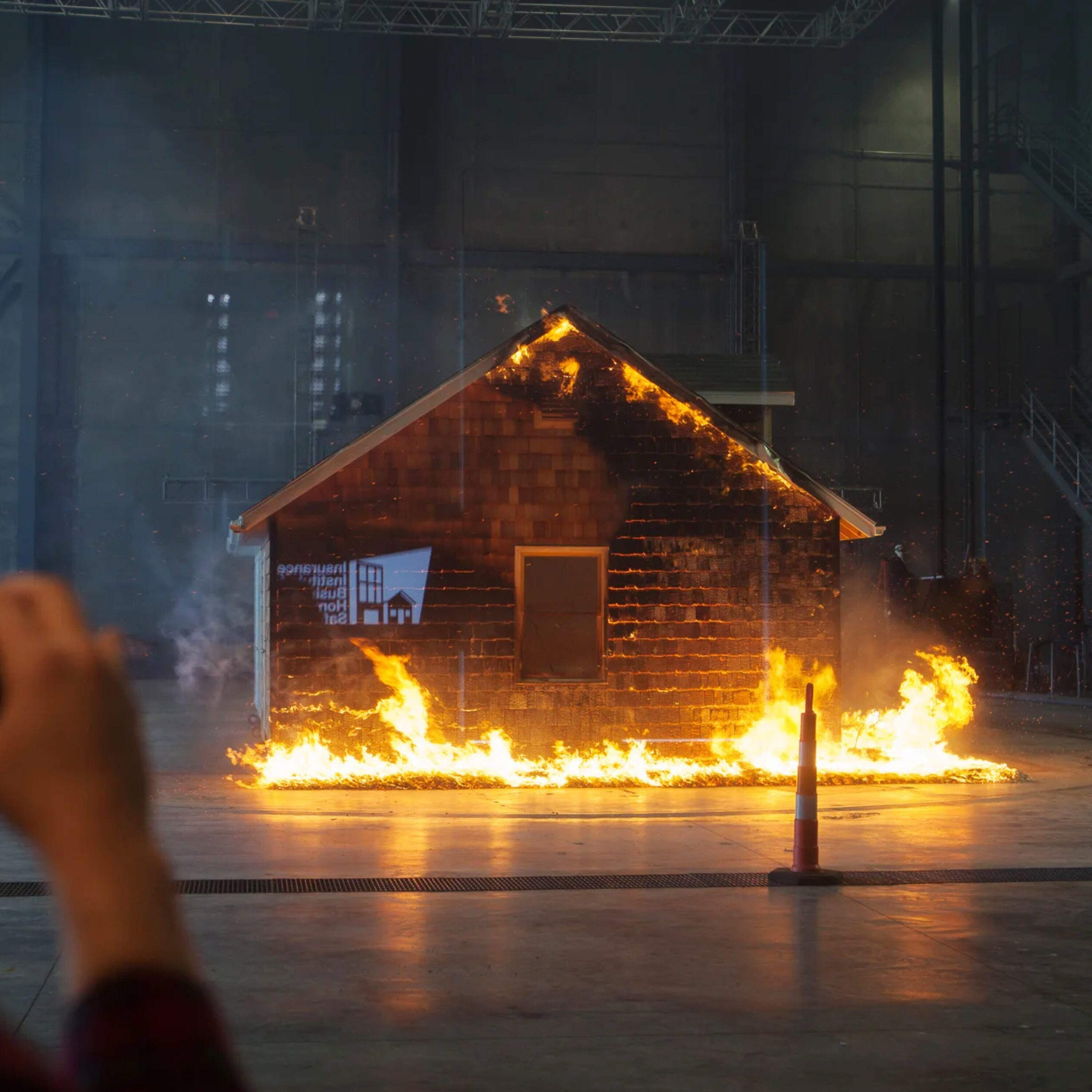
Overview of Inside the insurance industry’s destruction lab
NPR’s Planet Money explores the Insurance Institute for Business & Home Safety (IBHS), a private, insurance-funded research lab in South Carolina where engineers deliberately destroy houses, roofs, plants, and other structures to learn how to reduce losses from hurricanes, hail, fire, and wildfire. The episode shows how the insurance industry has long shaped safety standards in the background of everyday life—and how this lab is now trying to turn climate-disaster research into better building practices, lower losses, and potentially lower premiums.
What the episode is about
The story follows reporter Alexi Horowitz-Ghazi through IBHS’s “destruction lab,” where researchers simulate real-world catastrophes in controlled settings:
- giant fans recreate hurricane-force winds
- hail cannons test roof durability
- fire experiments measure wildfire risk from landscaping and building materials
- roof-aging and other outdoor test sites help scientists study long-term wear
The central question: How can insurers use science to reduce the damage caused by increasingly frequent billion-dollar disasters?
How insurance shaped the modern world
The episode traces insurance back to its roots as a system for pooling risk:
- Early marine insurance developed around shipping and trade, including Lloyd’s of London.
- In the U.S., the property-casualty insurance industry grew out of fire risk, especially in wood-built colonial cities.
- Benjamin Franklin helped found one of the first U.S. fire insurers, the Philadelphia Contributionship.
- As new technologies and hazards emerged—electricity, cars, industrial machinery, tornadoes, earthquakes—insurers funded research and safety testing to better understand and reduce risk.
A major example is Underwriters Laboratories (UL), which began as insurance-backed safety testing for electrical products and became a powerful standard-setting force. The same logic later extended to automobile crash testing, helping push changes like airbags and better headrests.
Why the destruction lab was created
Julie Rochman, a longtime insurance industry veteran and former CEO of IBHS, explains that the lab was built because climate-driven catastrophe losses were becoming unsustainable for insurers.
The industry’s concern was straightforward:
- disasters were getting bigger and more expensive
- rebuilding the same vulnerable structures over and over was costly
- insurers needed better data to price risk accurately
- they also needed ways to reduce risk, not just measure it
IBHS was founded to create a scientific basis for stronger buildings and better public policy, much like crash tests did for cars.
What the lab has learned
Hurricane and wind research
One of IBHS’s early demonstrations showed that a house built with relatively cheap added fortifications—less than 5% more cost—survived a simulated hurricane much better than a standard-code house that was blown apart.
Hail research
The hail lab tests roofing materials by firing artificial hailstones at them. This research matters because hail losses have grown dramatically since 2008 and now cost insurers tens of billions of dollars a year.
Roof and rain protection
IBHS found that simple upgrades, like adding a layer of waterproofing and sealing the roof deck, can prevent a large share of wind-driven rain damage—up to 95% in some cases.
Wildfire research
The wildfire experiments, including the burning-bush tests, helped establish several key home-hardening ideas:
- keep flammable material at least five feet from the house
- use smaller metal-mesh vents to block embers
- replace wooden fences with metal ones to avoid fire spreading from house to house
IBHS now offers a Wildfire Prepared certification to signal that a home has taken meaningful mitigation steps.
Real-world impact
The lab’s research has already influenced policy and construction in several places:
- Alabama offered grants and mandated insurer discounts for fortified roofs.
- More than 50,000 homes there have been upgraded.
- After Hurricane Sally, fortified homes were far less damaged, helping keep neighborhoods intact.
The episode frames this as a “triple win”:
- homeowners suffer less damage
- communities stay more stable after disasters
- insurers pay out less
The limits of mitigation
Even with strong building science, the episode emphasizes that insurance affordability and availability are not solved by home hardening alone.
Reasons include:
- neighbors’ properties also affect wildfire spread
- insurers may be overexposed in high-risk regions
- market-wide catastrophe risk can make entire areas hard to insure
- some homeowners who follow the recommendations still face huge premium increases or lose coverage entirely
IBHS’s engineers stress that their job is to provide credible science—not to solve every market or policy problem.
Key takeaways
- The insurance industry has long helped shape safety standards, from wiring to cars to building codes.
- IBHS is essentially a crash test lab for houses.
- Its research shows that relatively modest upgrades can dramatically reduce disaster damage.
- Climate change is making catastrophe losses more severe, pushing insurers to fund prevention research.
- Better science can reduce losses, but it cannot fully fix the broader insurance-market crisis in wildfire- and storm-prone areas.
Notable insight
The episode’s biggest idea is that insurance is not just something people buy after disaster strikes—it is also a quiet force that helps decide how things get built in the first place.