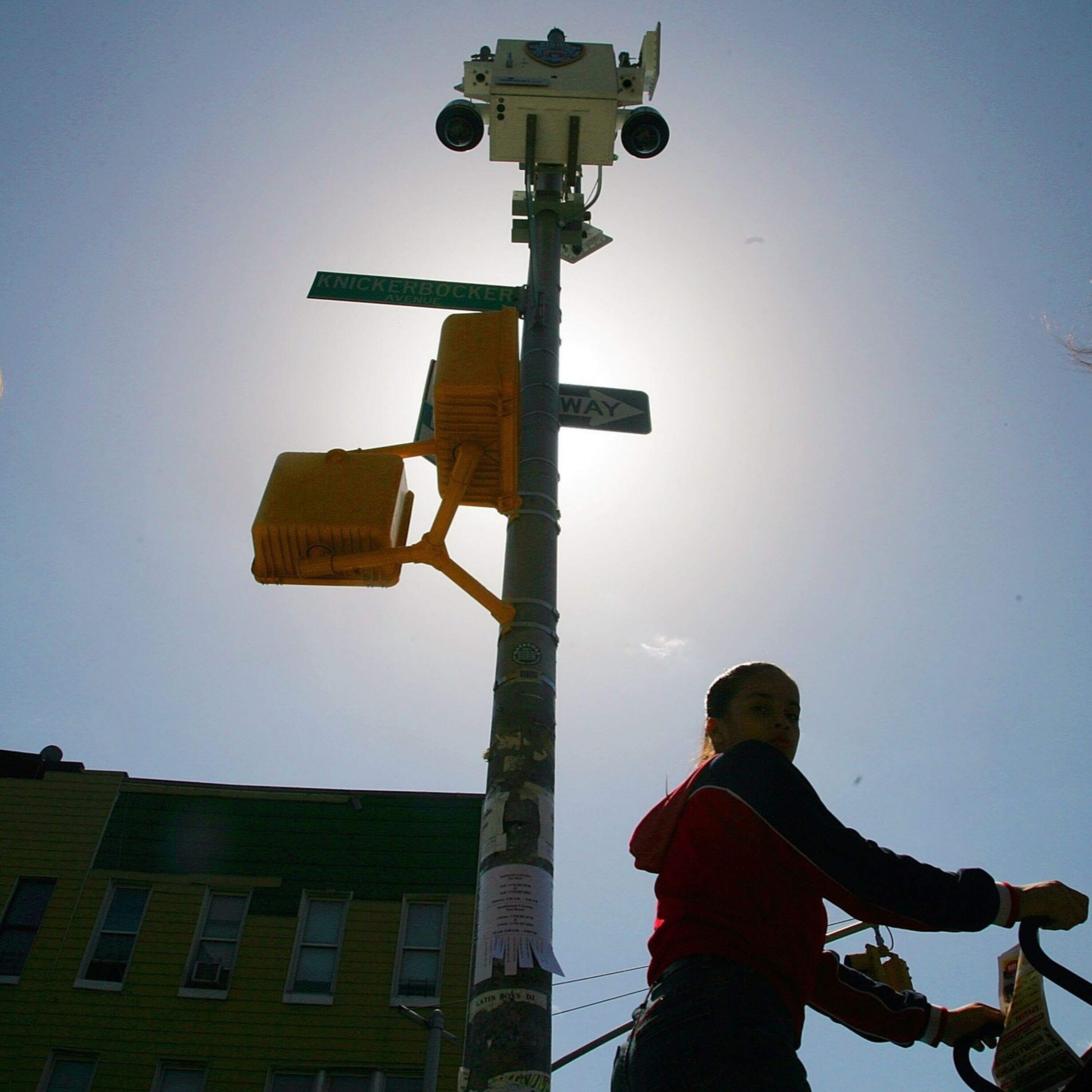
Overview of How surveillance crept up on us
This Planet Money episode from NPR examines how New York City built one of the most extensive police surveillance systems in the U.S. — largely out of public view. What started as a post-9/11 push for security and counterterrorism gradually expanded into a citywide web of cameras, license plate readers, databases, facial recognition tools, and real-time analytics accessible to NYPD officers on their phones. The episode follows Amanda Aronczyk’s personal shock while serving on a grand jury, then traces how surveillance tech spread through secretive purchasing practices, federal funding, and limited oversight — and how activists, lawyers, and city officials are now trying to force transparency.
How New York’s surveillance system grew
From old-school policing to tech-heavy monitoring
- Former NYPD captain Joe Pascarella recalls a time when policing relied more on foot patrols, radios, and people skills than on digital tools.
- In the early 2000s, more cameras were initially seen as a way to reduce aggressive stop-and-frisk policing by relying less on physical stops.
- After 9/11, the NYPD transformed itself into a counterterrorism force, using homeland security money to expand surveillance capabilities.
The Domain Awareness System
- The NYPD built a centralized platform called the Domain Awareness System (DAS), developed with Microsoft.
- DAS pulls together data from:
- thousands of cameras
- license plate readers
- 911 calls
- complaint reports
- arrest records
- warrants
- drone feeds
- biometric and facial recognition-related tools
- The system lets officers search people, addresses, and vehicle data quickly, often without a warrant.
Public-private camera networks
- The NYPD encouraged private businesses, banks, and building owners to share camera feeds.
- This model helped create a sprawling video network across the city.
- What began in Lower Manhattan became a template for other cities.
Why the system mattered so much
Faster investigations, broader reach
- The system lets police rapidly piece together video from many different cameras into a single timeline.
- Tasks that used to take detectives days can now take minutes.
- Amanda’s grand jury experience showed how police can use this network to create detailed reconstructions of crimes and suspects’ movements.
A shift from solving crime to predictive capacity
- The NYPD’s logic was that tools built for terrorism prevention could also help with ordinary crime.
- Surveillance expanded from exceptional cases to everyday policing.
- The episode suggests that this is part of a larger national trend: once the infrastructure exists, its use tends to spread.
The secrecy behind the expansion
A hidden procurement system
- A 2007 agreement allowed the NYPD to classify certain purchases as “special expenses” to avoid public scrutiny.
- This meant many tech purchases and contracts were effectively shielded from:
- City Council oversight
- public debate
- normal procurement review
- Former Comptroller Scott Stringer later questioned whether this “wink-wink, nod-nod” system was acceptable.
Civil liberties and legal concerns
- Lawyers and advocates argue that the NYPD used surveillance tools without enough transparency or legal guardrails.
- Jerome Greco of Legal Aid described cases where police seemed to locate people using opaque methods, raising questions about legality and due process.
- The episode emphasizes that without disclosure, it’s hard to know whether surveillance tools are effective, lawful, or biased.
Reform and pushback
The POST Act
- In 2020, amid protests after George Floyd’s murder, New York City passed the POST Act (Public Oversight of Surveillance Technology Act).
- The law requires more public disclosure about surveillance tools the NYPD uses or buys.
- Stringer also formally ended the old secrecy agreement.
Lawsuits and document releases
- Legal Aid sued to force the release of old NYPD surveillance contracts.
- The city said producing the records would be a “Herculean effort,” citing 165,000 pages of documents.
- So far, only a fraction of those documents have been released, but they reveal major purchases, including:
- camera systems
- biometric identification tools
- cellular tracking technologies
Broader national implications
- Public pressure is rising in other cities too, especially around Flock license plate readers and facial recognition.
- The episode argues that many police departments are still adopting surveillance tools first and setting rules later.
Key takeaways
- Surveillance in NYC expanded gradually, not all at once.
- 9/11 was the major inflection point that helped justify massive investment in police technology.
- The NYPD built a powerful integrated surveillance platform that combines video, location data, and police databases.
- Much of the system was developed in secrecy, with limited public oversight.
- Transparency advocates argue that police surveillance needs bright-line rules, not vague promises of “reasonable” use.
- AI may accelerate the problem, making it easier to process and search huge volumes of video and behavioral data.
Notable insight
“Over the past 35 years we have gone from practically no cameras in the streets to practically no streets without cameras.”
This line captures the episode’s central argument: surveillance did not arrive in one dramatic leap — it crept in through incremental decisions, secret agreements, and normalizing security logic.