Overview of Battlefield rare earths: How the U.S. lost to China
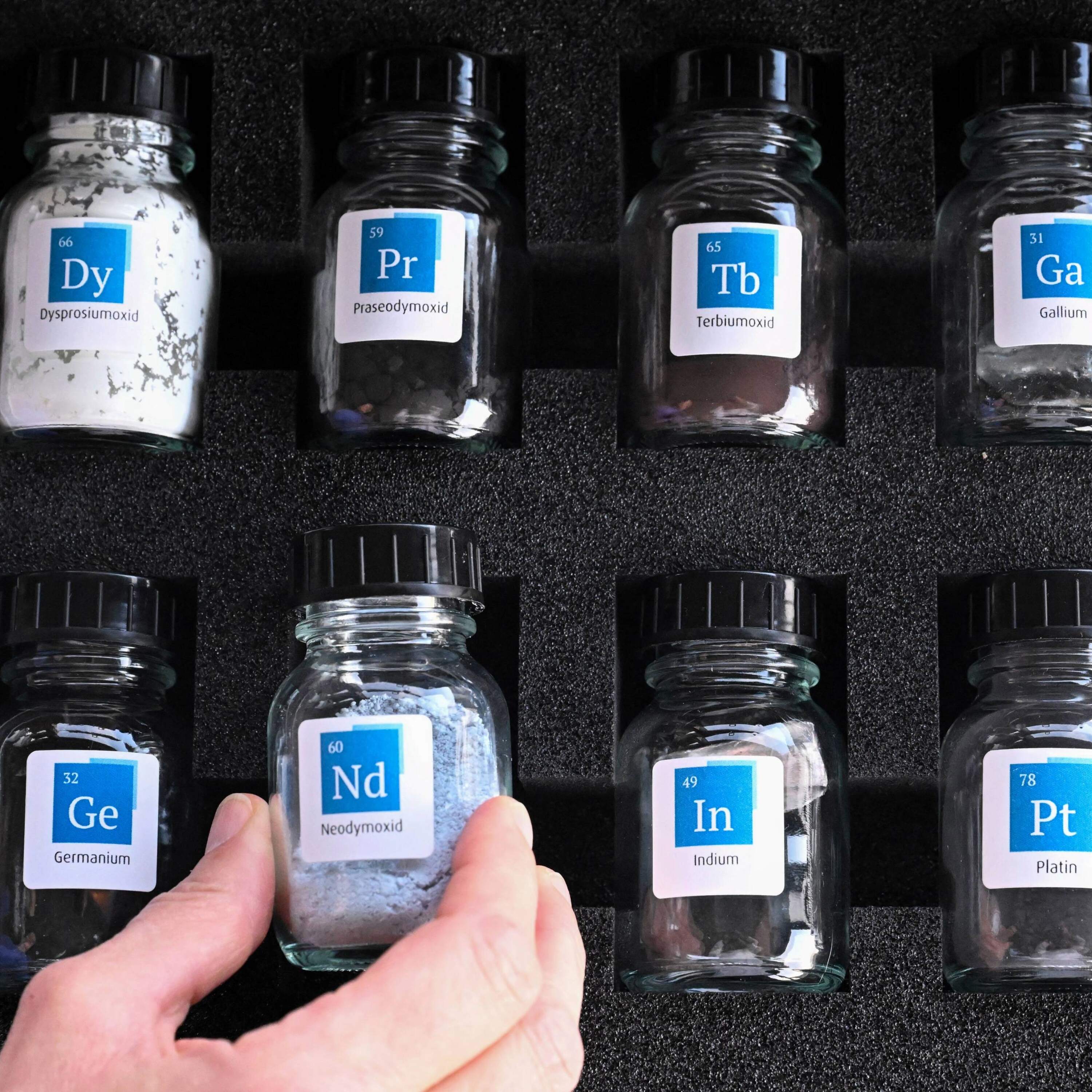
This Planet Money episode traces the history of rare earth metals from an accidental discovery in the California desert to a modern geopolitical showdown between the U.S. and China. The story centers on Mountain Pass, the rare earth mine on the California-Nevada border, and on Mark Smith, a mining executive who watched the American rare earth industry rise, collapse, and then become strategically dependent on China. The episode shows how rare earths—once obscure and commercially irrelevant—became essential to everything from color TVs to smartphones, fighter jets, and clean-energy tech, and why control of them now matters as much as control of oil once did.
The accidental discovery that started it all
Mountain Pass and the first rare earth boom
- In 1949, uranium prospectors in the desert near Los Angeles and Las Vegas used Geiger counters and stumbled onto a huge deposit of rare earths instead.
- The site became Mountain Pass, a major mine that eventually dominated global rare earth production.
- One especially important element from the deposit was europium, which was used to make the red color in early color television screens.
From obscure minerals to indispensable inputs
- Rare earths were once commercially insignificant.
- Over time, they became critical for:
- electronics
- cameras and optics
- oil refining
- military hardware
- consumer devices like smartphones
How China took over the industry
Molycorp’s early monopoly
- Mountain Pass was run by Molycorp, which had a near-monopoly on rare earths for decades.
- By the 1960s and 1970s, the company was a major American industrial asset.
China’s long-term industrial strategy
- China began paying attention to rare earths as part of a broader plan to build its manufacturing base.
- According to researcher Rod Eggert, rare earths were not the whole strategy, but a small and important piece of China’s push to become the world’s manufacturing hub.
- China’s rise was driven by:
- cheap government financing
- training scientists and engineers
- forcing ore to be refined inside China
- building the whole supply chain domestically
- tolerating lower environmental standards in the early stages
The result
- By the 1990s, China had effectively taken over the rare earth industry.
- It could mine and process rare earths more cheaply and at scale.
- The U.S. industry weakened as Chinese competition undercut prices.
The warning signs and Molycorp’s collapse
Mark Smith’s front-row seat
- Mark Smith joined Molycorp in the late 1980s and later became CEO.
- He saw demand shift and products pile up as customers increasingly bought cheaper materials from China.
The Japan shock in 2010
- In 2010, after a territorial dispute and fishing boat incident with Japan, China quietly restricted rare earth exports to Japan.
- That revealed how dependent the world had become on Chinese supply.
- Rare earth prices surged by roughly 600% to 700%, creating a brief opening for U.S. producers.
Project Phoenix
- Smith tried to revive Mountain Pass through a restart called Project Phoenix.
- Molycorp initially planned to reopen and then expand production.
- But when Smith announced plans to scale up, China flooded the market, prices crashed, and Molycorp could not sustain the business.
- The company ultimately went bankrupt and shut Mountain Pass down.
Why the episode matters now
Rare earths are strategic, not just industrial
- The episode argues that dependence on one country for rare earths is a major national-security risk.
- China’s dominance gives it leverage over global manufacturing and defense supply chains.
The U.S. response
- After new China-related disruptions and tariffs, the U.S. began treating rare earths as a strategic priority.
- The federal government has:
- poured billions into mining and processing projects
- offered grants and loans
- taken equity stakes in some companies
- explored price floors with allies like Japan, Mexico, and Europe
A new model that resembles China’s
- Ironically, the U.S. is now using state-backed investment and planning to rebuild the industry—methods that resemble the industrial policy China used to win it in the first place.
Where Mountain Pass stands today
- Mountain Pass was eventually sold to MP Materials.
- A Chinese state-linked company bought a stake in it, and later the U.S. Department of Defense took a stake as well.
- The mine has become a symbol of the new great-power competition over critical minerals.
Key takeaways
- Rare earths went from obscure geological oddities to essential ingredients in modern technology.
- The U.S. once led the industry but lost it through a mix of complacency, global competition, and China’s long-term industrial policy.
- China’s control of rare earth processing gives it real geopolitical leverage.
- The U.S. is now racing to rebuild a domestic supply chain, but analysts say it could take 5 to 10 years to fully recover.
Notable insight
“The more important rare earths become to the global economy, the more risky it becomes to be completely dependent on China for those rare earths.”
This episode’s central lesson is that critical supply chains can become strategic vulnerabilities—and once lost, they are very hard to get back.