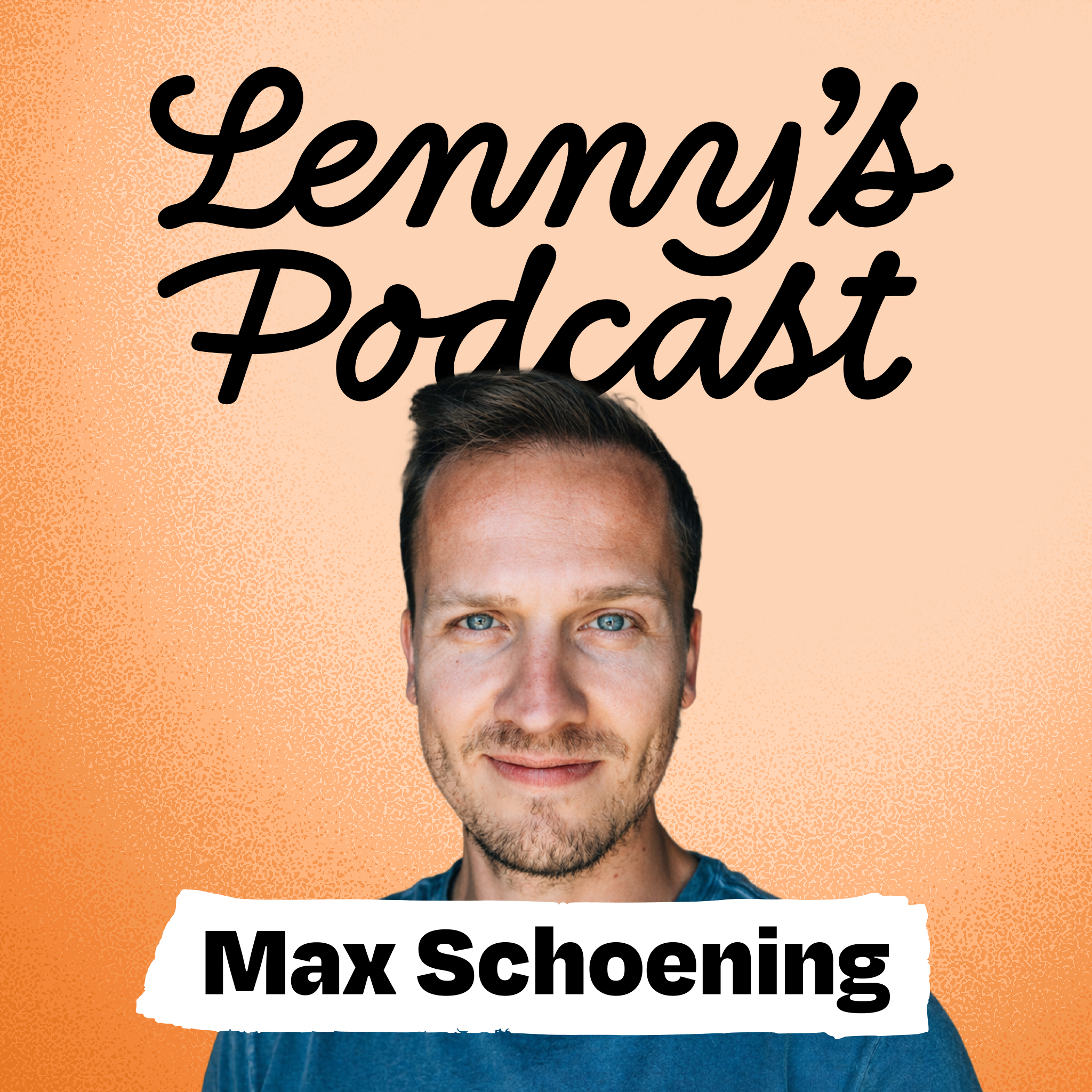
Overview of Why cultivating agency matters more than cultivating skills in the AI era — Max Schoening (Head of Product, Notion)
In this episode, Lenny Rachitsky talks with Max Schoening about how AI is changing product development, why agency matters more than raw skills, and how teams should adapt as software becomes more malleable. Max argues that AI has made the first draft of almost anything cheaper to create, which shifts the advantage toward people who are proactive, experimental, and willing to change the system around them. He also explains why he cares less about whether designers or PMs “ship code” and more about whether they understand the medium deeply enough to design better products.
Core Thesis: Agency > Skills
Max’s central belief is that AI has weakened the old excuse of “I can’t do this because I lack the skill.”
- The important differentiator now is agency: the belief that the world is malleable and that you can change it.
- People with high agency don’t wait for permission or cling to role definitions.
- He sees agency as unevenly distributed, and likely one of the biggest predictors of who thrives in the AI era.
- His advice: start making things. Making builds confidence, reveals possibility, and trains a person to act rather than defer.
Max’s mental model for agency
- “Do you drive Notion like it’s stolen?”
- Meaning: act with urgency, ownership, and a bias toward change.
- The people who succeed are those who see themselves as capable of shaping tools, teams, and processes.
How AI Is Changing Product Building
Max says AI has changed product work in a few important ways:
- The first 10% of a project is now nearly free.
- Rapid prototyping, exploring concepts, and showing a rough demo now take far less time.
- Teams can explore more ideas faster.
- It’s now easier to test multiple paths instead of spending weeks writing docs first.
- The old waterfall-style process is losing relevance.
- “Demos, not memos” is becoming even more true.
What’s changed in his day-to-day
- Less emphasis on polished PRDs upfront.
- More emphasis on creating something tangible quickly.
- More experimentation, more agent-based exploration, more iterative feedback loops.
Designers, PMs, and Engineers Are Blurring — But Not All the Way
Max strongly supports designers and PMs learning to code, but not because he cares about code landing in production.
Why he thinks coding still matters
- Coding forces people to understand the material they are designing with.
- In AI-era product work, understanding agent loops and system behavior matters more than being able to tweak CSS.
- If a designer or PM deeply understands the substrate, they can make better product decisions.
What he does not care much about
- Whether designers personally ship production code.
- Whether PMs become “mini engineers” for the sake of it.
His real concern
- People may lose the specialist edges:
- design craft
- engineering rigor
- product judgment
- He warns against flattening roles so much that teams lose depth and quality.
Malleable Software: The Big Idea
Max is a major advocate for malleable software — software that bends to the user’s needs, not just the company’s defaults.
What he means by malleable software
- Software should work more in the interest of the user than the corporation.
- Users should have more ownership and control over their tools.
- AI makes this more possible because people can now create and modify tools much more easily.
Why this matters
- Traditional apps often feel fixed and rigid.
- Malleable software allows users to adapt systems to their workflow.
- He believes the future is not “everyone builds everything from scratch,” but rather more general tools with more customization.
His analogy
- He compares rigid software to a home you cannot rearrange.
- Good software, like a good home, should be able to evolve with the people using it.
SaaS Apocalypse? Max Thinks It’s Overstated
Max pushes back on the idea that AI will destroy all SaaS.
His view
- Some SaaS products will absolutely change.
- But most people do not want to maintain a full software stack themselves.
- The real value of SaaS is often the maintenance, reliability, and specialized expertise.
What he expects
- More general-purpose tools, closer to:
- word processors
- spreadsheets
- FileMaker-style systems
- More AI-assisted customization on top of existing products.
- Specialized products will still matter for hard problems like security, compliance, and scale.
Bottom line
- The “SaaS apocalypse” is likely exaggerated.
- What will change is the balance between fixed product and user adaptability.
What Makes a Great Product
Max repeatedly comes back to one core idea: the best products usually have one tiny, exceptional superpower.
His examples
- GitHub: pull requests
- Heroku:
git push heroku master - Dropbox: frictionless sync
- Snapchat: disappearing photos
- Notion: blocks and slash commands
- Figma: seamless real-time collaboration
Why this matters
- Great products are not just a pile of features.
- Adding “one more thing” rarely makes a product finally great.
- The right approach is to identify the tiny core that feels magical, then polish that relentlessly.
Taste and Quality Still Matter a Lot
Even in the AI era, Max thinks taste is essential.
His definition of taste
- Taste is the ability to mentally predict whether a certain in-group will like something.
- It’s basically a feedback-trained judgment model.
How to build taste
- Do reps.
- Make things.
- Get feedback.
- Tinker with lots of objects, tools, and interfaces.
- Surround yourself with excellent design and well-made products.
His warning
- AI increases output, but not necessarily quality.
- The industry may produce more software without producing better software.
- He wants more of an “Apple-like” emphasis on craft, precision, and polish.
Notion’s Approach to AI
Max explains why Notion’s AI products fit especially well with Notion’s core product.
Why Notion works well with AI
- Notion is already a connected workspace with lots of context.
- Agents work better when they have rich, structured context to operate in.
- The product feels like an operating system rather than a single-purpose app.
What helped the AI agent succeed
- Early belief that AI would matter.
- Strong contextual data in the workspace.
- Automatic permissions and enterprise-grade handling.
- A willingness to build hard things, not just flashy ones.
Team Culture: More Shots on Goal, More “Obviously Good” Products
Max says great teams need more experimentation, but they also need strong quality control.
What works at Notion
- Encourage more shots on goal.
- Use fast prototyping to get something concrete to react to.
- Then consolidate and refine the idea into a simpler, stronger core.
Their quality bar
- “Obviously good” is the target.
- If a product is obviously good, users feel it immediately.
- He believes teams should avoid getting stuck in isolation trying to perfect something before showing it to users.
Hot Take: We Already Have UBI
Max’s “universal basic income” take is that we already have something like it:
- He jokingly says knowledge work is UBI.
- Most knowledge workers are already being paid well for relatively abstract computer work.
- AI may reduce the value of some of that labor over time, but humans will always find new ways to justify being in the loop.
Practical Advice from Max
If you want more agency, more taste, and better product instincts, Max’s advice is simple:
- Make things
- Tinker
- Use tools deeply
- Don’t wait for permission
- Care about the medium
- Work hard, but don’t be frantic
- Focus on what you actually care about
He also encourages people to zoom out and recognize that:
- the world is made by people,
- many of them are not smarter than you,
- and you can change things.
Books, Tools, and References Mentioned
Books
- Code by Charles Petzold
- Tools for Conviviality by Ivan Illich
- Seeing Like a State by James C. Scott
Tools / products
- Ghostty terminal
- Moshi phone app
- Corne split keyboard
- A quality pocket knife
- Notion AI
- Claude Code / Codex / similar agentic coding tools
Notable Quotes
“The thing that matters is agency.”
“Do you drive Notion like it’s stolen?”
“The first 10% of every project are now free.”
“All the great products have something tiny that is a superpower.”
“The world is made up by people no smarter than you.”
Key Takeaways
- AI is making early exploration cheaper, which rewards people with agency.
- Product roles are blurring, but craft and specialization still matter.
- Great products usually have a small, magical core.
- Malleable software is a major theme: users should be able to shape their tools.
- The future is less about replacing SaaS and more about making tools more adaptable.
- The best way to develop taste and agency is still the oldest way: build, iterate, and get feedback.