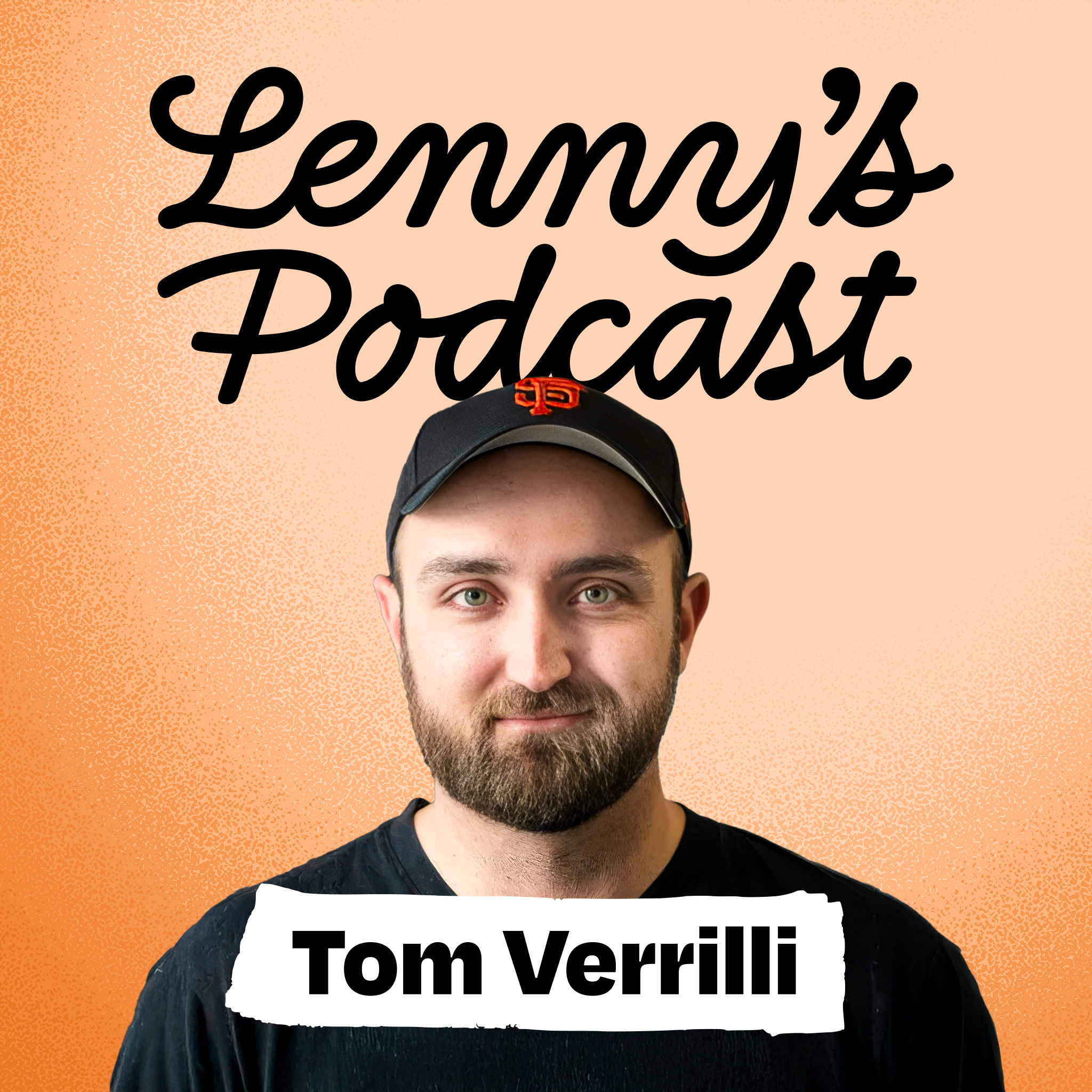
Overview of This CPO regrets that product management exists | Tom Verrilli (CPO of Whatnot)
In this episode, Lenny Rachitsky talks with Tom Verrilli, CPO of Whatnot and former product leader at Twitch and Twitter, about why he believes product management is often overused, how Whatnot runs with fewer, more senior PMs, and why the best modern product people are increasingly “ICs” again. The conversation centers on a contrarian but consistent thesis: PM should be a specialist lever, not a default staffing choice, and the strongest product teams are built when engineers, designers, and PMs all stay close to the customer, the code, and the decision-making.
Tom’s Core Thesis on Product Management
“We regret that product management exists”
Tom’s provocative framing is not anti-PM; it is anti-default-PM. His view is:
- Product management emerged as a response to scale, not because it is inherently required everywhere.
- Teams should not assume they need a PM in every pod or every problem area.
- The best long-term organizations develop the product-thinking muscles of engineers and designers, rather than over-abstracting them behind PMs.
Product management is a trade, not a credential
Tom argues that PM is a skill developed through reps:
- Good PMs get better by doing the work repeatedly.
- But if PMs do all the thinking, engineers and designers lose the chance to develop that same judgment.
- PM should be deployed where it creates leverage, not as organizational filler.
PMs can sometimes become “politics specialists”
A big theme in the interview is that many PMs over-index on:
- alignment meetings
- stakeholder management
- internal politics
- “product theater”
Tom says these skills are often rewarded in large companies, but they are not the same as truly understanding users, systems, and business tradeoffs.
How Whatnot Structures Product Work
Fewer PMs, more seniority, more autonomy
Whatnot’s product team is intentionally lean:
- Roughly 20–22 PMs for a very large and fast-growing business.
- PMs are assigned to problems, not permanently mapped to a single engineering team.
- The team regularly reassigns PMs based on the highest-priority company problems.
Planning is top-down, but execution is hands-on
Every six months, leadership defines:
- the critical outcomes the company needs
- the biggest projects required to get there
- who is accountable for each workstream
But once the priorities are set, Tom expects people to do the real work:
- digging into data
- talking to users
- understanding the codebase
- writing specs
- running reviews
- making decisions
IC work is valued at every level
At Whatnot:
- Most managers still do primarily IC work.
- Tom himself spends about half his time as an IC.
- Leadership is expected to stay close to ground truth, not just coach from afar.
What Tom Looks for in PMs
What is trending down
Tom says he is less impressed by candidates who talk mostly about:
- alignment
- stakeholder management
- keeping executives updated
- driving consensus for its own sake
He sees this as a sign of “political PM” behavior rather than product judgment.
What is trending up
The qualities he values most are:
- systems thinking — understanding how a change affects the whole business
- macro + micro thinking — seeing both the strategy and the implementation detail
- decisiveness — being able to move quickly with imperfect information
- specificity — having built or changed something concrete, not just managed legacy work
- customer understanding — knowing what users actually need, not just what they say
The best PMs are builders
Tom wants PMs who can:
- define what good looks like
- figure out the smallest useful test
- understand tradeoffs
- translate across product, engineering, design, and business needs
How to Build Systems Thinking
Tom’s advice is practical and mental-model driven:
- Ask: What happens if this experiment is green? What happens if it’s red?
- Think one or two steps beyond the immediate outcome.
- Stress-test ideas for scale, edge cases, and second-order effects.
- Don’t just ask whether something works locally; ask what breaks globally.
His internal mantra is essentially: “No, then go.”
Meaning:
- think through the risks
- understand the dependencies
- then move forward anyway
Why Tom Likes the Move Back to IC Work
Tom is excited about the modern shift away from PMs as purely managerial coordinators and toward PMs as actual doers.
What changed
Older product orgs often rewarded PMs by promoting them into broader management roles:
- Director
- Group PM
- VP
But that often meant moving people away from the work they were best at.
Why he prefers the IC model
He argues that senior PM ICs can:
- make faster decisions
- stay close to the product reality
- reduce layers of alignment
- improve the quality of tradeoffs
- keep leadership aware of actual customer and system behavior
This is part of why he likes the Anthropic-style model, where senior people often remain hands-on.
AI’s Role in Changing Product Work
Tom is clear that AI is not the sole cause of the shift, but it massively amplifies it.
AI makes high-quality IC work more scalable
AI now helps product people:
- query data faster
- inspect codebases directly
- build rough sensitivity models quickly
- spot regressions and weird interactions earlier
- prototype more rapidly
AI reduces dependence on intermediate specialists
Instead of going to multiple people for answers, a skilled PM can now:
- inspect the data themselves
- talk directly to the code via AI tools
- validate assumptions more quickly
- spend less time waiting on support roles
But AI also raises the bar
Because the tools are so powerful, Tom believes people are now responsible for:
- better judgment
- deeper context
- more rigorous analysis
In his view, AI does not eliminate product judgment; it makes real product judgment even more valuable.
What the Team Actually Looks Like at Whatnot
Product team structure
Whatnot is organized around broad company areas:
- buyer
- seller
- trust and risk
PMs are not rigidly locked to teams forever. Instead, leadership assigns them to the most important problems in the next planning cycle.
Cross-functional ownership
Tom emphasizes that:
- engineers, designers, and PMs can all take on product ownership
- problems are assigned based on need and fit
- if a priority emerges without an owner, a PM may be assigned to it
Advice for PMs and Leaders
If you want to stay relevant, do the work
Tom’s advice to struggling PMs, directors, and senior folks:
- get back into the basics
- take on real IC work
- sharpen your judgment
- stay close to customers and systems
Don’t overvalue theater
He argues that many PMs have been rewarded for:
- polished presentations
- frameworks
- strategy docs
- communication discipline
But the real craft is deeper:
- understanding the business
- understanding the user
- understanding the tech
- making good decisions with incomplete information
Debug with leadership, not around leadership
In founder-led companies, Tom says the CPO’s job is not to compete with the founder on vision. It is to:
- translate vision into execution
- push with curiosity
- use data when available
- seek truth rather than winning arguments
Lessons from Twitter and Product Failure
Twitter’s strongest lesson: product-market fit is real
Tom says Twitter taught him that when a product truly has product-market fit:
- the love is obvious
- the network effects are powerful
- even bad organization cannot fully destroy it
The second lesson: many “hard” problems are really leadership failures
He points to long-standing Twitter issues, like the 140-character limit, as examples of:
- obvious decisions getting delayed
- too many working groups
- too little ownership
- leadership avoiding calls that should have been made
His biggest career mistake
Tom says his most common mistake is relying too much on averages.
- An average metric can hide the fact that a small group of users relies on something critically.
- Removing or degrading a feature based on aggregate data can blow up a real user segment or business use case.
- He prefers being guided by anecdotes and edge cases when they reveal important truth.
Notable Quotes and Memorable Ideas
- “We regret that product management exists.”
- “Product management is a trade, not a qualification.”
- “Hiring so many PMs infantilizes engineers and designers.”
- “No, then go.”
- “Play the accordion.” — zoom out to understand the problem, then zoom back in to act, then repeat
- “Batting 500 is the goal.” — you should expect to be wrong often, but not carelessly
Other Highlights
Why Whatnot is different
Tom describes Whatnot as a place where live commerce enables:
- immediate user feedback
- rapid product changes
- real-time seller needs
- unusually tight loops between customer, product, and engineering
He shares an example of engineers changing an auction timer in real time while watching a seller’s show live.
A surprising Whatnot purchase
Tom’s favorite recent Whatnot purchase was a live California spiny lobster, shipped overnight from a live-streamed seafood seller in San Diego.
Bottom Line
Tom Verrilli’s worldview is that modern product teams should be smaller, sharper, and much closer to the work. PMs still matter, but the best PMs are not meeting facilitators or alignment brokers — they are builders, analysts, and decision-makers who can operate with engineering and design at a deeply hands-on level. In an AI-enabled world, that kind of product judgment becomes even more valuable.
If you want, I can also turn this into:
- a shorter TL;DR version
- a bullet list of actionable takeaways for PMs
- or a tweet/thread-style summary.