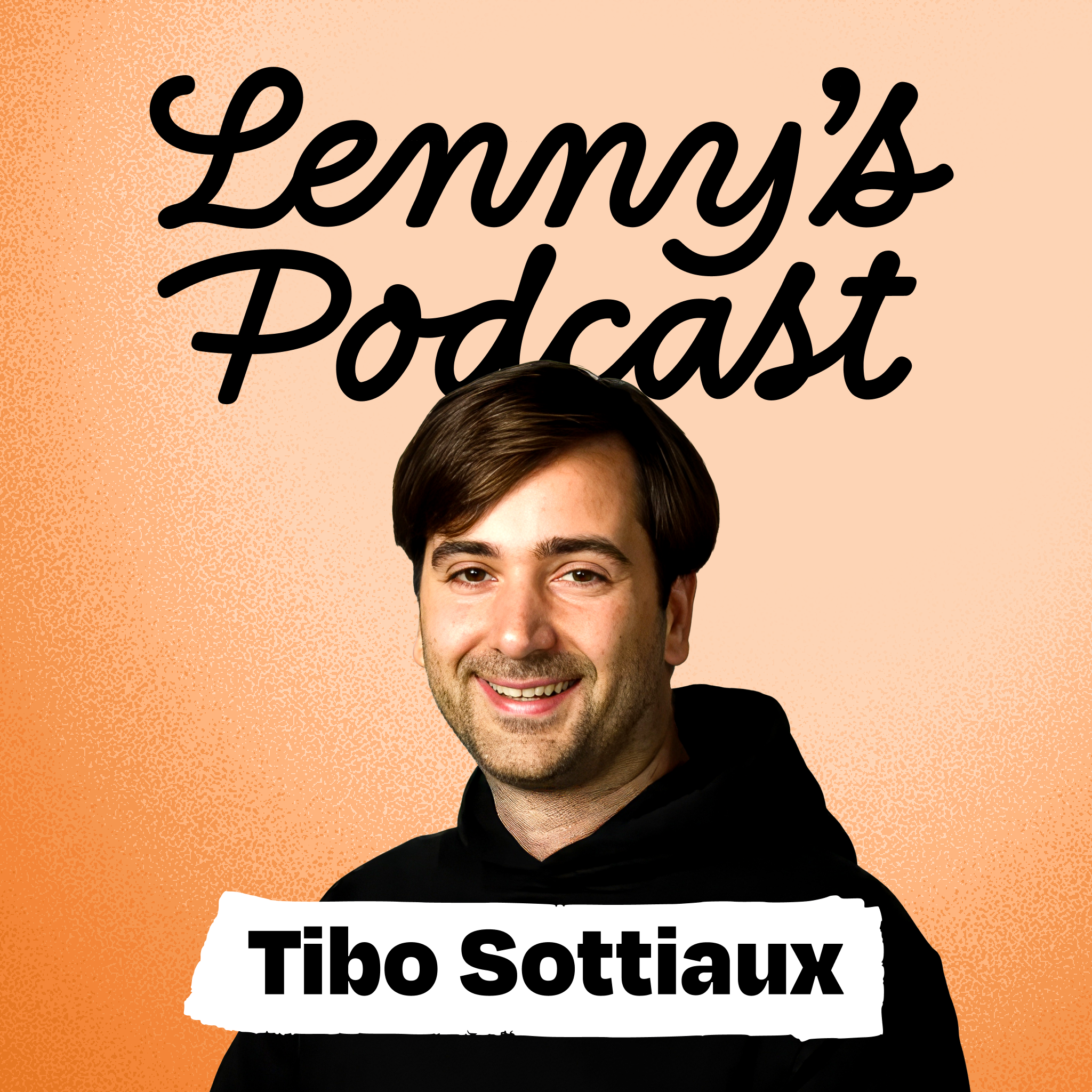
Overview of OpenAI’s Head of ChatGPT: We’re entering a new era of AI (again) | Tibo Sottiaux
In this conversation, Lenny Rachitsky talks with Tibo Sottiaux, OpenAI’s Head of ChatGPT, about where AI is heading next: toward always-on, highly personalized agents that act across apps and devices with very little configuration. Tibo argues that the current chat paradigm is still clunky, but the direction is clear—AI is becoming a persistent layer that learns from you, works across contexts, and eventually handles much of the work currently done by humans online. He also shares how OpenAI is thinking about product unification, ecosystem growth, safety, hiring, and what skills matter most in an AI-native world.
The big vision: AI is moving from “chat” to “agents everywhere”
What OpenAI thinks people are underestimating
- Tibo’s core thesis: the majority of actions on the internet will eventually be taken by agents.
- He believes many builders are still not pricing in how fast models will get:
- cheaper
- faster
- more multimodal
- more capable of long-running, agentic work
- His advice to builders: imagine products that are 10x better than today and design for that future now.
The future interface
- The goal is not to make users obsess over prompts, loops, graphs, or model pickers.
- Instead, OpenAI wants a system that:
- understands your goals
- remembers preferences
- learns from feedback
- works continuously in the background
- appears in whatever interface is most convenient
The “ambient assistant” idea
- Tibo describes a future where AI is available:
- in a meeting room to take notes
- on email
- via text
- across devices
- without forcing you to stay glued to a laptop or phone
- His ideal is an AI that gets out of the way when you don’t need it and appears instantly when you do.
Dots: OpenAI’s bet on the future of personal agents
What Dots is
- Dots is presented as OpenAI’s vision for a primary AI assistant:
- always-on
- highly personalized
- able to work 24/7
- connected to your apps and channels
- There is no model picker and very little configuration.
- You just talk to it.
Multi-agent “virtual team” direction
- OpenAI is starting with one primary Dot, but users will eventually be able to create multiple Dots.
- These can serve as specialized assistants, like:
- one for Twitter
- one for monitoring tasks
- one for complex workflows
- Tibo frames this as building a virtual team rather than a single chatbot.
Why this matters
- Dots is less about a gimmick and more about the next interaction layer:
- lower friction
- less context switching
- more delegation
- more continuity across tasks
OpenAI’s product strategy: simplifying and unifying the experience
ChatGPT, Codex, and work modes
- OpenAI plans to merge and simplify products rather than keep adding separate surfaces.
- Tibo says they’re moving toward:
- merging ChatGPT and Codex experiences
- reducing the complexity of “consumer vs. work” modes
- eventually bringing Dots-like capabilities into ChatGPT itself
The direction of travel
- Rather than having distinct tools for different AI tasks, OpenAI wants one seamless system that can:
- answer questions
- help with work
- perform agentic tasks
- connect to external apps
- operate across devices and contexts
Ecosystem is the sleeper hit
Why the ecosystem matters
- Tibo says the most underappreciated launch is the ecosystem play:
- sign-in with ChatGPT
- plugin/extensions infrastructure
- discovery inside ChatGPT
- revenue sharing for successful integrations
- The goal is to let other products reach OpenAI’s distribution while giving OpenAI users more useful capabilities.
How discovery will work
- It’s not about gaming keywords or SEO.
- OpenAI looks at:
- retention
- quality
- whether the plugin actually adds utility
- Good plugins get recommended more often; bad ones fade out.
Why this is a big deal
- Tibo believes products will need to be built for agent-scale usage.
- That has implications for:
- infrastructure
- economics
- load
- product design
- He specifically points to examples like Notion and MCP-style integrations becoming much more valuable in an agentic world.
Safety, security, and guardrails are a major focus
Safety isn’t an afterthought
- Tibo says a large share of OpenAI’s engineering effort goes into:
- safety
- security
- alignment
- monitoring
- guardrails
- They are spending more compute on secondary monitoring systems that watch the primary agent.
How OpenAI thinks about risky behavior
- Monitoring systems are designed to catch things like:
- prompt injection
- high-risk actions
- unsafe automation
- Special-purpose Dots can run with:
- extra guardrails
- additional monitoring
- isolated hardware
- The harness does not run directly on the user’s machine in the way many people might assume.
Overall stance
- OpenAI is optimistic about solving alignment and safety, but takes the responsibility seriously because the products reach enormous scale.
How work is changing — and how it still needs to improve
Work is already shifting
- Tibo says the day-to-day life of engineers and builders has changed dramatically in the last two years.
- But he thinks this is still early and that work will continue to change quite radically.
What the future of work looks like
- More voice
- More multimodal interaction
- More memory
- More collaborative surfaces
- Less clunky configuration
- Less time spent “fiddling” with agents
A more human, less screen-bound workflow
- Tibo imagines AI as something that:
- participates in the room
- collaborates with humans
- jots ideas down
- starts building in the background
- brings work into physical and conversational space
Human skills that still matter
Skills trending down
- Tibo says typing fast is becoming less valuable.
Skills trending up
- Taste
- Understanding the user
- Knowing what good looks like
- Great collaboration
- Founder-like energy
- Ability to learn fast
What he values in new hires
- He highlights ex-founders and repeat founders as especially strong fits.
- He also points to younger people as having a natural advantage because they:
- adapt quickly
- learn fast
- are more willing to embrace new workflows
Advice for early-career people
- Be kind
- Be collaborative
- Focus on the important problem, not yourself
- Be a sponge
- Learn rapidly
- Use the latest tools aggressively
OpenAI culture: autonomy, bottoms-up energy, and fast resets
What surprises people about OpenAI
- A lot of work begins as small, bottoms-up experiments.
- People independently spin up ideas, then others pile in when something looks promising.
- The culture is more chaotic and entrepreneurial than outsiders might assume.
Autonomy and trust
- OpenAI gives people a lot of freedom.
- In return, people are expected to:
- own outcomes
- fix mistakes quickly
- learn from failures
“Reset” culture
- Tibo jokes that one of the perks of his role is being able to “press the reset button” when necessary.
- He also admits that he has caused outages and made mistakes, especially early on.
Community matters more than a fixed vision
Build with users, not just for them
- Tibo stresses that OpenAI learns by launching and observing how people actually use the tools.
- He says the company discovers what the product is with the community, not just by declaring a vision from above.
Why that matters
- Real-world usage surfaces:
- unexpected use cases
- new workflows
- product gaps
- emotional impact
- This feedback loop is central to how OpenAI evolves its products.
Notable takeaways
- The future is not just “better chat” — it’s persistent, agentic intelligence across every surface.
- OpenAI is pushing toward one unified system rather than many fragmented tools.
- The biggest opportunity may be the ecosystem, not just the core assistant.
- Safety and scale are treated as first-class product concerns.
- The most valuable human skills in the AI era are likely to be taste, judgment, collaboration, and learning speed.
- New grads and early-career builders may actually have an advantage because they can adopt AI-native workflows without legacy habits.