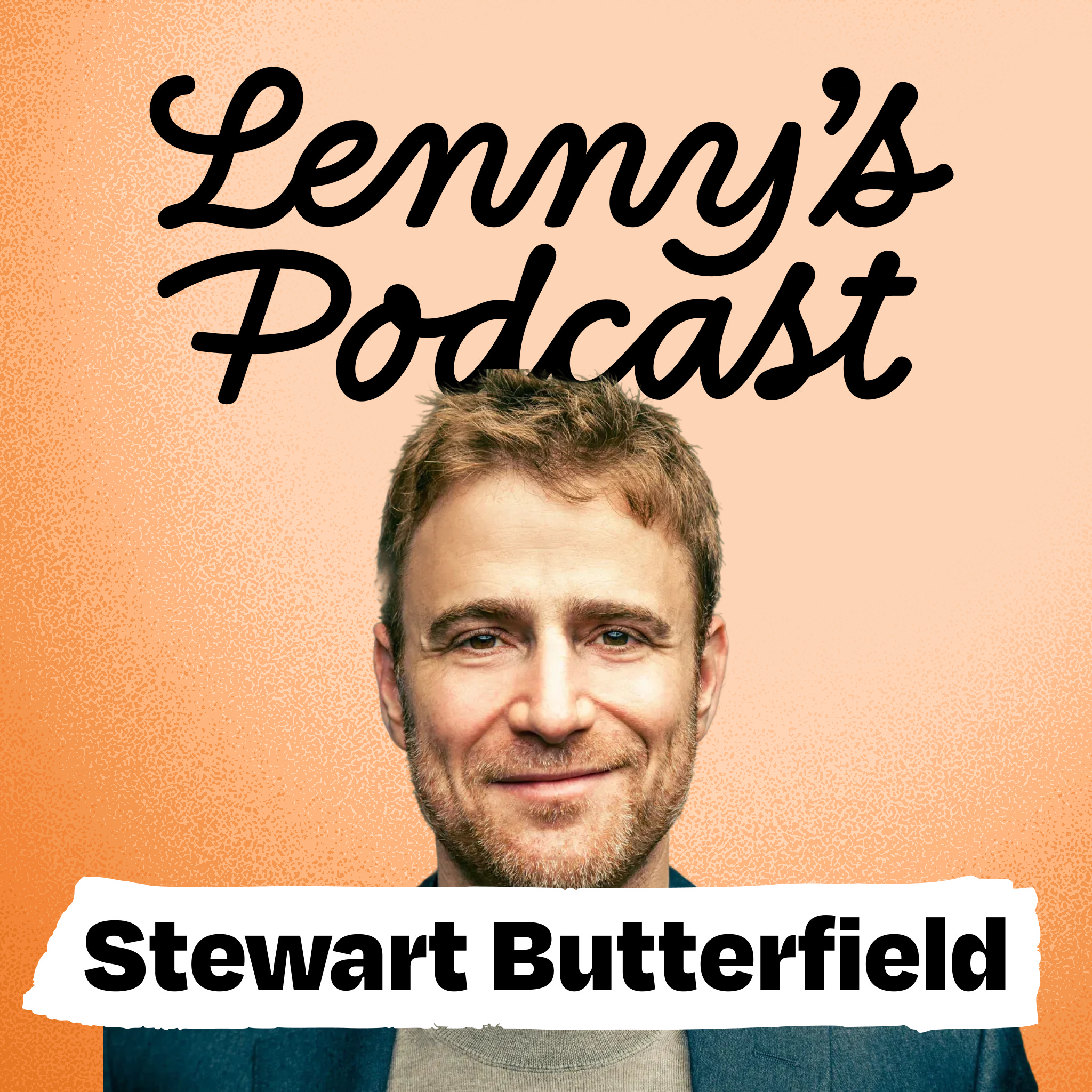
Overview of Slack founder: Mental models for building products people love (ft. Stewart Butterfield)
Episode: Lenny Rachitsky interviews Stewart Butterfield (Flickr, Slack) about product craft, leadership, and mental models he used to build beloved products. The conversation covers practical frameworks (utility curves, owners’ delusion, Parkinson’s law), concrete product design lessons (magic links, notification defaults, “don’t make me think”), organizational dynamics (hyper‑realistic work‑like activities), pivot decisions, and the role of generosity in leadership. Packed with examples and war stories, the episode surfaces repeatable principles for product teams and leaders.
Key takeaways
- Utility matters in non‑linear ways: small investments often yield no value until a threshold—invest on the rising part of the S‑curve (the "aha") to create product stickiness.
- Comprehension > raw friction metrics: reducing clicks is often the wrong objective. The real goal is to minimize user thinking and clarify “what is this?” and “what do I do next?”
- Taste and craft are sustainable advantages: many competitors ignore details; shipping thoughtful small conveniences builds emotional advocacy.
- Leaders must prevent “hyper‑realistic work‑like activities”: lots of meetings and visible work can masquerade as value. Leaders have to supply real, aligned work and say “no.”
- Pivot rationally: exhaust realistic options and then make a cold, intellectual decision—pivots are painful and often humiliating, so handle them deliberately.
- Generosity pays off: fair policies, empathetic treatment of employees and customers, and creating real value are both ethical and strategic advantages.
Mental models & frameworks
Utility curves (S‑curve)
- Visualize value (y) vs cost/effort (x). Early effort gives almost no value; after a threshold the value ramps steeply; then diminishing returns.
- Use the curve to decide whether a feature deserves more investment (are you on the rising slope?) or should be abandoned (you’re on the flat tail).
Don’t make me think (reduce cognitive load)
- The user’s cognitive cost is real — it burns metabolic and emotional energy. If the UI forces users to pause and decide, you risk making them feel stupid and losing them.
- Design to prevent thinking: clarify affordances, highlight the next action, preset sensible defaults, and surface the most common choices.
Friction is not always bad
- Friction as a raw metric (fewer taps) is misleading. Where intent and specificity are high (e.g., buying a ticket), friction matters less. Where comprehension is low, the focus should be on explaining and guiding, not shaving clicks.
Owner’s delusion
- Creators/founders often assume their priorities are the user’s priorities (e.g., flashy media, Ken Burns photos, non‑clickable phone numbers). Call this the "owner’s delusion" — you must evaluate your product through a regular person’s lens.
Parkinson’s law & organizational incentives
- Work (and headcount) expands to fill available time/resources. People naturally create more roles and work; managers tend to hire direct reports.
- Leaders must intentionally constrain and prioritize; otherwise the org will drift into busy, non‑valuable activities.
Hyper‑realistic work‑like activities
- Meetings and artifacts that look like work but don’t create value (deck pre‑reviews, endless A/B analysis for tiny deltas). They are easy to perform and consume huge resources.
- The leader’s job is to create clarity on valuable work and say no to the rest.
Concrete examples & product stories (what Stewart did at Slack)
- Magic links: removed password typing on mobile—enter email, receive a link that opens/authenticates the app. A frictionless auth pattern Slack helped popularize.
- Notification defaults: initially forced per‑message notifications for new users (to avoid early confusion), then prompted users to switch to recommended quieter defaults after they’d experienced Slack.
- Shouty rooster: when someone used @everyone/@channel, Slack warned with a playful rooster and explicit message about how many people/timezones would be affected — reduced abuse of global pings and taught better norms.
- Do Not Disturb rollout: complex, multi‑layered default system—org admins could set defaults, users could override, admins could later change defaults—designed to avoid administrative blowback while enabling useful sleep controls.
- Critiques of other products: Google Calendar’s timezone picker and Gmail actions/menu layout used as examples of poor comprehension and discoverability.
- UX rhythm example: Snapchat’s fast, fluid interactions (teens tapping many times/second) show that reducing taps could actually ruin some experiences.
Leadership, culture & generosity
- Chant/motto at Slack: “In the long run, the measure of our success will be the amount of value that we create for customers.” This framed decisions toward genuine customer value.
- Generosity in practice: examples include fully paid employee health insurance, employee‑friendly acquisition and direct listing, proactive credits during outages/COVID, fair billing (not charging for unused seats), and personally supporting employees during layoffs.
- Game‑theoretic view: generosity signals cooperation and builds reciprocal culture; it’s both ethical and strategically beneficial.
On pivoting
- Pivot only after exhausting realistic, non‑ridiculous options to make the original idea work.
- Create intellectual distance to evaluate choices coldly — emotional attachment can bias decisions.
- Recognize pivot costs: community members, employees, reputation; treat transitions seriously and empathetically.
Notable quotes (concise)
- “Don’t make me think.” — Replace friction metrics with reducing cognitive load.
- “In the long run, the measure of our success will be the amount of value that we create for customers.”
- “If you can’t see almost limitless opportunities to improve, you shouldn’t be designing the product.”
Actionable recommendations (for product leaders & teams)
- Map utility curves for key features: identify where you are (junk → rising → plateau) before investing or cutting.
- Prioritize comprehension in onboarding and core flows: make the product readable, show the next action, and use guided defaults.
- Use defaults proactively: people rarely configure; pick thoughtful defaults that protect users’ time and attention.
- Design to minimize thinking, not clicks: chunk menus, show 2–3 primary actions, put “other” behind secondary navigation.
- Build delightful small conveniences (the umbrella metaphor): small thoughtful details create emotional advocates.
- Audit for owner’s delusion: have uninvolved users test whether the product communicates its purpose and actions clearly.
- Eliminate hyper‑realistic work‑like activities: leaders must align priorities, create a supply of valuable work, and explicitly say “no” to busywork.
- When considering a pivot: list all realistic fixes, estimate expected value & cost, and make a dispassionate decision once you’ve exhausted those paths.
- Lead with generosity where sustainable: fair policies, transparent handling of outages and layoffs, and customer‑centric decisions build long‑term trust.
Further reading / resources mentioned
- “Don’t Make Me Think” (UX classic)
- “Positioning” (marketing classic)
- Parkinson’s original Economist article (work expands to fill available time)
- Stewart’s “We don’t sell saddles here” memo (internal Slack memo turned public guidance on selling outcomes vs features)
If you want, I can convert these recommendations into a one‑page checklist for product reviews or a template for running feature utility‑curve analyses.