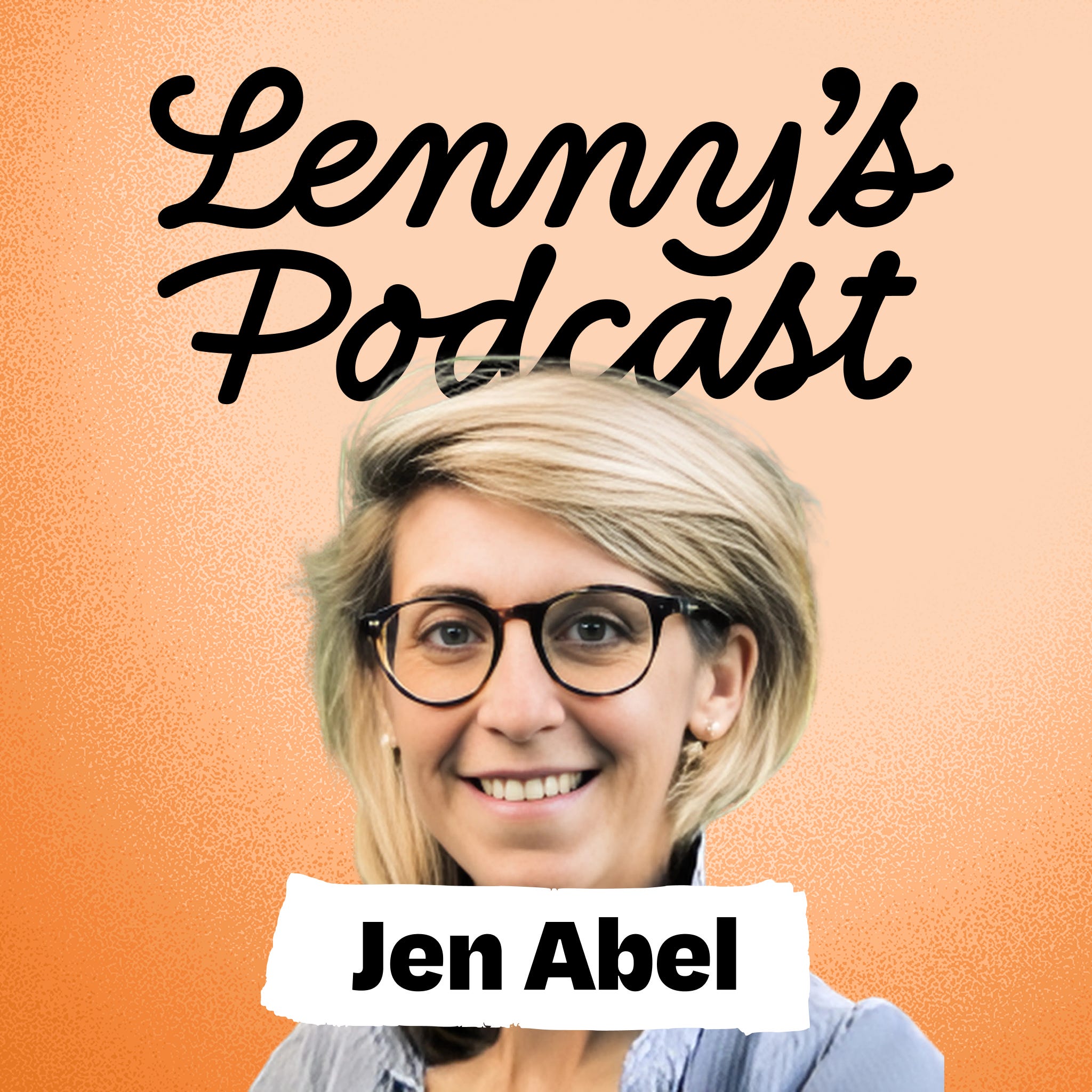
Overview of "Sell the alpha, not the feature": The enterprise sales playbook for $1M to $10M ARR (Lenny Rachitsky with Jen Abel)
This episode is a tactical, founder-focused playbook for going from ~$1M ARR to $10M ARR via enterprise sales. Jen Abel (co‑founder of Jellyfish, now GMF Enterprise at State Affairs) argues founders should sell opportunity/alpha (vision) not features/problems, pick a clear market (SMB vs enterprise — there is no “mid‑market”), price and structure deals for enterprise economics ($75–150K ACV), land with services/design partners, and treat enterprise sales as creative deal‑crafting driven by relationships and founder-led vision.
Key principles and frameworks
Sell the alpha (vision/opportunity), not the feature/problem
- Leaders buy opportunities and differentiation — show how your product makes them “superheroes” (Kathy Sierra’s “sell Mario on blast” metaphor).
- Frame the conversation as: “Here’s how you will be different tomorrow because of what we do today” (access to unique data, speed, talent, etc.).
- Problem‑selling (feature, technical list) is transactional and makes you a comparison; vision‑selling makes you strategic.
The mid‑market “doesn’t exist”
- Don’t treat SMB / enterprise as a continuum. Pick a game:
- SMB = marketing‑led, low ACV, product/usage focused.
- Enterprise = sales‑led, high ACV, relationship driven.
- Most “mid‑market” thinking is actually lower‑end enterprise or upper SMB — mixing games loses.
Go after tier‑one logos early (counterintuitive)
- Big, number‑one companies (Walmart, McDonald’s, Nvidia, etc.) are often early adopters because they must protect market leadership.
- Tier‑one logos give referenceability, pull roadmap, and accelerate growth more than “easier” small customers.
Price to enterprise economics (75K–150K ACV range)
- Enterprises are used to land+expand spends in this band; starting too low (10K) can anchor you, make expansion hard, and attract the wrong deals.
- If you must land lower, have a clear, defendable path to expansion and plan for rapid moves to higher ACV.
Services and forward‑deployed work as a foot in the door
- Enterprises buy services; selling a service (human + software) is a fast way to build trust and then convert to product.
- Examples: Palantir / forward deployed engineers, early AI vendors educating CTOs, consultancies introducing startups.
Design partners: use carefully, set framing
- Choose tech‑savvy, experimentation‑friendly design partners (often the best early partners).
- Offer concessions but set expectations: discount as a reward for “day‑one” partnership and make future pricing/expandability explicit.
- Founder must decide what to build: take feedback but don’t be pulled into legacy workflows that derail your vision.
Enterprise sales is art — deal crafting over playbooks
- Every enterprise deal will be slightly different; creativity, co‑authoring contracts/pricing, and relationship work win.
- Give away things that are cheap for you but valuable to them (custom integration, spotlight at events) to create asymmetric value.
Qualification rigor — "No" is valuable
- Treat “no” as data. Don’t spend cycles on lukewarm prospects. Ask direct questions early to avoid wasting time.
- Executive sponsorship matters — without it you will get stuck in procurement.
Manual, highly personalized outbound > mass automation for big deals
- For $100K+ deals, manual hunting and customized outreach (read the person/company signal and tailor the frame) outperforms templated AI blasts.
- AI/sequence tools often hit the same databases; find the backdoors and be human.
Tactical playbook — what you can do tomorrow
- Decide the game: explicitly pick SMB (marketing/PLG) or enterprise (sales/relationship). Stop targeting a fuzzy “mid‑market.”
- Reframe one core outreach message from “problem → feature” to “vision → alpha.” Write a 3‑sentence, counterintuitive subject line + one‑line pitch that articulates the opportunity.
- Identify 5 tier‑one logos that would materially change your GTM story if won. Map the exec(s) who would care about the opportunity you sell.
- Run one “service + product” pilot offer for a strategic prospect: scope services, price as a contrac t that escalates into product adoption in year 2.
- Design partners: pick 2–3 tech‑savvy partners, set framing and future pricing (e.g., 30% perpetual concession), and document the 6–12 month roadmap.
- Set a target ACV band (75–150K). If currently below, build a 3‑month plan to raise average deal size and the executive involvement needed.
- If hiring first salesperson: start the search now (around $1M ARR), hire 2 people to compare, and evaluate “can they cosplay the founder?” (vision, credibility, hunger).
Hiring & comp specifics
- When to hire: roughly around $1M ARR and after 7–10 customers when patterns are repeatable.
- Profile for the first enterprise rep:
- Not necessarily a traditional enterprise VP from a big brand (brand reps rely on brand trust).
- Look for people who can “cosplay the founder”: sell vision, be creative, build trust with executives.
- Good fits: ex‑founders, product/engineer background who can think like the customer, or highly unusual sales talent.
- Comp template:
- OTE split ~50% base / 50% variable.
- Commission in tech deals generally ~8–12% of deal value (rough rule; structure by ARR/ACV).
- Hiring tip: hire two reps so you can compare and account for high attrition/failure rate.
Pricing & packaging recommendations
- Target initial enterprise land deal: $75K–$150K (or service arrangement that nets to that).
- If you land at $10K, have a clear, defendable expansion plan (and pricing justification) — otherwise you’ll be anchored.
- Co‑author pricing with the customer for big deals: create options (smaller year‑1 + step‑up in year‑2) so they can go to bat internally.
- Always document and communicate the step change in value (why paying 10x makes sense).
Prospecting & outreach (tools and methods)
- Prefer manual, human outreach for high ACV deals: read signals (role tenure, posts, news), craft tailored subject lines, and keep messages short (3 sentences).
- Avoid generic “growth X%” hooks; use a counterintuitive insight or a concrete, differentiated promise that signals alpha.
- Use services/forward‑deployed work or bespoke pilots as an entry strategy to build relationships and trust.
- AI/sequence tools are useful at scale for SMB; for enterprise, they create noise — be the backdoor, not the front door.
Common pitfalls to avoid
- Playing both SMB and enterprise without distinct GTM — ends up losing both.
- Landing customers at low price points and then trying to scale them to enterprise pricing without a defendable value step.
- Hiring the “brand VP” from a large company too early — they expect brand to do the selling and may not be suited to founder‑level hustle.
- Over‑customizing product for one client (turning into a bespoke consultancy) without guardrails and pricing to reflect the work.
- Letting procurement and junior buyers lead the process — always involve an executive sponsor.
Notable quotes / soundbites
- “Sell the alpha, not the feature.”
- “The mid‑market does not exist — pick SMB or enterprise.”
- “If you become one of three they're testing, you've already sort of lost.”
- “No is the best answer because it's data.”
- “You need people that can cosplay the founder.”
Actionable checklist (quick)
- Choose your GTM game: SMB vs enterprise — write it on the whiteboard.
- Set an ACV target band (75–150K) and define 3 deal structures to land in that range.
- Identify 5 tier‑one logos you’ll pursue; map decision makers and an intro plan.
- Prepare a 1‑page vision pitch (3 sentences) for outbound.
- Plan one “service → product” pilot with framing and year‑2 pricing.
- Begin hiring process for first enterprise rep (hire two; 50/50 comp).
Where to go next
- Revisit Jen’s prior episode (founder‑led sales, zero → $1M ARR) for the earlier stage playbook.
- Learn more about Jellyfish (Jen’s consultancy) if you want hands‑on help with founder→enterprise transitions.
- Resources mentioned in the episode: Lenny’s newsletter, and tools/services referenced (WorkOS, Coda, Lovable) for enterprise readiness and team productivity.
This summary condenses the episode’s tactical guidance for founders scaling from ~$1M to ~$10M ARR through enterprise GTM — focusing on vision‑selling, the right customers, enterprise pricing, services as entry, creative deal crafting, and hiring the right sales muscle.