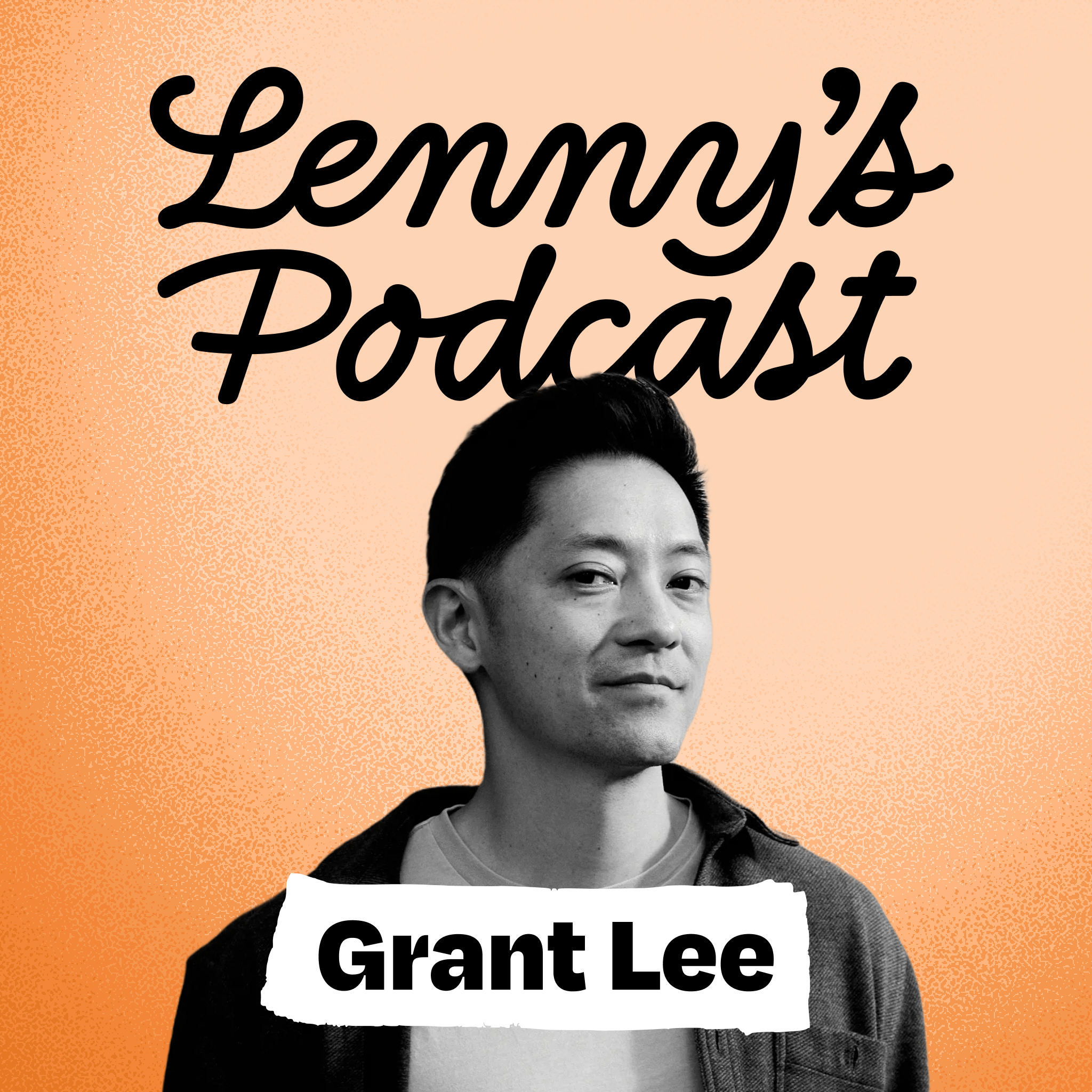
Overview of “Dumbest idea I’ve heard” to $100M ARR: Inside the rise of Gamma | Grant Lee (CEO)
This episode of Lenny Rachitsky’s podcast features Grant Lee, CEO and co‑founder of Gamma, an AI‑powered presentation and website design tool that reached $100M ARR in just over two years, is profitable, and is valued at >$2B. The conversation is tactical — covering product‑market fit, the pivotal onboarding changes that unlocked organic growth, founder‑led marketing (including a deep dive into influencer strategy), rapid prototype testing with real users, pricing, hiring philosophy, and what it takes to build a durable “GPT‑wrapper” business.
Key takeaways
- Product market fit came when the product produced strong organic, word‑of‑mouth growth — not just early launch vanity metrics. Gamma rewrote onboarding so new users experienced “magic” in the first 30 seconds.
- Founder‑led marketing matters. Grant used Product Hunt, one provocative tweet (which Paul Graham commented on), and his personal content to break through.
- Influencer marketing worked best for Gamma when focused on thousands of micro‑influencers (niche, trusted creators) and when the founder personally onboarded creators to ensure authentic storytelling.
- Rapid hypothesis → prototype → user test cycles (same day) using panels and power‑user communities avoids months of wasted development.
- Pricing: tested willingness‑to‑pay (Van Westendorp / conjoint techniques), launched at a simple $20/mo‑style plan, and prioritized unit economics early.
- Hiring: hire painfully slowly; prefer generalists and player‑coach managers; “bet big” on exceptional people.
- Technical strategy: being a GPT‑wrapper can be durable if you deeply own the workflow and orchestrate many models (different models for different sub‑tasks).
How Gamma found product‑market fit
- Product Hunt launch (Aug 2022) produced visibility (Product of the Day/Week/Month) but signups plateaued — no sustained word‑of‑mouth.
- Company bet the business on reworking the onboarding: make the first 30 seconds (or first minute) deliver clear time‑to‑value and a shareable result.
- After relaunching onboarding with AI integrated in March 2023, organic signups jumped from hundreds/day to thousands — followed by rising daily growth without paid acquisition. That shift signaled true PMF.
Why the 30‑second rule?
- New users are selfish, vain, lazy; the product must earn the next 30 seconds. Short time‑to‑value reveals the single magical thing your product does and encourages sharing.
Growth phases & milestones
- Early users: friends + Product Hunt traction → episodic usage.
- AI relaunch → tens of thousands of users in a short span; viral tweet increased reach (Paul Graham comment amplified it).
- Post ~$10M ARR: rebrand and scale influence + creative. At scale, >50% of new acquisitions were organic/word‑of‑mouth.
- Revenue: launched paid plans quickly (after credits ran out), hit ~$1M ARR within months and became profitable.
Founder‑led marketing & viral launch tactics
- Founder involvement is critical: Grant personally wrote, posted, and iterated on social copy; founder storytelling is a repeatable muscle.
- The viral tweet strategy: provocative copy (e.g., “the most valuable skill in business is about to become obsolete”), built discussion and authority, and benefited from an influential comment (Paul Graham).
- Platform approach: use LinkedIn and Twitter differently — LinkedIn for higher‑intent, aspirational content; Twitter for tactical, contrarian, technical threads.
Practical founder content workflow:
- Keep a running doc of interesting, unintuitive lessons.
- Weekly blocks to craft posts from those notes.
- Test tone & format per platform; iterate on what gets engagement.
Influencer marketing — how Gamma made it work
Why micro‑influencers & authenticity:
- Big macro influencers often read scripts and feel like ads. Micro‑influencers in niches (e.g., teachers, consultants) have trust and produce authentic recommendations.
- Grant personally onboarded initial creators, coached them on product value (not prescriptive scripts), and made it easy for creators to post.
Tactics and scale:
- Start manual, then scale with tools/agencies: FirstCollab (YC) and small hungry agencies (e.g., AKG Media) helped find creators.
- Typical budgets early: work with many creators rather than one big name — $10–20K/month over ~6 months recommended to get enough test coverage.
- Expect a power law: ~10% of creators may produce ~90% of reach; you can’t reliably predict which ones, so cast wide.
- Use brand assets and open‑sourced brand kit (brand.gamma.app) so creators don’t reinvent the wheel.
Measured impact:
- Word‑of‑mouth is the core engine (>50% of signups), influencers act as an amplifier and increase organic mentions/searches.
Experimentation & rapid user testing
- Daily rapid loop: idea in the morning → prototype (functional or coded) → recruit testers (Voice Panel, UserTesting) → review results same day or next.
- Use a “power user” Slack community (Gamma’s Gambaster program) for ongoing early feedback on new features.
- Test small prototypes (20 testers typical) before building larger investments. Many ideas die early; the winning ones receive iterative refinement.
Tools referenced:
- Voice Panel (YC, Grant angel investor), UserTesting, FirstCollab, MidJourney (for imagery), Intercom (customer feedback).
Brand & performance marketing
- Invest in brand before heavy performance spend: a coherent, replicable brand DNA enables scalable creative testing (thousands of creatives).
- Brand work is expensive and slow — but necessary if you’ll scale creative volume and influencer assets.
- Heuristic: Don’t scale paid acquisition until you have organic momentum. Target: ideally >25–50% organic/word‑of‑mouth before heavy paid spend.
- Treat brand marketing as performance (it strengthens paid channels and lowers CAC over time).
Pricing & monetization
- Gamma initially launched a credit system; user demand forced rapid packaging/pricing.
- Used Van Westendorp and conjoint-like surveys to find willingness‑to‑pay; simple plan introduced (~$20/mo).
- Early focus: ensure economics work (unit margins) because inference costs matter for AI‑heavy products.
- Rule: monitor paid acquisition share; if >50% of growth is paid, reassess core product/PMF.
Product & tech strategy — “GPT‑wrapper” reality
- A successful wrapper is not just an API pass‑through. Durability requires:
- Deep ownership of a workflow (end‑to‑end experience).
- Orchestration of many models (Grant cites ~20 models used for different sub‑tasks).
- Continuous experimentation to choose the right model for each job and optimize cost/value tradeoffs.
- Personalization (different personas — educators vs. consultants — need different outputs).
- The business edge comes from workflow design, UX, integrations, and model orchestration — not just the underlying model.
Hiring and org design
- Hire painfully slowly. First ~10–12 hires shape DNA; Gamma’s first 10 stayed 5+ years.
- Prefer generalists who can wear many hats and player‑coach managers who still do IC work.
- Player‑coach model: leaders execute and mentor; this enables fast decision‑making and a flat org.
- “Bet big” on exceptional hires — give them runway, responsibility, and resources.
- Revenue per employee is tracked but not the singular north star — focus on quality hires and retention.
Practical, actionable checklist (for founders)
- Before scaling paid ads: confirm organic word‑of‑mouth and a compelling first‑minute experience.
- Make onboarding so that a user can generate a useful outcome within ~30 seconds.
- Keep a founder content doc; post regularly and iterate per platform.
- Run influencer campaigns at scale: many small creators, coach them, provide brand assets, measure and double down.
- Prototype fast: build functional prototypes, test with ~20 target users same day using Voice Panel/UserTesting.
- Price early enough to test willingness‑to‑pay and ensure unit economics; start simple.
- Hire slowly; favor generalists and player‑coaches; preserve culture continuity.
Notable quotes & soundbites
- “I don't come from a growth background. If I can learn growth, anybody can learn growth.”
- “Think of new users as selfish, vain, and lazy — earn the next 30 seconds.”
- “Founder‑led marketing = craft your narrative; practice copywriting and posting yourself.”
- “When you find someone exceptional, bet big on them.”
Tools & resources mentioned
- FirstCollab (influencer sourcing)
- Voice Panel (user research panel)
- UserTesting
- MidJourney (creative assets)
- Van Westendorp pricing survey (willingness to pay)
- Gambaster (Gamma’s power‑user Slack program)
- Sponsor mentions (Vanta, JustWorks, Miro) — podcast sponsorships
Lightning round highlights (quick extras)
- Books: Shoe Dog (Phil Knight) recommended for pre‑PMF founders; Seven Powers (Hamilton Helmer) for post‑PMF strategy.
- Life motto: Chinese idiom — the “frog at the bottom of the well” → don’t limit your view; dream bigger.
- Presentation tip: “One idea at a time” — give the audience one egg they can catch (less is more).
- Where to find Grant/Gamma: Twitter & LinkedIn (Grant), Gamma at gamma.app; Grant invites DMs and feedback.
Who this episode is for
- Founders and early product teams building AI products, especially prosumer/creator tools.
- Growth and marketing leads exploring influencer strategies and founder‑led content.
- Product teams that want practical frameworks for rapid prototyping, onboarding, and pricing.
- Operators designing small, high‑leverage teams and modern org structures.
If you want tactical steps to try first: (1) map the one magical outcome you can give users in 30 seconds and prototype it, (2) run a 1‑day user‑test via Voice Panel/UserTesting with ~20 target users, (3) start micro‑influencer tests (20–40 creators) and measure organic uplift, and (4) do a quick Van Westendorp survey to sanity‑check pricing.