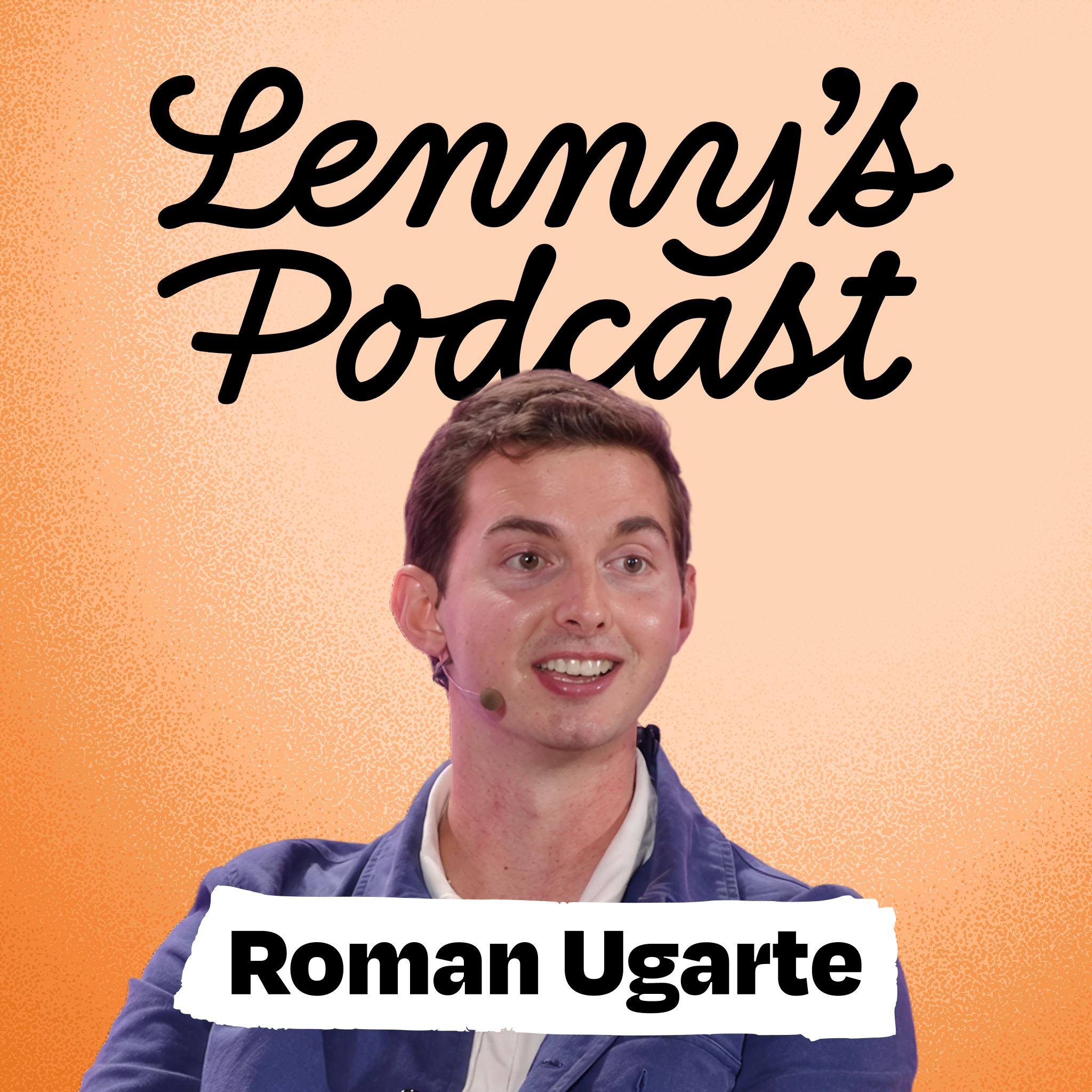
Overview of How we built Grok Bot in a month | Roman Ugarte (SpaceXAI)
This episode is a deep dive into how Roman Ugarte and a tiny internal team built GrokBot from scratch in about a month, then rapidly refined it through hundreds of manual onboarding sessions and a fast post-launch iteration loop. The core theme is that GrokBot succeeded not by being “another AI chat app,” but by being designed from the ground up as a cloud-based AI teammate with its own computer, long-term memory, and a product philosophy centered on doing 100% of the job, not just 90%.
Key Takeaways
-
Start from scratch when the use case changes.
The team chose not to bolt GrokBot onto Cursor because non-coding knowledge work needed a different product shape, UX, and mental model. -
The product is built around “AI colleagues,” not chat threads.
GrokBot is meant to feel like a team of bots that can be delegated real work, rather than a chat interface with tools attached. -
Two early decisions were foundational:
- Everything runs in the cloud — users shouldn’t think about local vs. remote runtimes.
- Each bot has its own computer — agents should operate like real teammates with independent access and state.
-
They aggressively removed visibility and complexity.
Instead of exposing tool calls, chain-of-thought, and internal mechanics, GrokBot emphasizes progressive updates and a simple “it’s working” signal. -
The product improved fastest through hands-on onboarding and dogfooding.
Roman’s team manually onboarded 200–300 early users to uncover friction, validate patterns, and learn which workflows actually mattered.
How GrokBot Was Built
Origin Story
- The project began as a blank-slate internal sprint focused on bringing agents beyond engineering use cases.
- A very small team worked in an isolated setup for about a month to produce a usable prototype.
- The team intentionally avoided a large, consensus-driven process so they could make fast micro-decisions.
Internal Launch and Feedback Loop
- After a company all-hands, internal adoption surged.
- Users quickly switched from other tools to GrokBot for day-to-day agentic tasks.
- That strong internal response triggered a shift from prototype mode to scaling for public launch.
What Made GrokBot Different
1) “100% of the job” changes the category
Roman emphasized that there’s a huge difference between:
- AI that helps you get most of the way there, and
- AI that fully completes a task so you can truly delegate it.
For him, GrokBot was the first time non-coding work felt fully delegable to AI.
2) Bots as persistent teammates
Instead of one-off chats, GrokBot uses:
- long-lived bots
- swimmable work roles or domains
- memory across interactions
- their own tools and computer access
3) Less UI, more capability
The team prefers:
- natural language over configuration screens
- hidden infrastructure over visible complexity
- capability expansion over adding more buttons and menus
A recurring internal mantra was to ask:
- “What is the launch tweet?”
- “What would users actually feel?”
If the answer wasn’t compelling, it probably didn’t deserve to ship.
What They Learned From Early Users
Common Patterns Emerged Organically
Roman described how internal usage revealed patterns they didn’t want to force on users:
- Users initially created multiple bots for different lanes of work.
- Over time, many converged on a chief-of-staff bot that delegated to specialized bots.
This informed the product, but only after seeing it happen naturally.
Visibility Was Overrated
Early versions exposed too much:
- internal model thinking
- memory storage details
- debugging-style observability
They learned users didn’t want a stream of low-level mechanics. They wanted the bot to simply do the work.
Non-technical users were crucial
The onboarding program included people outside the usual AI power-user bubble, like:
- a coffee shop owner
- recruiting team members
- other business operators
This helped them spot blind spots and confirm GrokBot’s broader potential beyond technical users.
Technical and Product Breakthroughs
“Computer use” reliability was a major unlock
A lot of the improvement work was behind the scenes:
- clicking precisely on pixels
- navigating websites without good APIs
- handling tools that lacked MCP or API support
- making bots reliable enough to complete full workflows
These fixes were more valuable than flashy features because they made the product actually usable end-to-end.
Examples of high-value workflows
-
Recruiting/sourcing:
Automatically scanning papers, conference websites, and contact graphs to build candidate lists and route warm intros. -
Sales/go-to-market:
Handling tasks that require browser interaction and messy real-world systems. -
QA/testing:
Using one GrokBot to test another GrokBot or to regression-test the desktop app. -
Information digestion:
Serving as an always-on “infovore” that watches Slack, email, X, and internal context, then surfaces only what matters.
Go-to-Market and Distribution
Build useful things people obsess over
Roman reiterated a lesson from Cursor:
- don’t over-focus on abstract moats
- build a product people want to use every day
- let distribution and data advantages emerge from usefulness
Launch strategy
- push fast
- get many users on early
- collect feedback in public
- support real workflows and templates
- target businesses, not just individual enthusiasts
The idea is that the “aha” moment may happen personally first, but the real opportunity is transforming teams and companies.
Vision for the Future
The long-term vision for GrokBot is simple:
A team of AI bots that help you with your job and your life.
What that means in practice
- bots feel like teammates, not tools
- they can be proactive
- they can huddle with you
- they can manage multiple workstreams
- they can eventually support both work and personal life in one system, with appropriate boundaries and permissions
Roman’s view is that the best interface for AI is increasingly conversational and teammate-like, not a dense cockpit of knobs and controls.
Practical Tips for New GrokBot Users
For beginners
- Give the bot real context:
- Slack
- company docs
- Ask it to identify tasks it can take off your plate
- Let it suggest a few workflows, then spin up bots for the best ones
For power users
- Create a system for bot outputs:
- frequent digests
- shared databases
- structured destinations for artifacts
- Think in terms of bots collaborating with each other, not just one bot and one human
Notable Quotes / Ideas
- “An AI that does 100% of the job feels categorically different from one that gets you 90% there.”
- “Delete the product.”
Remove scaffolding as models improve. - “Just do the thing.”
A culture of ownership and agency over permission-seeking. - “Colleague-pilled.”
A useful internal lens: ask what a human teammate would want in this situation.
Lightning Round Highlights
-
Books
- Cat’s Cradle by Kurt Vonnegut
- The War of Art by Steven Pressfield
-
Movie/TV
- Casablanca (annual rewatch)
- Monk for its San Francisco nostalgia
-
Favorite AI product
- Exa / semantic search over unusual datasets
-
Life motto
- The Desiderata poem, which he keeps on his door
Final Thought
The episode is ultimately a playbook for building a breakout AI product in a fast-moving market: move fast, stay small and focused, learn directly from users, simplify ruthlessly, and build around the future state you actually want—AI as a dependable teammate that can truly take work off your plate.