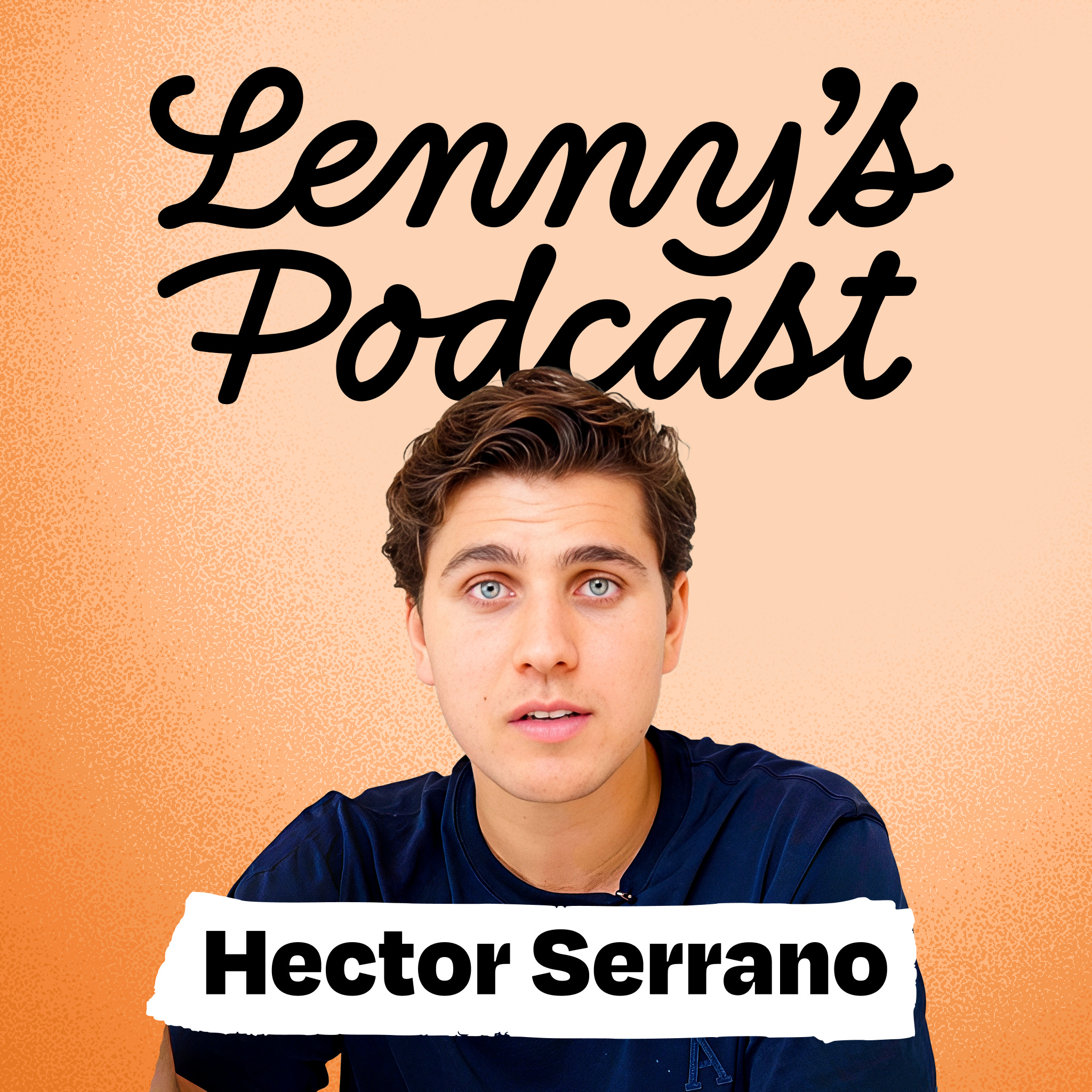
Overview of How a 19-year-old intern built the growth engine behind this $2B AI company | Hector Serrano
In this episode, Lenny Rachitsky interviews Hector Serrano, the young growth/content lead at Whisperflow, about how the company scaled massively through product-led growth, paid UGC, creator-led performance marketing, and founder-led content. Hector shares a highly tactical breakdown of how Whisperflow built a creator engine that can produce hundreds of ads per month, why young talent is such an advantage in modern marketing, and why the company deliberately avoids over-automating creative with AI.
Key Takeaways
- Product comes first. Hector repeatedly emphasizes that none of the growth channels would work without strong product-market fit.
- Paid can be an early signal, not just a scale lever. Whisperflow used paid ads early to test messaging, validate resonance, and learn faster.
- UGC works best when it’s performance-based and creator-friendly. The strongest model rewards creators based on results while preserving their creative freedom.
- Young creators and marketers have a real edge. Hector argues that young people often better understand modern social channels, trends, and creator culture.
- Founder-led content compounds over time. Whisperflow uses YouTube, Instagram, X, and behind-the-scenes content to build trust and lower paid CAC over time.
- AI should not be the final creative layer. Hector believes AI is useful internally, but the public-facing creative should feel human and authentic.
The Paid UGC Growth Playbook
1) Start with product-market fit
Hector says the first lesson is simple: if the product doesn’t already have real pull, paid won’t save it.
- Whisperflow grew organically first because users genuinely loved the product.
- Paid and content only work well when they’re amplifying something that already resonates.
2) Use paid early to learn faster
Rather than waiting until later, Whisperflow turned on paid early to validate:
- whether messaging resonated
- whether cold traffic could convert
- which angles and audiences were strongest
This gave them faster feedback than relying on organic alone.
3) Move from organic UGC to performance-based UGC
Whisperflow initially tested organic UGC, where creators posted on their own accounts and were paid by view-based CPMs. It drove huge views, but not enough conversion.
They then shifted to performance-based paid UGC:
- creators make videos for the brand
- the brand runs those videos as paid ads
- creators get a cut of spend or revenue tied to performance
For SaaS, they typically pay based on ad spend; for e-commerce, GMV can make more sense.
4) Keep creator relationships long-term
One of the strongest parts of the model is that creators stay in a tight-knit community:
- weekly creator meetings
- creator coaches
- giveaways
- retreats
- referral bonuses for bringing in other strong creators
That creates compounding quality, because creators get better the longer they work with the brand.
5) Don’t over-brief creators
Hector argues that giving creators overly restrictive scripts kills the creative edge.
- The best creators need room to experiment.
- Good performance often comes from unexpected concepts.
- Some of Whisperflow’s best ads were creator ideas the team never would have scripted.
6) Volume matters, but variety matters more
Whisperflow runs a very large number of ads each month, but the key is not just scale—it’s diversity:
- UGC videos
- statics
- founder-led ads
- influencer content
- in-house concepts
- launch videos
This helps avoid ad fatigue and gives Meta/other platforms more to work with.
How Whisperflow Finds and Onboards Creators
Finding creators
Hector recommends not relying on inbound platforms at first.
Instead:
- search Instagram manually using niche keywords
- look through follower/following graphs
- find creators already making relevant content
- start with people who already follow or engage with the brand when possible
His advice: send highly targeted manual DMs, not mass automation.
Starting small
Whisperflow started with a tiny creator set:
- roughly 5 creators at first
- then 10
- then 15
- slowly expanding as the program proved itself
He argues that starting too broad creates sameness and limits learning.
Onboarding creators well
The onboarding process is intentionally human and relationship-driven:
- learn about the creator first
- explain the product and why they were selected
- show example ads
- explain payout timing and structure
- make them feel like a partner, not a contractor
A key tactic: pay creators every 7 days to keep motivation high.
Hiring Philosophy: Why Young Talent Wins
Hector makes a strong case that the best people for this kind of work are often young, scrappy, and creator-native, not necessarily the most credentialed.
What to look for
He says the ideal hire usually has:
- proof they’ve grown some kind of audience
- some experience making content
- evidence of hard work
- good character and cultural fit
- curiosity and hunger
He’s skeptical of hiring by:
- GPA
- elite school pedigree
- high salary expectations
- over-indexing on resume polish
Why young people matter
Hector believes younger people often understand:
- social-native behavior
- trends
- creator culture
- how to package content for modern platforms
His core point: older founders often don’t naturally see what’s working on TikTok, Instagram, or Discord in the same way that young natives do.
Founder-Led Content as a Growth Lever
Hector sees founder-led content as one of the most underrated growth opportunities.
Why it works
People trust people more than brands.
Founder content helps:
- humanize the company
- build trust
- create long-term brand affinity
- give users context for the mission and product
What makes it effective
It works best when the founder has:
- a clear mission or North Star
- a consistent narrative
- a willingness to overshare and teach
- a long-term view
At Whisperflow, content is tied to a bigger story about the company’s mission and progress.
YouTube is especially powerful
Hector strongly believes YouTube is one of the highest-leverage platforms because:
- videos have a long shelf life
- good videos can keep compounding for months or years
- packaging matters a lot
- strong thumbnails, titles, and storytelling can massively extend reach
He argues the post-production and packaging team is often more important than the raw video quality itself.
Hector’s View on AI
Hector’s take on AI is surprisingly restrained compared to the current hype.
His main point
- AI is useful for internal productivity.
- AI is not something he wants to dominate the final creative output that customers actually see.
Why
He thinks AI-generated public-facing content can feel:
- low-quality
- inauthentic
- visually or textually “off”
- riskier for brand perception
His broader argument is that in a world flooded with AI slop and high-volume content, quality and taste cut through more than automation.
Practical Advice and Warnings
Common mistakes he sees
- Hiring the wrong profile for content/growth roles
- Over-indexing on pedigree instead of talent
- Going too broad with creators too early
- Over-scripting creators
- Chasing vanity metrics instead of conversion
- Trying to automate or scale before the creative system is working
His advice to aspiring creators
- Stop asking for endless advice
- Start making content
- Expect to be bad at first
- Keep iterating
- Don’t wait for perfection
His advice to companies
- Give young talent real responsibility
- Let them fail and learn
- Build creator relationships like long-term partnerships
- Use content to support paid, not replace product quality
Notable Quotes / Ideas
- “There’s really no hack besides having a good product.”
- “The best marketers are allergic to AI.”
- “People buy from people.”
- “If you want someone like me, don’t look for someone like me.”
- “You can’t always connect the dots looking forward, but you can always connect them looking backwards.” — Steve Jobs, cited as a personal motto
Action Items for Founders and Growth Teams
- Audit your product-market fit before scaling paid.
- Test paid early as a learning channel.
- Build a creator program with performance-based incentives.
- Keep creator briefs loose and experimentation-friendly.
- Find one or two young, creator-native operators to lead content.
- Invest in founder-led storytelling on YouTube, Instagram, X, and LinkedIn.
- Treat creators well and pay them reliably.
- Focus on quality, not just content volume.
Closing Thought
The episode’s core message is that modern growth is increasingly about taste, trust, and creator-native execution. Whisperflow’s system works because it combines a great product with young talent, performance-based creator economics, and authentic founder storytelling—then lets all of that compound over time.