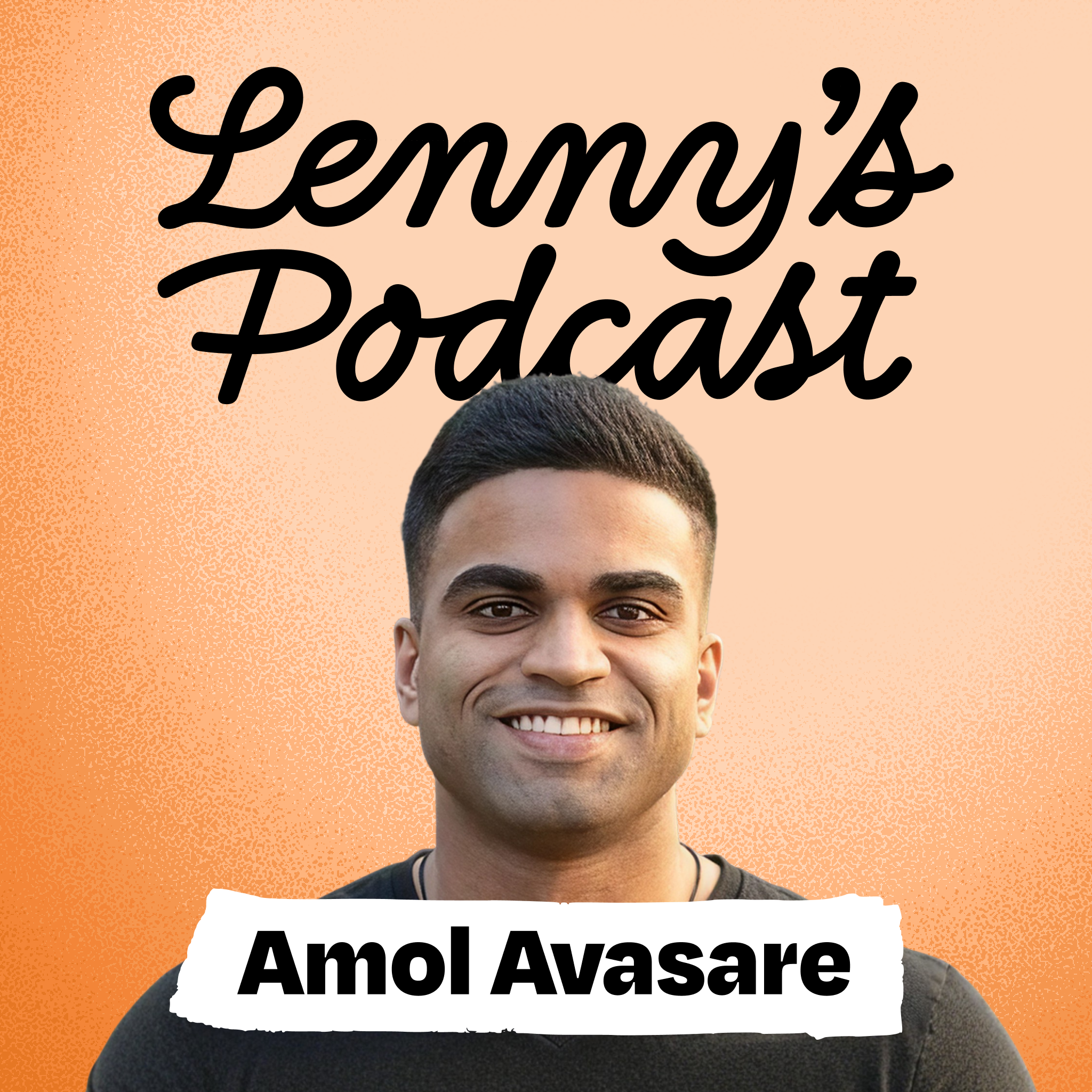
Overview of Head of Growth (Anthropic): “Claude is growing itself” — Amol Avasare
Lenny Rachitsky interviews Amol Avasare, Head of Growth at Anthropic, about how the company exploded from ~$1B ARR to ~$19B+ ARR in ~14 months, how growth works at an AI-first company, what the growth org actually does, how AI is starting to automate growth work, cultural and safety trade-offs, and Amol’s personal background (including a traumatic brain injury and a failed startup). The episode mixes tactical growth/product learnings with big-picture thinking about product value, team structure, and the near-term future of PM/engineering roles.
Key takeaways
- Anthropic’s growth has been exponential: roughly 10x year-over-year, from ~$1B ARR to ~$19B+ ARR in ~14 months (and still accelerating).
- Growth work at an AI-first company is split between big firefighting on “success disasters” (70% of Amol’s time) and proactive product/monetization work (30%).
- Activation (day-zero/day-one “aha”) is critical and harder with fast-improving models; “good friction”—asking the right onboarding questions—often improves retention and long-term value.
- When AI underpins your core product value, growth teams should shift more of the effort to large, strategic bets (capture future exponential value) rather than mostly small optimizations.
- AI is already automating parts of growth: Anthropic’s CASH (Claw to Accelerate Sustainable Hypergrowth) uses Claude to generate and run growth experiments (human-in-the-loop today), showing early promising wins.
- Role changes: engineers are gaining the most leverage from AI; PMs and designers are squeezed and need to up-level to coordinate, coach, and set strategy. Anthropic deputizes engineers to act as “mini-PMs” for short (<=2-week) projects.
- Anthropic’s culture—mission-driven, transparent leadership, and high talent density—is a core competitive advantage; safety/alignment is baked into company structure (public benefit corp) and decision-making even at the cost of short-term growth.
Notable quotes / memorable lines
- “Claude is growing itself at this point.” (on AI automating growth work)
- “Linear charts are just not cool. Everything is log linear.” (on exponential thinking)
- “70% of what I spend my time on is success disasters.” (on firefighting the effects of rapid growth)
- “Freedom through constraints.” (how constraints force focus)
- “We are very comfortable forgoing metric impact in order to prioritize safety.” (growth + safety trade-offs)
Topics discussed
- Anthropic’s growth trajectory and what that looks like operationally
- How Amol cold-emailed Mike Krieger to join Anthropic
- The growth team’s structure (≈ 40 people): horizontals (growth platform, monetization) + product/audience pods (API, Claude Code, CoWork, B2B, knowledge workers)
- Onboarding & activation: why added friction can be beneficial and examples from Mercury, Masterclass, Anthropic
- CASH: automating growth experimentation with Claude (human-in-the-loop currently)
- Tools and workflows: Cowork (desk app + Chrome extension + Slack MCP), scheduled metric checks, misalignment detection, admin automation (expenses, meeting rooms)
- How PM/engineering/design roles are changing with AI
- Safety & mission: public benefit corporation, willingness to forgo short-term revenue for safety/brand
- Personal stories: Amol’s failed startup and traumatic brain injury and how they shaped his work habits and perspective
Growth tactics, structure & wins (practical)
- Organization:
- Growth ≈ 40 people (engineers, PMs, designers, data).
- Hybrid structure: audience/product pods (narrow focus) + horizontal teams (platform, monetization).
- Hiring / roles:
- Hire product-minded engineers who can act as mini-PMs for small projects (<= 2 engineering-weeks).
- Add PMs when scale causes coordination bottlenecks—companies may need more PMs, not fewer.
- Onboarding / activation:
- Ask onboarding questions to understand user intent/interests even if it adds friction; the right friction can increase conversion, activation, personalization, and downstream lifecycle value.
- Prioritize quality in onboarding; one quarter focused purely on onboarding quality can materially move metrics.
- Prioritization:
- If AI is central to your product’s value, prioritize larger bets (to capture exponential future value) instead of only many small optimizations.
- Product bets:
- Build features that unlock new markets (agentic coding example). Anthropic invested in things others weren’t doing (e.g., Chrome extension underpinning Cowork/Code).
Automation & AI for growth (CASH, Cowork, Claude)
- CASH: Claw to Accelerate Sustainable Hypergrowth
- Objective: use Claude to automate the growth experimentation loop — identify opportunities, build copy/UI variants, test, analyze learnings.
- Early results: small copy/UI tweaks perform at junior-PM win rates; human-in-the-loop approval remains for brand/safety.
- Gains expected to expand as models improve (Opus 4.6 made earlier leaps possible).
- Cowork/Claude uses:
- Scheduled metric dashboards and alerts (desktop app + charts).
- Misalignment detection across Slack/projects: weekly runs to flag where teams may be out of sync.
- Manager/coaching lens: analyze direct report notes, transcripts, OKRs, suggest feedback or priorities.
- Admin automation: expense filings, inbox triage, booking — frees PM time.
- Future: strategy agents (continuous monitoring + recommendations) are near-term plausible; human oversight remains crucial for high-stakes decisions.
How PM / Engineering / Design roles are evolving
- Engineers currently get the biggest leverage from AI tooling (e.g., Claude Code); a small engineering team can look like a much larger effective engineer pool.
- PMs and designers are “squeezed” (more engineers to coordinate) — likely need either:
- More PM hires to maintain alignment, or
- Engineers who are product-minded and can run small projects end-to-end.
- Rule-of-thumb Anthropic uses:
- Projects <= ~2 engineering-weeks: engineer acts as PM (executes, coordinates).
- Projects > ~2 weeks: PM should lead and be accountable.
- PMs’ highest leverage: improving the “why” and “what” (strategy, product sense, stakeholder alignment) and coaching up the team, rather than spending most time shipping PRs.
Culture, safety & company design
- Anthropic is mission-first: a public benefit corp emphasizing safe, aligned AI even if it reduces short-term revenue.
- Safety influences growth decisions; controversial tests are evaluated against brand/values; some experiments are declined even if they’d move metrics.
- Leadership transparency and “notebook” channels (internal personal feeds) help scale beliefs and reduce drift as the company scales.
- Talent density and mission alignment are cited as the company’s “secret sauce.”
Personal story & leadership lessons
- Amol’s background: founder (failed startup), investor-banking background, growth roles at Mercury and Masterclass, then cold-emailed Mike Krieger to join Anthropic.
- He suffered a traumatic brain injury in 2022, requiring nine months of rehab; he speaks about how it changed his life, habits (meditation, breaks, sleep/health disciplines), and outlook (“freedom through constraints”).
- Failure lesson: shutting down his startup was brutal but formative—keeps investors updated; failure taught product skills and resilience that enabled later success.
Actionable recommendations (for PMs, growth people, leaders)
- If you work on an AI-first product:
- Shift more of your effort toward larger bets that capture exponential future value.
- Invest in onboarding/activation that captures user intent—even if it adds friction—test it thoroughly.
- Embrace product-minded engineers and a 2-week rule for small projects to scale execution.
- Adopt AI tools now:
- Use models to automate routine growth tasks (copy tests, chart monitoring, misalignment detection).
- Start human-in-the-loop experiments (CASH-like) for low-risk optimizations; iterate as model capabilities improve.
- Career advice:
- Lean into unique interdisciplinary strengths (e.g., product + domain expertise) to become indispensable.
- Be adaptable—expect 50–70% of old playbooks to be irrelevant in an AI-accelerated world.
- Culture & ethics:
- Prioritize brand and safety; be willing to “leave money on the table” for long-term trust and sustainability.
Where to find Amol / hiring
- Amol: LinkedIn (search Amol Avasare per episode); Anthropic jobs page for growth/product/engineering roles.
- How to help: try Anthropic products, give candid feedback, and refer high-quality candidates for growth/product roles.
Resources & episodes’ notable references
- Anthropic products mentioned: Claude, Claude Code, Cowork (Chrome extension + desktop + Slack MCP).
- CASH: Claw to Accelerate Sustainable Hypergrowth (growth automation initiative).
- Amol’s suggested books: The Joy of Living (Yongey Mingyur Rinpoche), Awareness (Anthony de Mello), Thinking in Bets (Annie Duke).
If you want a very short cheat-sheet: focus AI-first growth on big bets and activation, automate the repeatable parts with models (human-in-loop today), deputize product-minded engineers for short projects, keep safety/brand as a hard constraint, and use AI to reduce coordination friction (metrics, misalignment, coaching).