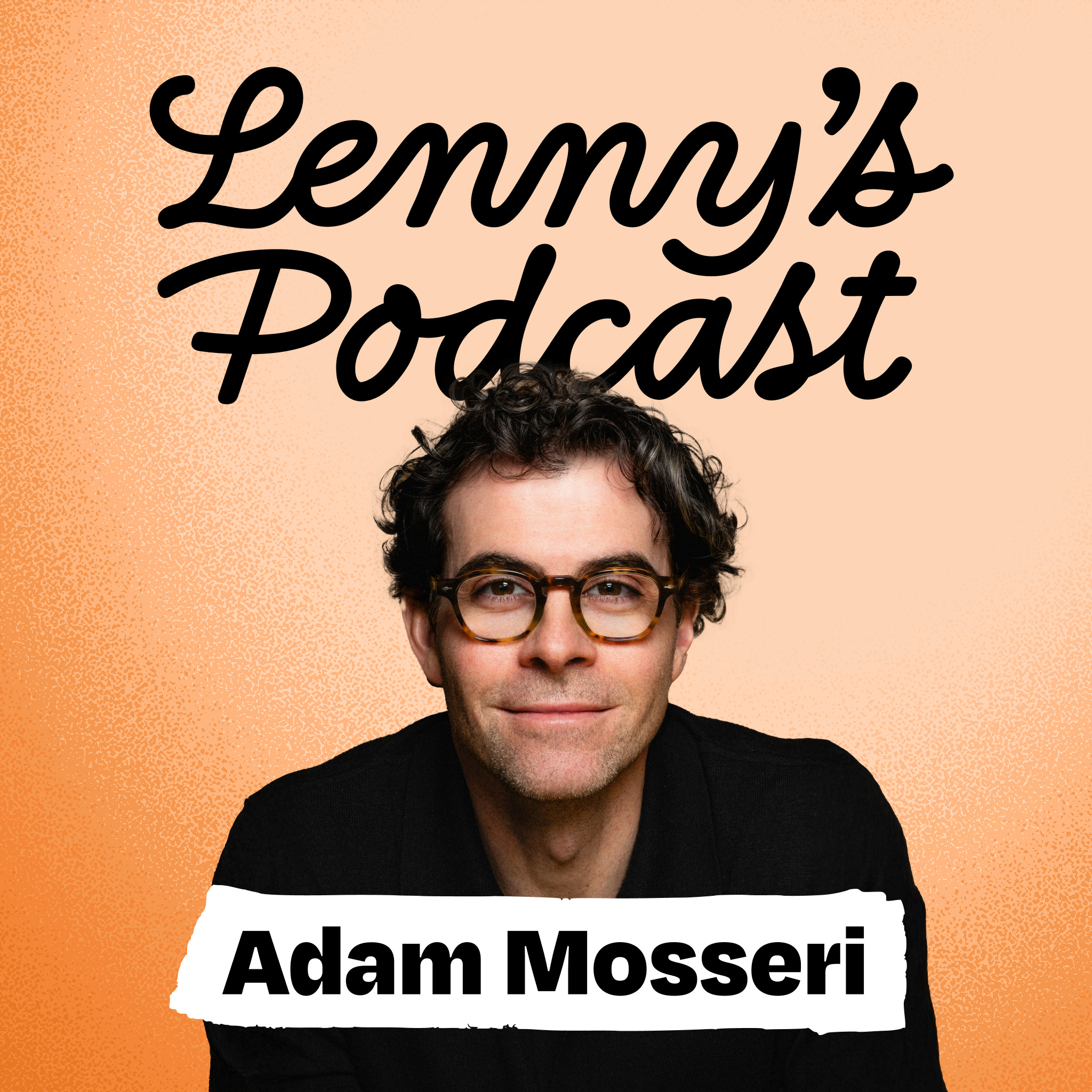
Overview of Adam Mosseri: AI is a tailwind for authenticity
In this episode, Instagram head Adam Mosseri discusses how AI is reshaping product teams, hiring, content creation, and the future of social feeds. His core view: AI will change the mechanics of building products, but human taste, judgment, curiosity, and authenticity will matter even more. He argues that AI-generated content is a tailwind for Instagram because it will increase demand for real people, original perspectives, and creative identity.
Key Themes and Takeaways
AI is making product teams smaller, faster, and more generalist
- Meta/Instagram is moving from large, specialized teams to smaller pods of about 6–7 people.
- The new structure centers around:
- 4–6 engineers
- a more expanded “product staff” role
- specialists only when needed, such as senior designers or senior data scientists
- AI tools are taking over more mechanical work, especially in data analysis and workflow automation.
- This is causing functions to bleed into each other:
- PMs are doing more design/data/research work
- designers and data scientists are increasingly crossing into product strategy
- Mosseri thinks the industry is shifting toward generalists with taste, while still preserving room for elite specialists.
Taste is becoming more important, not less
- Mosseri strongly agrees that taste matters a ton in an AI-heavy world.
- His view: when building becomes easier, the scarce skill is deciding what to build.
- He is especially optimistic about designers, because taste is hard to automate.
- He believes many of the strongest future product leaders will come from:
- design
- data science
- other cross-functional backgrounds
- The best people, in his view, are those who can:
- see across disciplines
- make good judgment calls
- have strong opinions beyond their original craft
What he looks for when hiring
Mosseri says he still looks for three baseline traits in almost everyone:
- Grit / drive
- Fast learning
- Self-awareness
He also emphasized two traits that matter more in the AI era:
- Curiosity
- Willingness to try things and look stupid
His message: people who are not curious or who are afraid of mistakes will struggle as tools and workflows keep changing.
Product leaders should be curators, not just visionaries
- Mosseri said some of the best product leaders are less “idea machines” and more curators.
- They don’t need to own every idea themselves.
- Instead, they:
- curate people
- curate ideas
- curate technologies
- curate strategy
- Great leaders create conditions where strong ideas can emerge from the team and be chosen well.
- He also stressed that team chemistry matters:
- trust and rapport are essential
- even great people can fail if they don’t work well together
AI’s Role in the Product Development Lifecycle
Human brains are still most valuable in strategy and judgment
Mosseri believes humans will remain most important in:
- Taste
- Strategy
- Vision
- Judgment
- Management
His definition:
- Vision = the destination
- Strategy = the opinionated path to get there
He thinks AI can help refine strategy, but only if you steer it carefully with:
- goals
- constraints
- team context
- competitive landscape
- regulatory and compliance considerations
- product and brand identity
AI is useful, but not uniformly good
- Mosseri rejects the simplistic “AI-pilled vs. anti-AI” framing.
- He says tools are amazing at some things and bad at others.
- The most successful people will be those who:
- know what AI is good at now
- know what it will likely be good at soon
- avoid outsourcing important decisions blindly
Token spend and AI budgets
- Instagram is not currently using token limits for engineers.
- They are, however, watching usage and shutting down “silly” or wasteful use cases.
- Mosseri thinks AI usage should be treated like any other resource:
- compute
- storage
- payroll
- capacity planning
- He expects companies will eventually need caps tied to trust and ROI, especially if AI usage becomes materially expensive.
Instagram, Algorithms, and AI Content
The Instagram algorithm is less “semantic” than people think
Mosseri says a common misconception is that Instagram’s recommender system deeply understands your interests in human terms.
Instead:
- it mostly relies on embeddings and other machine-learned representations
- these are often not directly readable by humans
- the system knows patterns that correlate with interests, but not always the literal meaning behind them
He shared that LLMs now make it possible to describe what those embeddings are “about” in plain language, which opens the door to new user controls.
“Your algorithm” gives users more agency
Instagram is experimenting with ways to let people:
- see what topics the system thinks they like
- add/remove interests
- adjust recommendations more directly
Mosseri wants users to have more control over the feed while still benefiting from ranking systems that improve relevance.
Why Instagram is not going back to a chronological feed
He argued against the idea that a fully chronological feed is better:
- it incentivizes people to post too much
- it advantages publishers and large accounts over friends
- it often lowers satisfaction over time
His broader point:
- product design is like city planning
- every system creates incentives
- some “ideal” user experience at the individual level can become bad at scale
AI Content: Headwind or Tailwind?
Mosseri thinks AI content will help Instagram overall
His answer: tailwind, but challenging.
Why it may help:
- Instagram is a creator platform
- synthetic content will increase demand for:
- creativity
- authenticity
- distinct perspective
- the human behind the post
He believes users will increasingly seek out people, not just content.
Instagram should label AI content, not ban it
Mosseri’s position:
- Don’t judge content by whether AI made it
- Judge it by:
- the point of view
- the creator
- the quality of the content
- If content is AI-generated, users should know that
- Instagram should also be transparent about how confident it is in that labeling
He also noted that:
- labeling AI content is technically difficult
- detection will get harder as models improve
- in the long run, it may be more practical to label camera-captured / non-AI content rather than try to identify all AI content
Account trust matters too
He distinguished between:
- content labels
- account identity / authenticity
He’s especially concerned about:
- fake accounts
- spam
- AI personas used deceptively, such as bogus supplement scams or misleading “AI monk” style accounts
Ranking, Discovery, and Creator Growth
TikTok influenced Instagram’s recommender strategy
Mosseri praised TikTok/ByteDance for excelling at:
- exploration-based ranking
- finding small or niche talent
- helping creators break out to new audiences
Instagram has invested in:
- originality
- breakout content
- recency
- recommendation quality
He said they are now close to becoming best-in-class for recommendations during his tenure, though not fully there yet.
Trade-offs are unavoidable
He repeatedly emphasized a core belief:
- every major product decision involves trade-offs
- privacy vs. safety
- discovery vs. familiarity
- recency vs. relevance
- individual preference vs. ecosystem health
His take: the job is often not to eliminate trade-offs, but to make them explicit and manage them well.
Leadership, Controversy, and Public Backlash
Mosseri believes leaders should engage publicly
He explained that he got used to being the public face of Instagram early on, starting with News Feed at Facebook. His reasoning:
- the debate is going to happen anyway
- it’s better to participate openly
- transparency builds understanding, even if it doesn’t win everyone over
He tries to stay grounded in criticism
When facing backlash, he tries to:
- put comments in perspective
- remember people’s workflows and habits are being disrupted
- step away and spend time with his kids/outside
He said criticism can be:
- fair
- unfair
- emotionally draining
- sometimes useful
Major product tests need communication plans
He noted that at Instagram’s scale, even small tests can trigger huge public reactions. That means teams now need to plan:
- what to say if a test leaks
- whether to communicate proactively or reactively
- how to explain the trade-offs clearly
He stressed that experimentation at 3 billion-user scale is inherently high risk.
Failure Corners and Lessons Learned
Facebook Home was a major failure that taught him a lot
Mosseri said Facebook Home was a “spectacular failure,” but also one of the most educational experiences of his career. It taught him about:
- Android
- carriers
- OEMs
- certification
- operating systems
- how to test whether an idea actually has market fit
Reels’ first version was also a mistake
He admitted that early Reels work was built on top of Stories, which was not the right foundation. The lesson:
- extending a popular primitive can be the wrong strategic move
- being technically elegant is not enough if the market shifts under you
He said Instagram might have been better positioned against TikTok if they had launched the right Reels experience earlier.
Parenting, Screen Time, and AI Literacy
His kids have boundaries, not free rein
Mosseri said his kids are still too young for social media, but they do have iPads.
His rules:
- they have to earn screen time
- apps are approved by parents
- school-time boundaries matter
- airplane use is the exception
He wants kids to be AI literate
He’s concerned about two risks:
- kids using AI and losing critical thinking
- kids not learning to use AI and falling behind
His solution is balance:
- set guardrails
- teach responsible use
- encourage building, not just consuming
He’s already vibe coding with his son
One of the most striking anecdotes:
- his 10-year-old is using Claude Code
- they are building a platformer game together
- the project is helping his child learn to make things, not just play them
Final Takeaway
Mosseri’s worldview is pragmatic and trade-off oriented:
- AI will accelerate product building
- small teams and generalist roles will become more common
- taste, judgment, and curation will become more valuable
- Instagram’s future likely depends on creators, authenticity, and transparent handling of AI content
- there is no perfect feed or perfect policy, only better-managed trade-offs
His underlying message is simple: in a more automated world, human judgment matters more, not less.