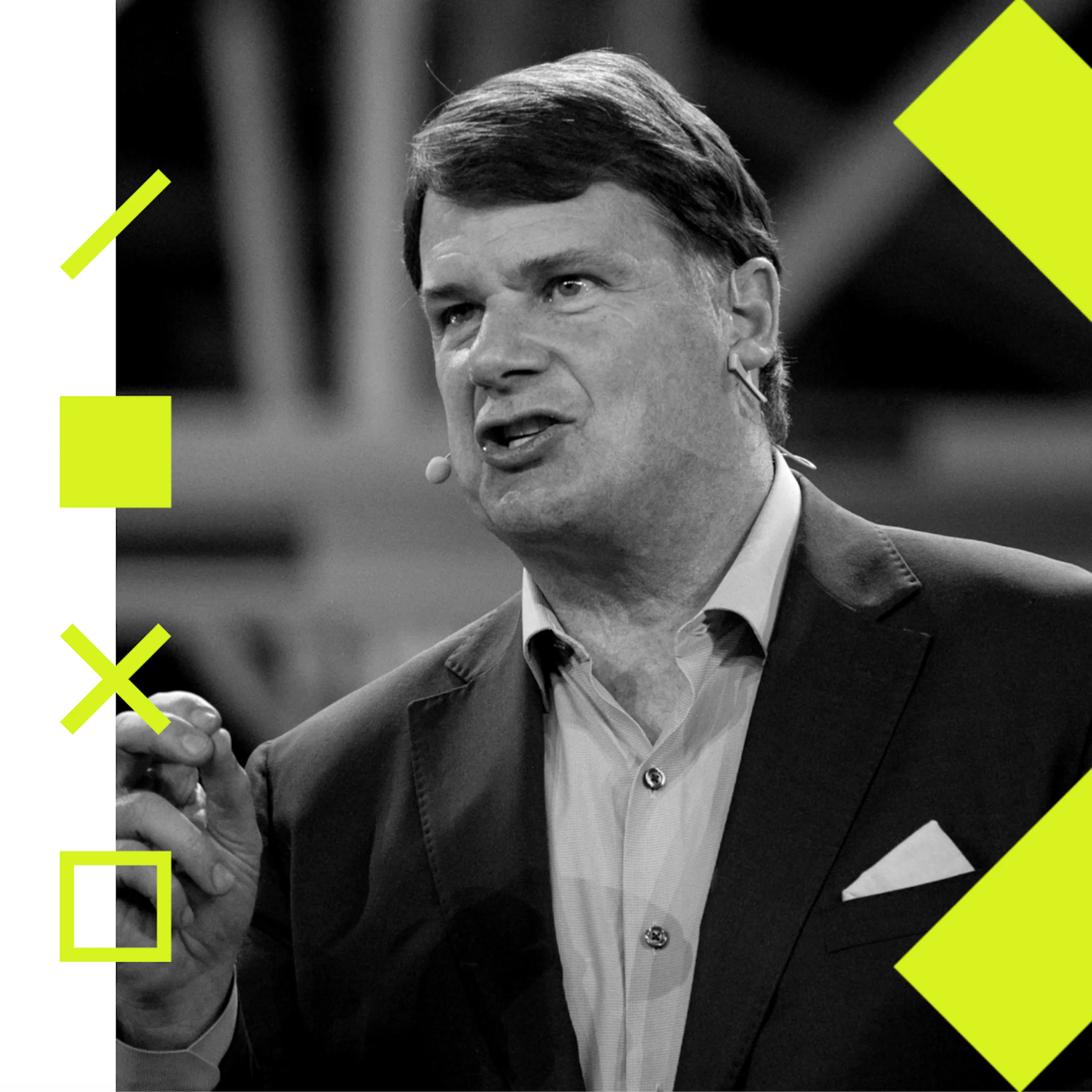
Overview of Rewind: CEO Jim Farley on Ford's EV gamble
In this interview, Ford CEO Jim Farley explains why Ford is radically reshaping its EV strategy, even if that means admitting the original approach behind vehicles like the Mustang Mach-E wasn’t good enough to win long-term. He argues Ford’s future EVs must be simpler, cheaper to build, more software-aware, and far better positioned against Chinese competitors like BYD. The conversation also goes deep on Ford’s stance on tariffs, CarPlay, AI in vehicles, BlueCruise autonomy, and Farley’s broader belief that America needs to revalue blue-collar and manufacturing careers.
Ford’s EV reset: why the company is starting over
The Mach-E was a learning phase
- Farley says Ford learned a lot from the Mach-E and its EV launch strategy, but that it’s now operating from “what we know now,” not what it knew five years ago.
- He frames Ford’s EV push as a gamble that required bigger risks than the company originally expected.
The new Universal EV Platform
- Ford’s new platform is designed to produce multiple affordable EVs from a common architecture.
- First product is expected in 2027.
- Ford says the first vehicle will be:
- pickup-like in silhouette, but not a traditional pickup
- roomy, with more interior space than a Toyota RAV4
- rear-wheel drive and fun to drive
- paired with a new digital experience unlike anything Ford says is currently sold in the U.S.
Ford’s core goals
- Reduce cost and complexity dramatically.
- Build for manufacturability from the start.
- Make EVs profitable and sustainable in the U.S.
- Use a separate “maverick”/Skunk Works-style team to avoid legacy Ford processes slowing the project down.
Competing with China and the EV pricing problem
Why China is the real benchmark
- Farley repeatedly says Chinese automakers are the dominant force in EVs globally.
- He points to:
- BYD’s vertical integration
- lower-cost LFP battery tech
- heavy local government support
- fast innovation and strong digital user expectations
Why “affordable” is not enough
- Farley says a $30,000 EV is only meaningful if it can be built profitably.
- He argues many automakers can offer low sticker prices but still lose money on each car.
- He emphasizes that the real challenge is making an EV customers can afford and a company can sustainably produce.
Ford’s competitive posture
- In North America, Ford believes the new platform is the right approach.
- Globally, Farley says Ford still has much more work to do to compete with China.
How Farley makes decisions: Gemba, simplification, and engineering reality
His decision-making process
- Farley says he uses Gemba: going to see problems with his own eyes.
- He says he looks at real manufacturing details, not just strategy decks.
What changed his mind
- He cites the Mach-E wiring loom:
- 70 pounds heavier than the Model Y’s
- expensive to carry around
- He also compares:
- number of fasteners
- complexity of legacy Ford systems
- outdated parts-release and CAD workflows
The takeaway
- Farley says Ford cannot win by layering new EV ideas onto old systems.
- The company had to create a separate team and a cleaner engineering approach to have a chance against BYD and Tesla.
Ford’s broader vision: the “essential economy”
A labor shortage crisis
Farley argues the U.S. has major shortages in:
- factory workers
- construction workers
- emergency workers
- plumbers and electricians
- dealership technicians
His concern about culture
- He says American culture overvalues elite white-collar paths and undervalues trade work.
- He believes AI is accelerating white-collar productivity, but essential industries are being neglected.
Ford’s response
- Ford is investing heavily in:
- safer, more dignified workplaces
- trade schools
- scholarships
- technician training
- He says Ford will host a Detroit conference to bring together companies, schools, government, and other stakeholders around the issue.
Personal example
- Farley says his 17-year-old son worked a summer welding job.
- He says he’d be proud if his son became a welder or mechanic.
- His point: skilled hands-on work should be seen as a respected, high-value career path.
Policy, tariffs, and the pressure on Ford’s business
Tariffs are a major profitability problem
- Ford took a large tariff-related hit, including about $800 million in one quarter.
- Farley says tariffs on imported parts stack up and are especially painful because Ford makes many vehicles in the U.S. but still relies on imported components.
What Ford is asking for
- A fair tariff regime that doesn’t punish companies making affordable U.S.-built vehicles.
- A policy structure that recognizes the reality of global supply chains.
- Relief or adjustment on tariffs that would otherwise add hundreds of dollars to monthly vehicle costs.
EV credits and emissions rules
- Ford says it doesn’t rely on the $7,500 EV consumer credit the way some others do.
- Farley wants:
- support for domestic battery production
- one national emissions standard
- practical rules that reflect customer demand for hybrids and EVs
- He says the company’s main policy fight is tariffs, not tax credits.
Software, CarPlay, and the future of the in-car experience
Ford is pro-CarPlay
- Farley says Ford does not want to “disrupt” people’s digital lives in the car.
- Ford wants customers to bring their phone ecosystem with them.
But Ford also wants its own layer
- The company wants to add value on top of CarPlay/Android with:
- trip planning
- vehicle data
- AI assistant features
- subscription services
- BlueCruise integration
- Farley says Ford should not try to replace the customer’s phone, but it does need its own software experience.
The unresolved Apple question
- Ford is watching Apple closely, especially around CarPlay Ultra.
- Farley says the key issue is whether Apple wants control of the whole vehicle experience.
- If Apple tries to control too much of the car, Ford may have to lean harder into its own platform or choose Google-based options more aggressively.
AI in the car
- Farley wants an in-car AI companion that’s vehicle-aware, not just a phone assistant brought in via Bluetooth.
- He believes OEMs need to be part of the AI relationship if the assistant is going to be useful for driving, vehicle condition, and safety.
Autonomy strategy: BlueCruise over robotaxi
Ford’s focus
- Farley says Ford is prioritizing highway driving automation and reliability over robotaxi ambitions.
- The goal is to be the safest, most dependable system for everyday drivers.
Why this path
- He sees more societal value in solving highway miles for millions of drivers than in chasing robotaxi hype.
- Ford is aiming for a practical “eyes-off” highway experience, not full self-driving everywhere.
Mustang tuning, aftermarket mods, and customer control
The tuning debate
- A caller asks about locked ECUs and whether they hurt Mustang sales.
- Farley says that isn’t the main reason Mustang sales changed.
Ford’s position
- Ford wants customers to have performance options, but not at the expense of reliability and quality.
- He says aftermarket tuning can create expensive damage and warranty issues.
- Ford’s likely direction is more controlled digital customization from the factory.
Bottom line
Farley’s message is that Ford is not just trying to build better EVs — it’s trying to reinvent how it designs, manufactures, and software-enables vehicles in a world reshaped by China, AI, and changing labor economics. The interview makes clear that Ford’s EV future depends on:
- radical simplification
- lower manufacturing cost
- new talent and new processes
- a stronger digital experience
- and policy conditions that don’t undercut domestic automakers
If you want, I can also turn this into a shorter executive summary or a bullet-point “key quotes” version.