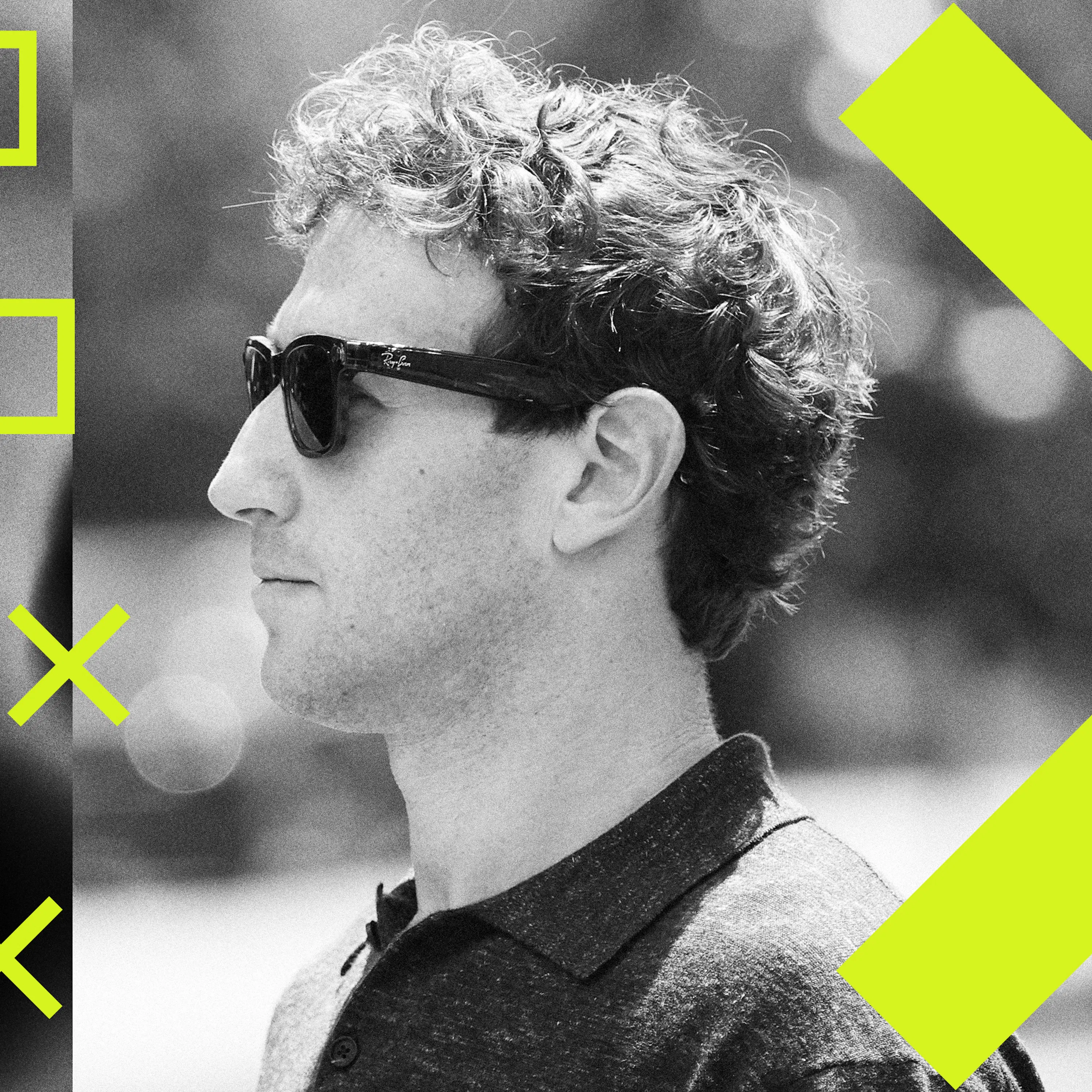
Overview of I have some questions for Mark Zuckerberg
In this Decoder episode, Nilay Patel reacts to Mark Zuckerberg’s recent interview on Sources and uses it as a springboard to lay out the follow-up questions he wishes he could ask Zuckerberg directly. The episode is less a straight recap of Meta’s current strategy than a pointed critique of how Meta talks about privacy, teen safety, AI safety, business models, and the real-world consequences of its products.
Main Themes
Meta glasses and passive surveillance
Nilay is especially skeptical of Zuckerberg’s framing of Meta’s smart glasses as analogous to smartphones.
- He argues that glasses with always-on or easy-to-trigger recording create a different social problem than phones.
- Unlike a phone, glasses can record more passively, without an obvious physical action signaling intent.
- He warns that Meta and the broader tech industry may be trying to normalize “passive surveillance devices” by folding them into the familiar smartphone mental model.
- He points out that Meta already appears aware of misuse, citing cases where glasses have been used to harass retail workers and women, leading Meta to downrank such content.
Core question: If Meta knows the product can enable abuse, what new norms or restrictions should exist around it?
Teen safety and Meta’s transparency problem
Nilay revisits Zuckerberg’s comments on teen safety and Meta’s multi-billion-dollar settlement.
- He argues that usage alone does not prove a product is healthy or beneficial.
- He compares social media to big tobacco: people can enjoy something while still being harmed by it.
- He notes the tension where Meta publishes research and transparency reports, then gets penalized for revealing harms that other companies may keep hidden.
- He suggests the real solution may be industry-wide transparency requirements, rather than only product-level restrictions.
Core question: Why should Meta be punished for being transparent, while less transparent competitors avoid scrutiny?
The “prisoner’s dilemma” of regulation
A major thread in the episode is Zuckerberg’s tendency to argue that Meta needs government action to solve industry-wide problems.
- On teen safety, Zuckerberg seems to imply Meta cannot act unilaterally because users will just move to TikTok or elsewhere.
- Nilay calls this a prisoner’s dilemma framing: Meta wants rules applied to everyone so it doesn’t lose out by acting first.
- But he contrasts that with Zuckerberg’s approach to AI safety, where Meta has argued the market will sort things out and that responsible labs will win.
Core question: Why does Zuckerberg want government coordination for social media safety, but market competition for AI safety?
AI safety, “Muse,” and the business model
Nilay also questions Meta’s new AI push, especially around its Muse product and how Zuckerberg describes it as a business tool.
- Zuckerberg says Muse will help people make money, save money, and handle transactions.
- Meta’s likely model, as Nilay sees it, is classic aggregation: if Meta controls enough consumer demand, it can take a small cut of transactions.
- Nilay notes Zuckerberg has long wanted to escape Apple’s control over mobile platforms, including the App Store’s fees and rules.
- He suggests Meta’s AI push may be another attempt to build the platform that comes after the iPhone.
Core question: How will Meta make downstream businesses feel good about a platform that may function like an aggregator extracting value?
Data centers and community impact
Nilay challenges Zuckerberg’s claims about the benefits of Meta’s data center investments.
- Zuckerberg presents data centers as long-term commitments that help local communities through tax revenue and public investment.
- Nilay argues the actual dealmaking often involves secrecy, aggressive tax breaks, and limited public visibility.
- He points to reporting on Meta’s Hyperion data center in Louisiana as an example of opaque negotiations.
Core question: If these projects are truly beneficial, why not make the details more public and let communities judge them directly?
Broader Takeaways
Nilay’s central criticism
Across the episode, Nilay’s main complaint is that Zuckerberg and Meta often frame their products as inevitable, neutral, or socially beneficial while dodging the harder questions about harm, power, and accountability.
The recurring tension
The episode repeatedly returns to one theme:
- When Meta benefits from market forces, Zuckerberg says the market will decide.
- When Meta risks losing ground, Zuckerberg calls for industry-wide rules or government action.
What Nilay wants from Zuckerberg
He isn’t just asking for better PR. He wants clearer answers on:
- whether Meta products are designed with adequate privacy safeguards,
- whether transparency about harms should be a shared industry obligation,
- whether AI safety should be treated with the same urgency as teen safety,
- and whether Meta’s long-term strategy is really about user benefit or platform control.
Final Note
The episode ends by reiterating that Zuckerberg declined to appear on Decoder, but Nilay says the invitation remains open. The whole piece functions as both commentary and an open list of unanswered questions for Meta’s CEO.