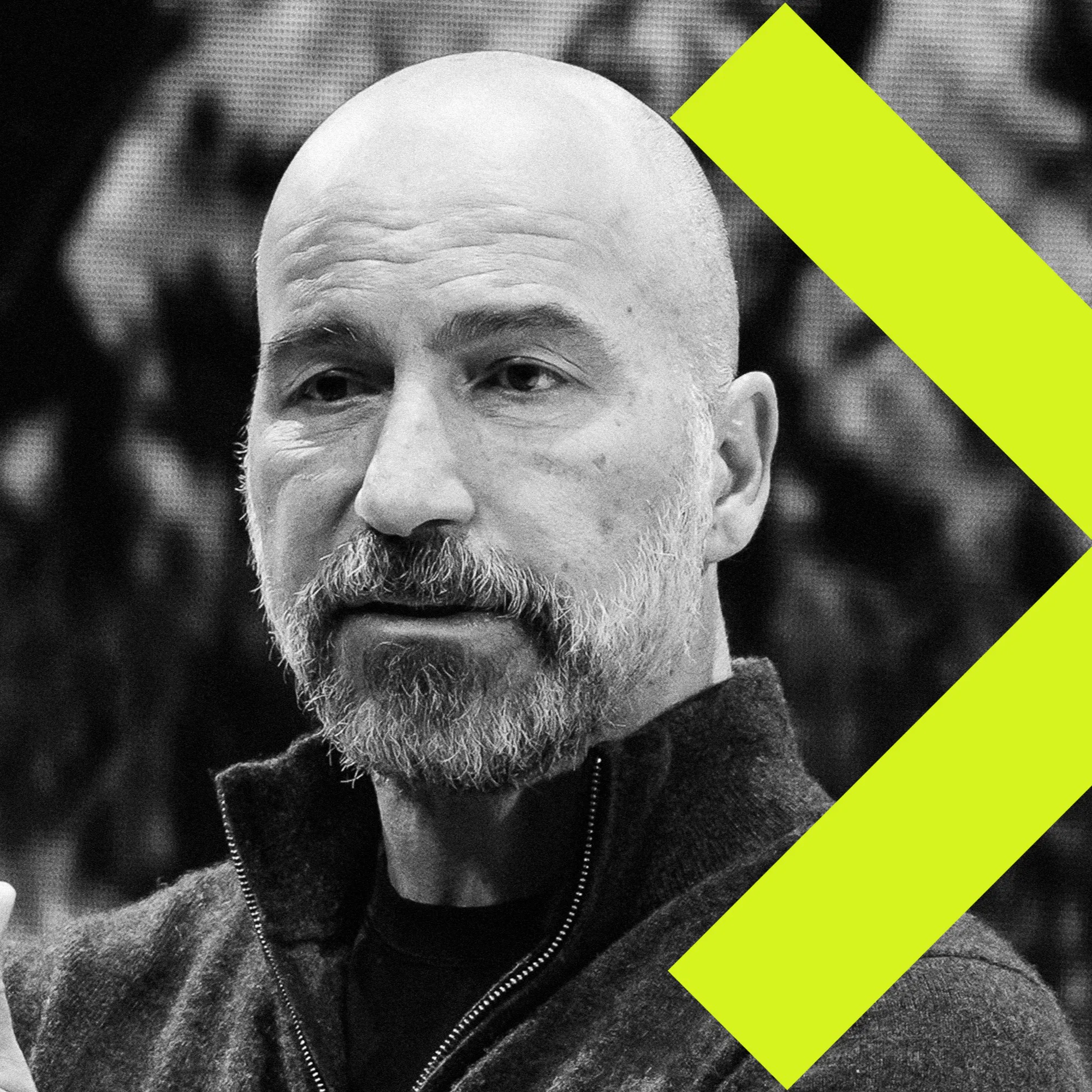
Overview of Decoder with Dara Khosrowshahi
The episode centers on Uber’s push to evolve from a ride-hailing app into a broader “platform” for travel, commerce, and eventually autonomy. Dara Khosrowshahi argues that Uber’s advantage is not just logistics, but the ability to handle real-world complexity at scale—dispatching cars, managing cancellations, integrating travel products, and using AI to make those systems faster and more contextual. The conversation also digs into how Uber is using AI internally, how it is thinking about autonomous vehicles, and what all of that could mean for drivers, company structure, and even the future of CEOs.
Uber’s “everything app” strategy
Uber is expanding beyond point-to-point rides into a more unified travel and commerce platform.
New products and partnerships
- Hotel booking inside the Uber app through a partnership with Expedia
- Travel mode that changes the app experience when users are away from home
- Uber Reserve as a step toward scheduled transportation, not just on-demand rides
- Experiments with:
- Trains in the UK
- Shopping assistants
- Coffee/snacks in rides
- Courier and personal shopping services
Why Uber thinks this works
- Uber sees a large existing audience already using the app for travel:
- 100M+ riders take airport trips each year
- 1.5B trips happen outside users’ home cities annually
- Khosrowshahi believes Uber can win by making the experience context-aware and end-to-end, not just by being a booking tool.
AI, agents, and the future of the app interface
A big theme is whether AI chatbots will become the interface between users and Uber.
Uber’s current view on consumer AI integrations
- Dara says calling an Uber from ChatGPT, Gemini, Alexa, etc. has not driven meaningful volume yet
- Those integrations often feel slower than just using the Uber app directly
- Uber is happy to be the backend service, but wants its brand and pixels visible in any AI-driven workflow
Why he thinks AI still matters
- AI makes it easier to:
- Handle real-world uncertainty
- Build more flexible interfaces
- Iterate faster and take more product risks
- He sees AI as making Uber’s “everything app” strategy more feasible, not less
How AI is changing Uber internally
The interview spends a lot of time on how AI is affecting software development and operations inside Uber.
Coding and product work
- Engineers are using tools like:
- Cursor
- Claude Code
- Codex
- Product managers and other non-engineers are also vibe coding simple fixes and features
- For larger projects, Uber still relies on conventional planning, design, and engineering discipline
Customer service and policies
Uber is rethinking how it uses rules and automation:
- Instead of hard-coding huge policy trees, Uber is experimenting with AI agents that work toward outcomes
- Dara says human-written policy docs are often messy and incomplete
- The goal is to tell an agent the desired outcome and let it decide within constraints
Budgeting and headcount
- Uber reportedly burned through its annual token/infra budget in just a few months
- Dara says Uber is now actively balancing:
- AI compute spend
- Hiring pace
- His view is not “fewer people,” but rather:
- If engineers become more productive, Uber wants to build more things, not just shrink
Company structure and decision-making
Khosrowshahi says Uber’s core decision framework hasn’t changed much.
His operating philosophy
- He still thinks in terms of:
- One-way doors vs. two-way doors
- Smart risk-taking
- He believes large companies naturally become more conservative, and Uber is trying to avoid that
Organizational changes
- The main structural change is the elevation of Andrew McDonald to President and COO
- Dara says this helps Uber manage the trade-offs between:
- Mobility
- Delivery
- Travel
- Platform-wide product decisions
Why the COO role matters
- Uber is increasingly a business of trade-offs
- The COO helps make decisions across the company’s competing priorities rather than within one business line
Autonomy and the future of drivers
Uber is making major investments in autonomous vehicles, but Dara says the company is not betting on one winner.
Major autonomy investments
- Significant commitments to:
- Rivian
- Lucid
- Nuro
- WeRide
- Avride
- Waymo partnerships in some markets
- Uber says it is building the broader ecosystem around autonomous vehicles, not just picking one model provider
Dara’s view of autonomy
- He believes autonomous driving is actually happening now, not “10 years away”
- He argues the industry is moving faster because:
- Models are better
- Simulation is better
- The economics are improving
- Uber is trying to be the platform that brings safe autonomous supply into the marketplace
What happens to drivers?
Dara’s answer is cautious but clear:
- He expects more drivers on the platform overall in 10 years than today
- Some human-driver work may shift toward:
- Shopping
- Courier tasks
- More complex on-the-ground services
- He acknowledges the societal impact is real and says CEOs should be honest about it
Will AI replace the CEO?
Uber employees have reportedly created an AI version of Dara for practice presentations.
Dara’s take
- The AI Dara exists, but he doesn’t think it’s a real substitute
- He believes the best outcome is humans + AI together, not a pure AI CEO
- He jokes that he’s not ready to be replaced yet
Driver pay, regulation, and local constraints
The conversation ends on a practical issue: driver economics.
Driver pay
- Dara says driver pay is tied to local market rates
- In high-demand markets like New York City, drivers can make substantially more per utilized hour
Regulation
- He argues some regulations, especially in New York, create inefficiencies
- Example raised:
- Westchester drivers can drive into NYC but can’t easily take return trips back, reducing utilization
- Dara says Uber is already lobbying on such issues
Key takeaways
- Uber is repositioning itself as a travel and logistics platform, not just a ride-hailing app.
- AI is becoming important internally before it becomes important as a consumer interface.
- Uber sees autonomy as inevitable, but expects a multi-player ecosystem rather than a single winner.
- Dara’s core management philosophy remains:
- take smart risks
- avoid bureaucracy
- focus on measurable trade-offs
- The company is preparing for a future where both software work and transportation work are being reshaped by AI.
Notable themes
- “Everything is a trade-off.” Dara repeatedly returns to this idea across product, hiring, compute, and autonomy.
- Context beats generic interfaces. Uber wants to serve people differently depending on where they are and what they need.
- AI is reducing the cost of experimentation. That makes Uber more willing to take bets.
- Uber wants to own the experience, not just the transaction. That applies to travel, delivery, and future autonomous services.