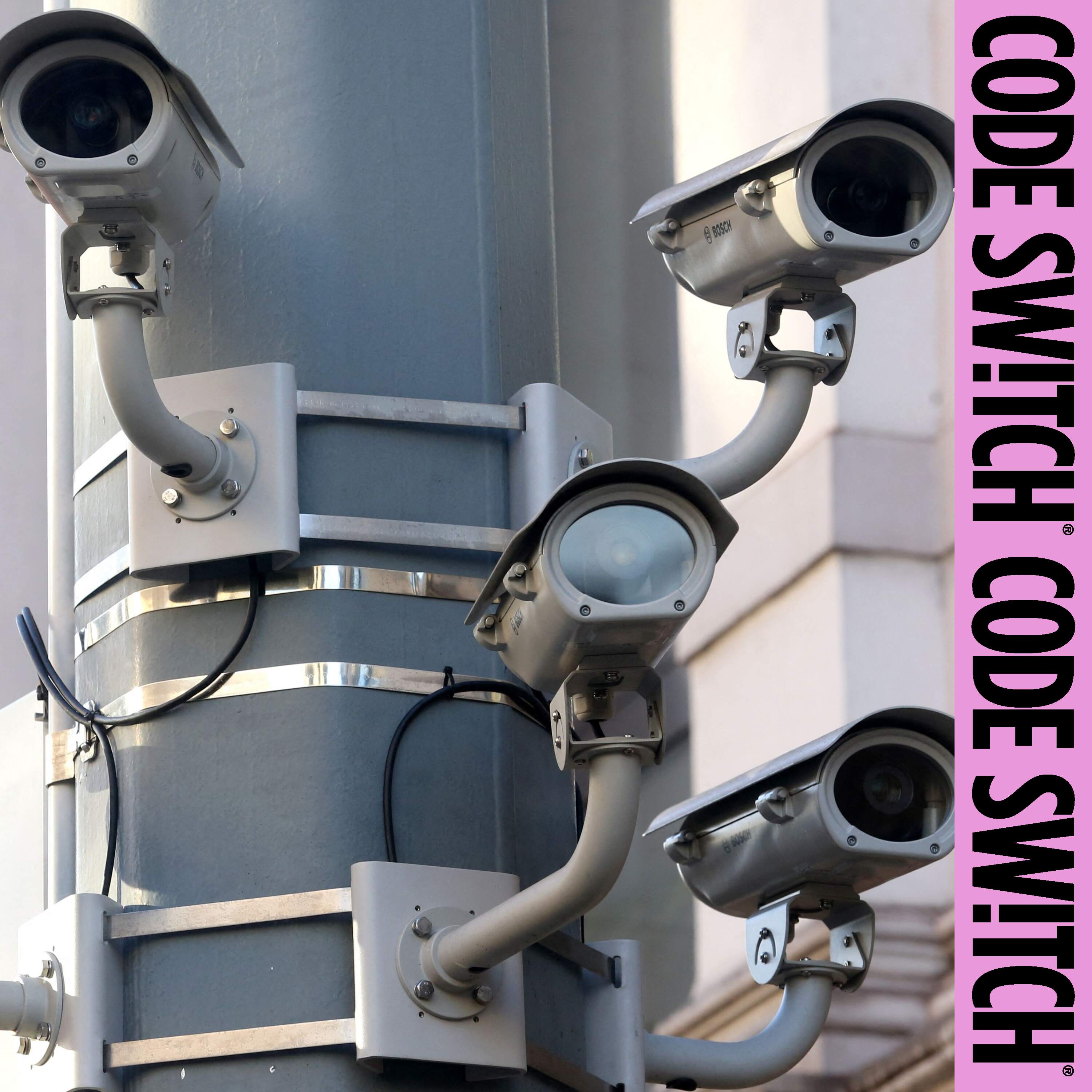
Overview of Why we’re all being watched
This Code Switch episode from NPR examines how modern surveillance has become woven into everyday life — from license plate readers and CCTV to Ring cameras, social media scraping, and data brokers — and why public backlash is growing now. Through a conversation with Matthew Gariglia of the Electronic Frontier Foundation, the episode argues that surveillance is not just about solving crime; it is a powerful system that can intensify policing, racial profiling, immigration enforcement, and political repression.
Key Topics Discussed
The rise of Flock and police surveillance tech
- Flock, a fast-growing private company founded in 2017, makes automated license plate readers now used by police departments nationwide.
- Its cameras scan billions of vehicles and have become a flashpoint over privacy, misuse, and overreach.
- The episode references public protests against Flock, including a viral San Diego city council appearance where a protester dressed as Darth Vader.
Surveillance in everyday life
- The hosts and guest describe how people are watched constantly in cities:
- street and intersection cameras
- transit surveillance
- automated license plate readers
- social media monitoring
- cellphone geolocation purchased from data brokers
- home cameras like Ring
- The point: surveillance is no longer limited to police investigations — it is ambient and widespread.
The “surveillance state” explained
- Gariglia defines the surveillance state as the government impulse to collect information on people whether or not they are already suspected of wrongdoing.
- A major concern is that surveillance inverts traditional legal logic:
- instead of building suspicion first and then obtaining a warrant,
- police collect data constantly and decide who looks suspicious afterward.
Race, policing, and surveillance history
- The episode connects modern surveillance to older technologies like fingerprinting and mugshots.
- These tools were developed and spread through colonial and racialized systems of control.
- Surveillance has long been used to define who counts as “suspicious,” often targeting Black people, immigrants, and marginalized communities.
Post-9/11 normalization of surveillance
- The conversation traces today’s surveillance boom to the post-9/11 era, when mass monitoring became culturally easier to justify.
- The “if you have nothing to hide” argument became common.
- Police increasingly blurred the line between counterterrorism and everyday crime control.
The money trail behind surveillance
- Surveillance expansion is driven not only by public funding, but also by:
- company grant writers helping police departments secure money
- police foundations funded by wealthy donors and corporations
- This means surveillance decisions are often shaped by those with money, not necessarily by public consensus.
Public backlash and current resistance
- Resistance is growing from multiple directions:
- privacy advocates
- left-leaning organizers
- libertarians and conservatives wary of government overreach
- local activists and groups like D-Flock
- Opposition is driven partly by fears that these systems can be used against:
- immigrants
- abortion seekers
- protestors
- people vulnerable to stalking and abuse
Main Takeaways
- Surveillance is infrastructure now. It is not just one camera or one company; it is a connected network of data systems.
- Police surveillance often expands by default. Even if it is justified as a tool for rare emergencies, it remains active all the time.
- It can be used selectively and unfairly. The episode stresses that surveillance often increases harassment of already-targeted communities.
- Tech companies are central players. Firms like Flock and Axon don’t just sell tools; they help shape how police obtain and use data.
- The backlash is about control, not just visibility. Many people are less bothered by cameras in principle than by not being able to control how the data is used or shared.
- Concern is becoming broader. More people now see surveillance as a threat across multiple issues: racial justice, immigrant rights, abortion rights, protest rights, and anti-violence work.
Notable Insights
On surveillance and policing
“The surveillance state is a technologically backed system that is designed to invert individualized suspicion.”
On why surveillance keeps expanding
- Gariglia argues surveillance is politically easy because:
- if crime rises, officials ask for more surveillance
- if crime falls, they claim surveillance worked
- This makes it a “no downside” industry for vendors and politicians.
On constitutional concerns
- The episode makes the case that mass license plate tracking is functionally similar to placing a GPS device under someone’s car.
- Gariglia argues this should require a warrant under the Fourth Amendment.
On the Ring camera ecosystem
- Ring footage can become part of police-accessible surveillance networks through partnerships with companies like Axon.
- The episode notes that consumers may think they own their devices, but not necessarily the data pathways behind them.
Conclusion
The episode’s central argument is that Americans have normalized a deeply connected surveillance system that reaches from city streets to private homes, and that system is increasingly being used not just for public safety but for monitoring, profiling, and control. The growing anti-surveillance backlash reflects a broader realization: surveillance is not neutral, and it affects nearly every social movement and everyday life.
Credits and Context
- Show: Code Switch from NPR
- Hosts: B.A. Parker and Gene Demby
- Guest: Matthew Gariglia, historian of policing and senior policy analyst at the Electronic Frontier Foundation