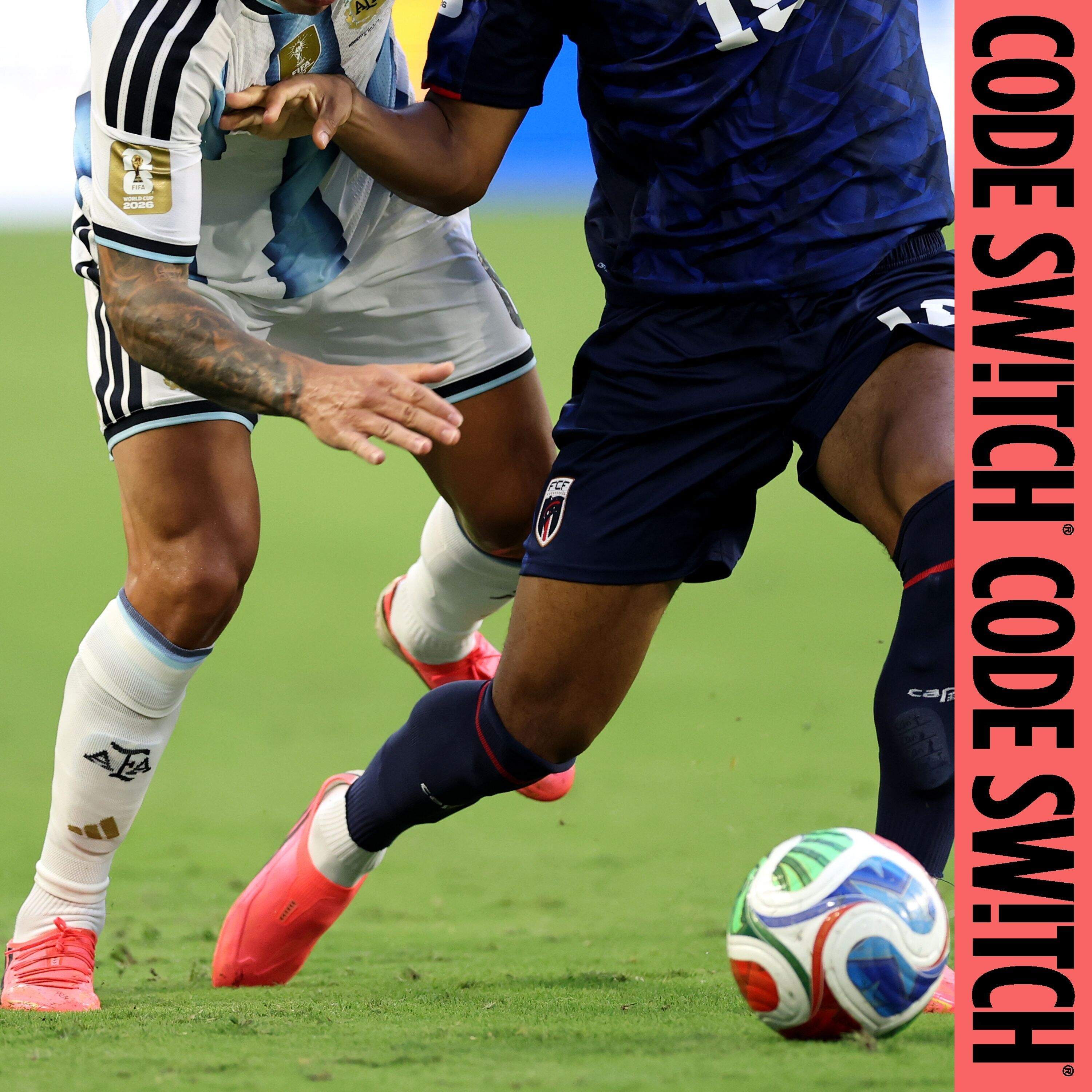
Overview of Why the World Cup is race and class all the way down
This Code Switch episode explores how the World Cup is never just about soccer: it’s a global stage where race, class, nationalism, immigration, colonial history, and soft power are constantly on display. Hosts Jean Demby and NPR immigration reporter Jasmine Garsd discuss what she saw reporting on the tournament across the U.S., and how teams like Morocco, France, Cape Verde, and Argentina reveal the deeper politics behind the sport.
Main Themes
The World Cup as a political and social spectacle
- The episode argues that the World Cup is “race and class all the way down.”
- Beyond the action on the field, it becomes a place where:
- nationalism is amplified,
- governments project power,
- fans perform identity,
- and inequality shows up in who can participate and who can even afford to attend.
Soft power, “sportswashing,” and FIFA’s money
- Jasmine notes that the World Cup is about more than sport at the highest level:
- diplomacy,
- global image management,
- and financial gain.
- The conversation contrasts how countries like Qatar or Saudi Arabia get accused of “sportswashing,” while the U.S. receives far less of that criticism despite similar dynamics around image and power.
- FIFA is described as highly motivated by profit, which can make soccer feel more exclusive even though it is often seen as a deeply accessible and democratic sport.
Class and access in the U.S. World Cup
- The hosts point to the cost of tickets and the broader “K-shaped economy” as evidence that the event is increasingly for people who can afford expensive access.
- Jasmine mentions speaking to fans who reportedly spent at least $10,000 on tickets and travel.
- The U.S. setting also raises questions about immigration, visas, and who gets included in American soccer culture.
Race, Colonial History, and National Identity
France and the legacy of colonialism
- The episode highlights France’s recurring discomfort with the fact that many of its top players are of North African or sub-Saharan African descent.
- This reflects France’s colonial history and immigration patterns, but also the racial anxieties that surface during each World Cup.
- The hosts discuss how fans can be pulled between different national allegiances, especially in diaspora communities.
Morocco and African soccer’s future
- Jasmine argues that African soccer represents the future of the sport.
- Morocco is framed as a model of long-term investment:
- government-backed development,
- strong infrastructure,
- elite training facilities,
- and a serious soft-power strategy.
- Cape Verde is also cited as an example of a small nation producing impressive football through a diasporic, transnational player pool.
Diaspora and complicated fandom
- The episode emphasizes how migration and colonial history shape who players represent and how fans choose sides.
- One example: a Cape Verde player was reportedly recruited through LinkedIn, showing how global and improvisational diaspora-based team building can be.
- The hosts also note how fans often “flatten” these complexities into simple loyalties, even when identity is layered and contradictory.
Argentina, Messi, and Race
Why Argentina is controversial in this World Cup
- Jasmine, who is Argentine-American, discusses the backlash toward Argentina’s national team.
- Lionel Messi is often treated as a special exception, but the team itself has drawn criticism for:
- a lack of Black players,
- the country’s history of racial and ethnic erasure,
- and Argentina’s long-running mythology of European-ness.
Erasure of Afro-Argentines and Indigenous people
- Jasmine pushes back on the idea that Argentina is simply “white.”
- She explains that scholars estimate a large portion of the population has mixed Indigenous or Afro-descended heritage, even if that diversity is often invisible on the national team and in official census categories.
- She emphasizes that talking about Argentina’s racial history requires nuance, not flattening the country into a single stereotype.
Historical examples that complicate the story
- The episode points to several figures and stories that challenge assumptions:
- Diego Maradona’s lineage was later connected to a Black ancestor in northern Argentina.
- José Ramos Delgado, a former Argentine defender, was of Cape Verdean descent.
- Kiki Ramos, a Haitian-Argentine youth player, is discussed as a possible future example of Black representation on the national team.
- Other examples include Afro-Argentine and brown civil-rights and cultural groups working to reclaim erased histories.
Notable Insights
- Sports fandom often requires contradiction. Jasmine describes loving soccer while also being repelled by the politics and exclusions surrounding it.
- National teams are not neutral. The episode shows that teams reflect histories of migration, empire, racism, and state power.
- Social media intensifies the debate. The discussion around Messi and Argentina becomes louder and more polarized online.
- Fans and commentators often essentialize nations. The episode critiques the tendency to say entire countries play or behave in fixed, racialized ways.
Closing Takeaway
The episode’s central message is that the World Cup is a mirror for global inequality and identity politics. Whether the topic is Morocco’s rise, France’s colonial past, Cape Verde’s diaspora-based team, or Argentina’s erased Black and Indigenous histories, the tournament exposes how deeply soccer is tied to race, class, nationhood, and power.
Extra Note
- The episode also briefly touches on Spanish-language broadcasting and the iconic “Goal!” call, reflecting how World Cup viewing in the U.S. is increasingly shaped by multilingual, transnational audiences.