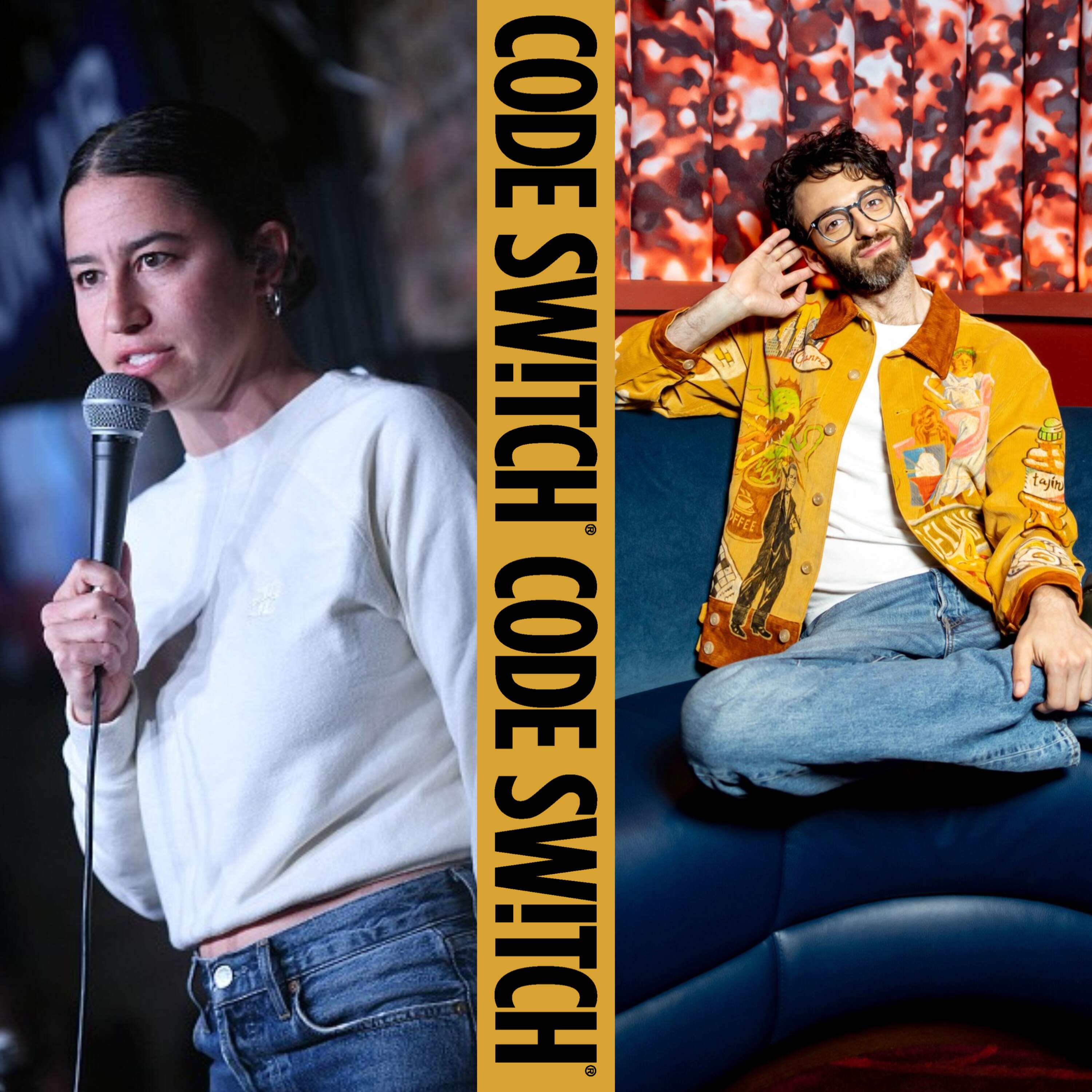
Overview of NPR's Code Switch episode “Who gets to joke about Israel?”
This episode examines how comedy has become more politically charged, especially around Israel, Gaza, and antisemitism. Hosts Gene Demby and B.A. Parker talk with Jewish comedians Ilana Glazer and Gianmarco Soresi about the rightward shift in comedy, the rise of “edgelord” humor, and the pressure on Jewish comics who are critical of Israel to explain or defend their politics. The conversation also explores how comedians increasingly operate as political actors, not just entertainers.
What the episode is about
The segment begins with a critique of comedian Shane Gillis and broader conservative comedy culture, using him and figures like Tony Hinchcliffe, Joe Rogan, and others as examples of comics whose appeal comes from saying offensive things and blurring the line between joking and political signaling.
From there, the episode narrows in on a more complicated question: in a comedy landscape where Israel and Gaza are politically divisive topics, what does it mean for Jewish comedians to publicly criticize Israel?
Key themes and arguments
Comedy is now deeply tied to politics
- The guests argue that comedy is no longer separate from power and public life.
- Comedians increasingly appear alongside politicians, at rallies, or in contexts that make their work feel like political endorsement.
- What used to feel like “just jokes” now lands differently when comedians are visibly connected to the machinery of influence.
The “edgy” comedy era has shifted
- Glazer describes older comedy scenes as being fueled by ironic misogyny and racist humor that often wasn’t really ironic at all.
- Both guests suggest that today’s offensive comedy is less about wit and more about shock value.
- The episode argues that this style is often less funny than it is politically useful or attention-grabbing.
Jewish comedians face a double bind
- Glazer and Soresi talk about the pressure they feel from two sides:
- Some people assume that being Jewish means being a Zionist.
- Others question whether Jewish critics of Israel are “really Jewish.”
- Their stance is that Jewish identity should not be used to police political opinion, especially when it comes to criticizing a foreign government.
Israel, Gaza, and the comedy world
- Both comedians say the Israel-Gaza conflict has created major fissures in friendships, families, and creative communities.
- Soresi describes the shock of seeing progressive friends rapidly align with Israel after October 7.
- Glazer says her activism intensified after Trump, and later through her growing understanding of what was happening in Israel and Palestine.
The Riyadh Comedy Festival controversy
- The episode discusses the Saudi-backed Riyadh Comedy Festival, which booked major American comics and sparked accusations of reputation laundering.
- Neither guest was asked to perform, but they say the festival exposed how many comedians are willing to accept money or prestige without fully reckoning with the political implications.
- Glazer says she wouldn’t have fit the festival’s purpose anyway, while Soresi says he never had to face the moral dilemma because he wasn’t invited.
Jewish comedy and its roots
The conversation also places Jewish comedy in historical context:
- Jewish comedians have long shaped American comedy, from Yiddish theater and the Catskills to figures like Lenny Bruce, Joan Rivers, Mel Brooks, and others.
- Glazer and Soresi connect that tradition to traits like:
- punchline-heavy writing
- self-deprecation
- cultural outsider perspective
- sharp, dense joke construction
They frame Jewish comedy as deeply embedded in the structure of American humor, not just a niche category.
What the guests say about speaking out
Ilana Glazer
- Says speaking out on human rights and Gaza has been professionally and personally costly.
- Argues that silence in the face of injustice is “in poor taste.”
- Says her platform gives her a responsibility to speak honestly, even if it is not funny or easy.
Gianmarco Soresi
- Says he feels free to criticize Israel because being Jewish does not require agreement with any government.
- Notes that the worst part of speaking out is not the criticism itself, but being cast as a moral authority.
- Emphasizes that his job is to make jokes, not moral pronouncements, even though audiences sometimes expect both.
Main takeaway
The episode argues that comedy is no longer just a place for jokes — it is part of the political and cultural battlefield. In that environment, Jewish comedians who criticize Israel are navigating a difficult space shaped by antisemitism, Zionism, activism, audience expectations, and the growing political power of comedy itself.
The central message is that criticism of Israel should not be confused with antisemitism, and that comedians — especially Jewish ones — are increasingly being pushed to choose between artistic freedom, political honesty, and public identity.