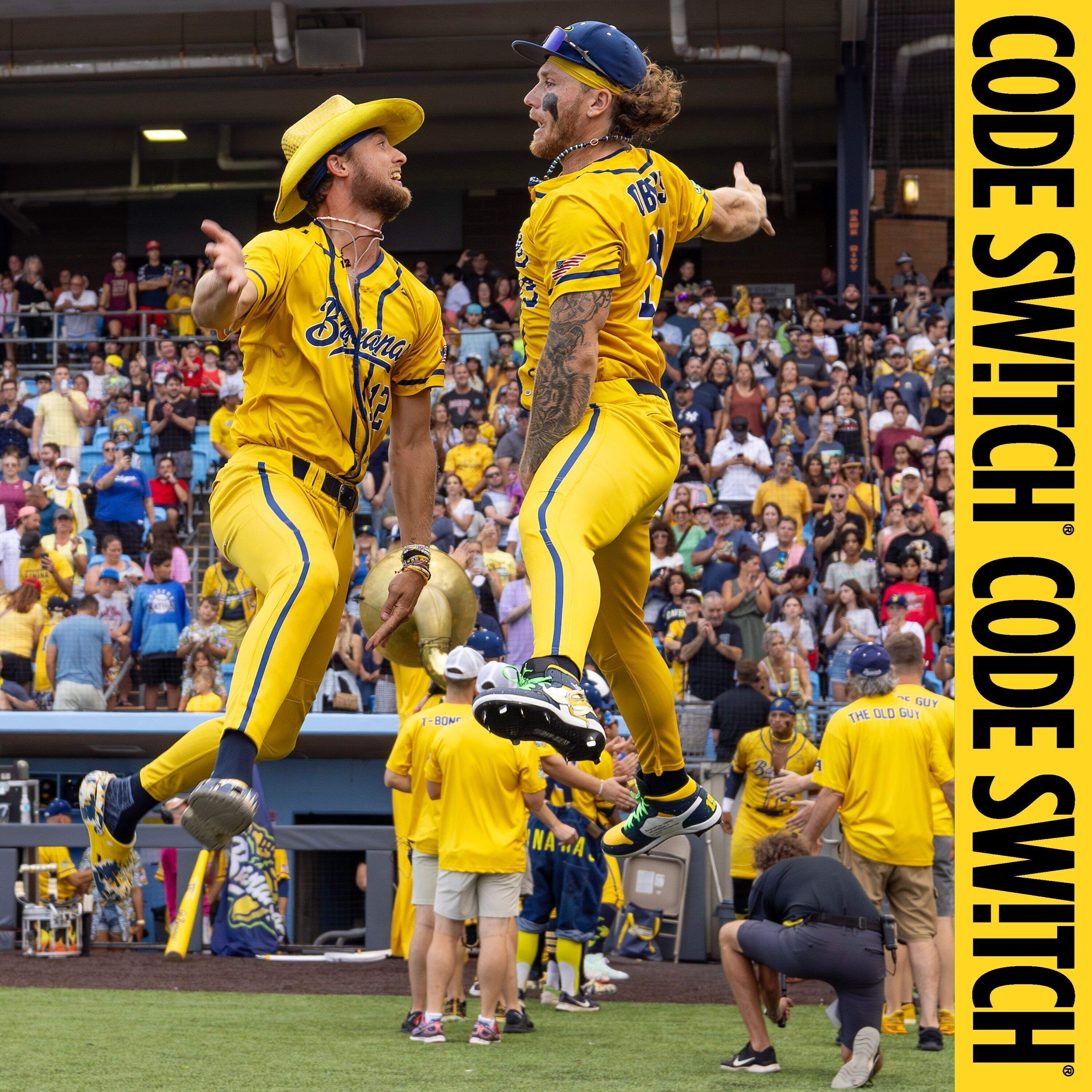
Overview of NPR's Code Switch
This episode examines the rise of the Savannah Bananas and their revival of the Indianapolis Clowns, using that story to explore the complicated history of Black baseball, entertainment, and racial minstrelsy in America. While the Bananas package baseball as viral, family-friendly spectacle, the episode asks what gets lost when that history is retold in a simplified, feel-good way—especially given the deeply fraught legacy of the original Clowns.
What the Episode Is About
- The Savannah Bananas have turned baseball into a touring entertainment product built for social media, with dances, comedy bits, audience interaction, and unusual on-field antics.
- Their extended universe includes a revived version of the Indianapolis Clowns, a Negro Leagues team with a controversial past.
- The episode uses that revival to dig into:
- the history of Black barnstorming teams,
- how entertainment and racism overlapped in early baseball,
- and why the Clowns remain a sensitive subject in Black baseball history.
Key Historical Context
The Indianapolis Clowns and racial minstrelsy
- The Clowns originally emerged as the Ethiopian Clowns, with players using clown makeup, faux African names, and comedic routines.
- They were part of a broader tradition of racial caricature and minstrelsy in American entertainment.
- Some of their acts were explicitly degrading or stereotypical, and many Black writers, players, and historians saw them as harmful to the broader project of Black baseball dignity and major league integration.
Why they were controversial
- Critics argued the Clowns made Black baseball look buffoonish and reinforced racist ideas that Black players were not serious athletes.
- Wendell Smith, a major Black sportswriter and advocate for integrating Major League Baseball, was especially critical and called them a “fourth-rate Uncle Tom minstrel show.”
- At the same time, the Clowns were also a commercial success and not universally hated; reactions in the Black community were mixed.
Integration changed everything
- After Jackie Robinson broke the color barrier in 1947, Major League Baseball began siphoning off the best Black talent.
- The Negro Leagues weakened economically as attendance and rosters declined.
- The Clowns survived longer than many teams because they were already structured as an entertainment act, not just a baseball team.
Notable People and Moments
Hank Aaron
- Hank Aaron’s first professional team was the Indianapolis Clowns.
- He signed with them as a teenager in 1952 before being sold to the Braves.
- The episode notes that Aaron was there to play baseball, not clown around, even though the team’s business model depended on spectacle.
Toni Stone, Connie Morgan, and Mamie “Peanut” Johnson
- In 1953, the Clowns signed Toni Stone, the first woman to hold a regular position for a major Black baseball club.
- The following year they added Connie Morgan and Mamie “Peanut” Johnson.
- These signings brought attention back to the team for a time, but the boost was temporary.
Buck O’Neil
- The episode references Buck O’Neil’s discomfort with his past playing for the Zulu Cannibal Giants, another example of how deeply embarrassing and demeaning some of these acts were for Black players.
Main Argument / Takeaway
- The Bananas’ resurrection of the Clowns is presented as incomplete history: not false, but highly sanitized.
- The episode argues that the Bananas lean into the “fun” version of the Clowns while leaving out the ugly realities of racial caricature, segregation, and the limited choices available to Black players.
- In that sense, the revival becomes a “sin of omission”:
- it celebrates the spectacle,
- but not the exploitation or controversy that shaped it.
Broader Themes
- Race and entertainment: Baseball was never separate from performance, and performance was often shaped by racism.
- Economic necessity: Many Black players took jobs with teams like the Clowns because they needed work, not because they endorsed the act.
- Historical memory: Each generation seems to get a new, softened version of the Clowns, while the harder truths remain contested or minimized.
- The limits of nostalgia: A fun, family-friendly sports product can obscure the painful histories it borrows from.
Bottom Line
The episode uses the Savannah Bananas as a springboard into a larger conversation about how America remembers Black baseball. It shows that the Indianapolis Clowns were both a successful entertainment act and a source of real harm and embarrassment in Black sports history—and argues that any revival of that legacy should reckon with both sides, not just the crowd-pleasing one.