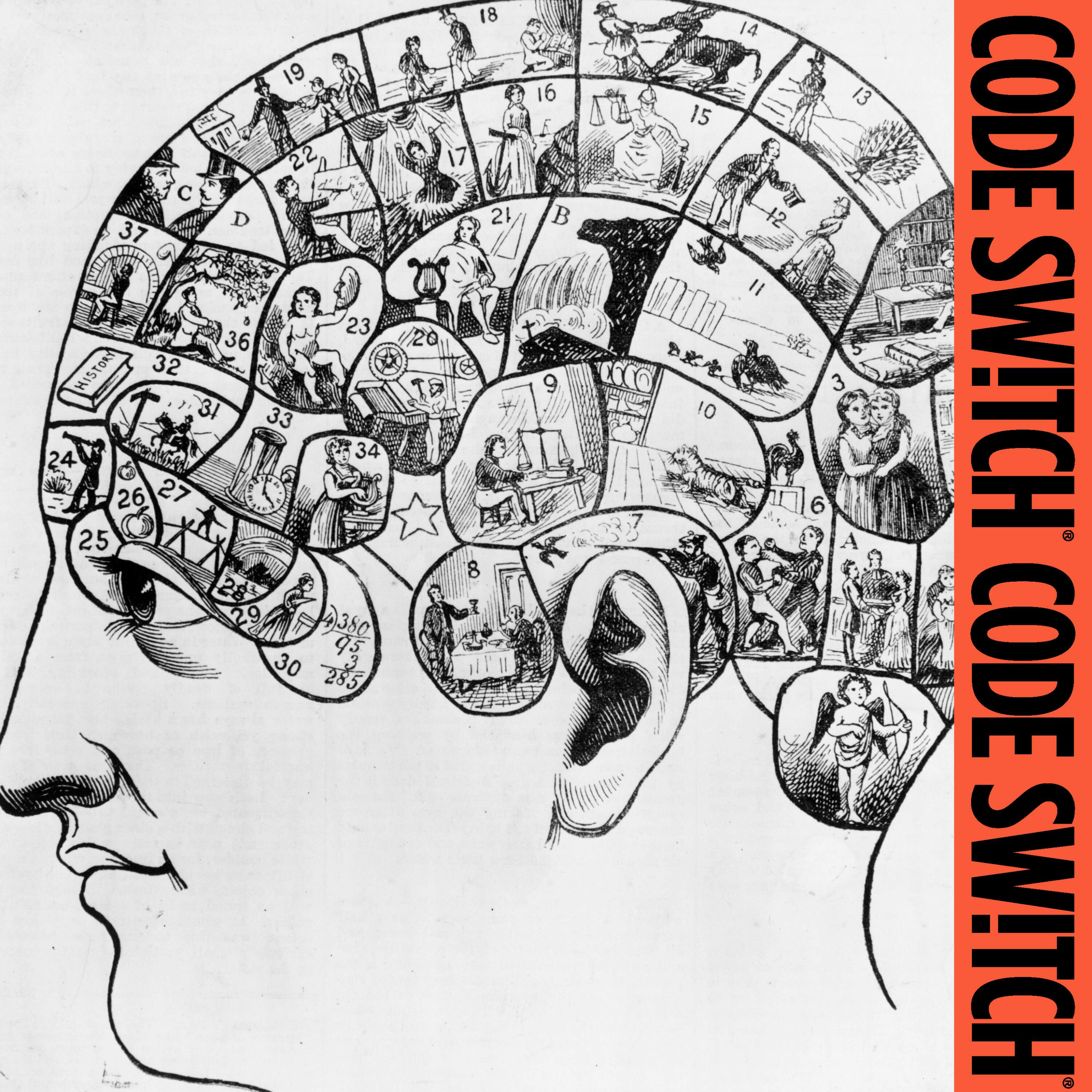
Overview of Weaponizing IQ: Who gets to be smart?
This NPR crossover episode between Code Switch and It’s Been a Minute examines how IQ has been used as a tool for ranking people, justifying inequality, and reinforcing racial and class hierarchies. Through interviews with historian Quinn Slobodian and science writer Angela Saini, the episode traces the history of IQ from eugenics to today’s political and tech culture, arguing that the obsession with “high IQ” often says more about power than intelligence.
Main Takeaways
-
IQ is treated as objective, but it’s deeply political.
The episode argues that IQ scores have long been used to make exclusion look scientific. -
The modern IQ obsession has roots in eugenics.
Intelligence testing grew out of efforts to measure heredity and sort people into hierarchies of worth. -
Today’s “high IQ” talk is common in both right-wing politics and Silicon Valley.
It shows up as a way to glorify elites, dismiss critics, and rationalize inequality. -
The tests themselves are limited and culturally loaded.
IQ and standardized tests reward certain forms of knowledge, upbringing, and schooling—not some pure measure of human value. -
There are many kinds of intelligence.
The episode pushes back on the idea that math, coding, or test performance are the only meaningful forms of intelligence.
Historical Roots of IQ and “Race Science”
Angela Saini explains that the idea of measuring intelligence took shape alongside the eugenics movement in Britain, when thinkers like Francis Galton tried to rank people by inherited traits. That logic fed into later ideas that some families—and eventually some races—were naturally more intelligent than others.
The episode also highlights examples of extreme IQ-based thinking, including:
- William Shockley, transistor inventor, who advocated sterilizing people with low IQs.
- The Bell Curve by Richard Herrnstein and Charles Murray, which helped revive public debate about genetic inequality and race/IQ claims in the 1990s.
- Far-right and anti-immigrant arguments in Europe that use IQ language to mask racism and Islamophobia.
IQ in Politics and Tech Today
The discussion connects older race science to modern political and tech rhetoric:
Trump-era politics
- Trump repeatedly uses “high IQ” as a compliment for allies and “low IQ” as an insult for enemies.
- The episode frames this as a form of dog-whistling and coded hierarchy, especially when aimed at Black political figures.
Silicon Valley and the tech right
- In tech culture, IQ is often treated as a proxy for who should lead, build, and decide.
- That worldview reduces people to their supposed utility in a data-driven economy.
- The episode suggests this mindset can justify social sorting, wealth concentration, and a belief that some people are naturally meant to rule.
The Problem with IQ Tests
Angela Saini and the hosts point out several flaws in IQ-style measurement:
- They can reward cultural familiarity, not raw ability.
- They often reflect schooling, environment, and class access.
- They flatten different kinds of skill into one number.
- They can make inequality look natural and deserved.
A recurring point is that intelligence is not one-dimensional. Someone may be strong in math, while another excels in creativity, caregiving, practical problem-solving, or emotional intelligence.
A Counterexample: The “Black Intelligence Test”
The episode discusses the Black Intelligence Test of Cultural Homogeneity, created by Dr. Robert Williams in 1972. It was designed to reveal how “objective” tests can actually depend on culturally specific knowledge.
Its point:
If a test is built around one group’s experience, it will inevitably advantage that group.
What the Episode Says About Meritocracy
A major argument in the conversation is that IQ fetishism is really a defense of inequality:
- It makes hierarchy feel natural.
- It lets institutions justify exclusion while pretending to be neutral.
- It turns complex social problems into supposedly measurable personal deficits.
The episode also notes that liberal institutions have embraced similar logics through gifted programs, elite admissions, and standardized tests as merit filters.
Is There Any Use for Standardized Testing?
The conversation lands on a nuanced point: the hosts and guests do not argue that all testing should disappear. They acknowledge that schools, colleges, and employers need some way to assess ability.
But they also stress:
- No test is perfect.
- Test scores should not be mistaken for human worth.
- Better systems would account for background, opportunity, and multiple forms of talent.
Final Thought
The episode’s central message is that society should stop treating IQ as a single, sacred measure of intelligence. Instead, it asks listeners to value broader forms of skill, especially those that are often overlooked—care work, emotional intelligence, creativity, and practical knowledge.
In short: the problem is not just the number. It’s the hierarchy built around it.
Notable Ideas and Quotes
- “Numbers can’t be racist” — challenged throughout the episode as a false assumption.
- “IQ fetishism is actually just an expression of a deeper commitment to inequality” — a core takeaway from Angela Saini.
- The episode suggests that AI hype mirrors IQ worship: both elevate intelligence as the ultimate human value while undervaluing lived, social, and relational forms of skill.