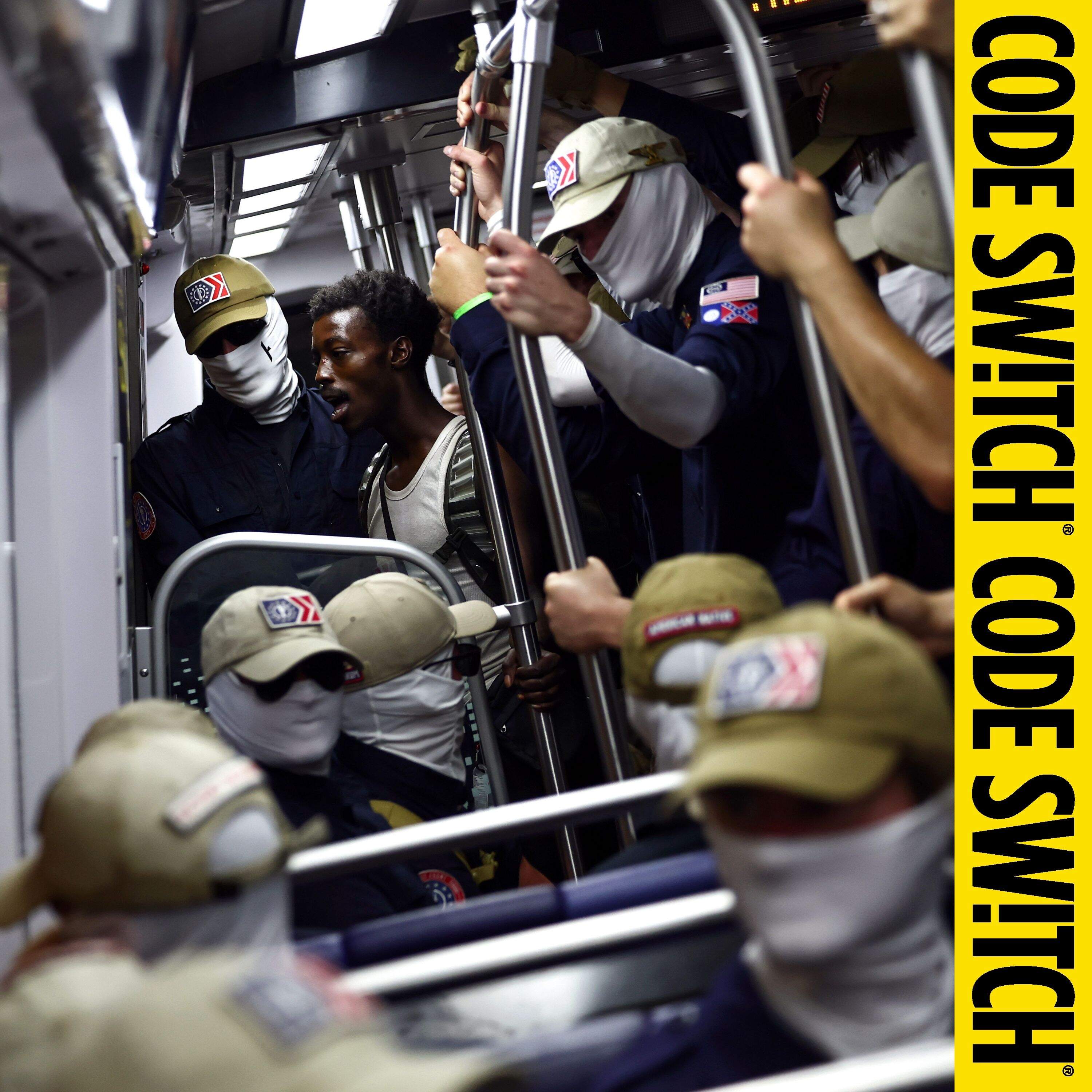
Overview of Inside the culty white supremacists the feds are ignoring
This NPR Code Switch episode examines Patriot Front, a neo-Nazi white supremacist group that has gained visibility through coordinated public marches and propaganda campaigns, while also operating like a cultish, quasi-MLM-style organization under founder Thomas Rousseau. The episode then broadens into a larger critique of how the Trump administration is responding to political extremism: instead of focusing on the most lethal domestic threat—white supremacist violence—it is increasingly targeting left-wing extremism and civil society groups like the Southern Poverty Law Center (SPLC).
What Patriot Front is and how it works
A white nationalist group with a polished public image
- Patriot Front is described as a neo-Nazi organization seeking a white ethnostate and the ethnic cleansing of the United States.
- The group tries to look disciplined, patriotic, and nonthreatening in public:
- matching khakis/polos or red-white-and-blue patches
- masks, sunglasses, and caps to hide identities
- orderly marches and banner drops
- That aesthetic is intentional: it helps them look more “mainstream” to men on the right who may not yet be fully radicalized.
Why it resembles a cult or pyramid scheme
- Reportedly, members must buy branded propaganda materials from Rousseau every month.
- Members are expected to spend time and money on:
- stickers
- stencils
- banner drops
- other street propaganda
- Former infiltrators and researchers described it as:
- a cult
- a pyramid scheme
- a street team for the white ethnostate
Patriot Front’s place in the white supremacist ecosystem
An “entryway” group
- Patriot Front is not mainly about formal politics or working through the system.
- It fits into an accelerationist worldview:
- pushing social chaos
- encouraging disorder and instability
- hoping collapse will help produce a white ethnostate
- While some even more extreme groups openly discuss sabotage or attacks, Patriot Front is more of a gateway organization:
- recruits people
- normalizes the ideology
- can funnel members into more violent or criminal networks later
Not the Klan, but the same ideology in a newer package
- The episode notes that the Klan is “passe” to many younger extremists.
- The core beliefs are similar, but the branding and presentation are updated for a Gen Z audience.
- Their anti-LGBTQ+, anti-trans, and anti-immigrant messaging is deliberately framed to appeal to “normie” conservative grievances.
Why the group matters even if it looks unserious
More than cosplay
- Patriot Front has often been dismissed as “LARPing” or performative.
- But the episode stresses that they are not harmless.
- They have been tied to real-world violence, including:
- a broad-daylight assault on an African-American musician in Boston
- Their visibility may help them recruit, and their ideology explicitly promotes harm to people who are not white, Christian, and cisgender male.
Growth and emboldenment
- Leaked records suggest Patriot Front may now have as many as 500 members, more than double its size a few years earlier.
- The episode suggests their public demonstrations reflect a moment of relative confidence, even as the broader far-right scene has been somewhat quieter.
The Trump administration’s focus: left-wing extremism
A major policy shift
- The Trump administration is described as:
- downplaying far-right extremism
- emphasizing “far-left terrorism” as a major threat
- Secretary of State Marco Rubio convened an international effort to address what the administration calls left-wing extremism.
- The State Department also issued restrictions aimed at foreign nationals allegedly associated with far-left terrorist groups.
Why experts dispute that framing
- Odette Yousef says the data do not support the idea that left-wing extremism is the primary deadly threat.
- Historically and in recent years, far-right violence has caused far more deaths.
- The episode notes that:
- political violence from the left was more prominent decades ago, especially in the 1970s
- today, the most persistent and lethal threat is white supremacist violence
The SPLC case and concerns about civil liberties
What the administration is doing
- The Trump administration has gone after the Southern Poverty Law Center, which tracks extremist groups.
- The episode says the administration has not just criticized the SPLC but brought criminal charges, alleging fraud involving:
- bank accounts used to pay informants
- donor money allegedly misrepresented in purpose
- This is seen as part of a broader effort to target left-leaning and civil society organizations.
Why this is alarming
- The SPLC has historically helped expose and undermine groups like the KKK and skinheads.
- Critics see the case as a test of NSPM-7, a national security memo that could chill support for what the administration labels the “radical left.”
- The larger concern is that the government is shifting from prosecuting criminal acts to policing ideology.
Bigger takeaway: ideology vs. criminal behavior
The core warning
- Odette Youssef’s central point is that law enforcement should focus on criminal conduct, not political beliefs.
- The current administration’s posture is troubling because it appears to:
- define danger by ideology first
- treat left-wing beliefs as inherently suspicious
- downplay the more lethal threat of white supremacist violence
The episode’s broader message
- Patriot Front illustrates how white nationalism is adapting:
- slicker branding
- community-building for disaffected young men
- public visibility without overt street violence
- But the larger story is about misdirected federal priorities:
- the most dangerous extremist networks are not being treated as the primary threat
- meanwhile, leftist organizing and civil society groups face intensified scrutiny
Notable insights
-
“They’re hype beasts for Hitler.”
A blunt description of how the group packages extremist identity for young men. -
“The ideology really is the same; it’s the presentation that differs.”
A key point about how modern white nationalism rebrands old hate. -
“There should be a focus on identifying criminal activity and prosecuting criminal activity.”
The episode’s clearest statement of the proper standard for extremism investigations.
Bottom line
Patriot Front is portrayed as a highly organized, aggressively racist, recruitment-minded neo-Nazi group that uses modern optics to expand its reach. But the episode’s bigger concern is that the U.S. government is increasingly misidentifying the main domestic extremism threat, focusing on the left while white supremacist networks remain a serious and persistent source of violence.