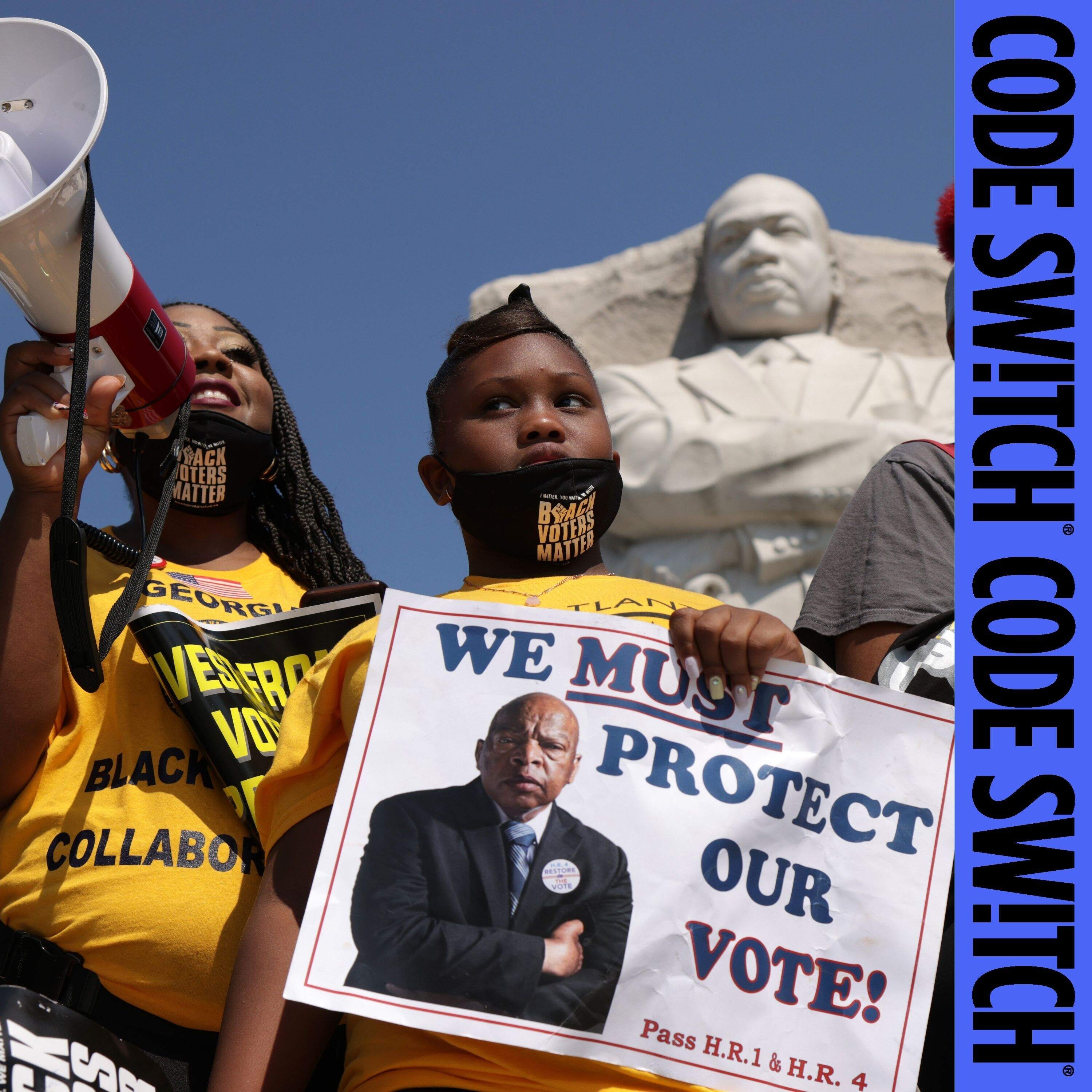
Overview of How the Supreme Court gutted Black voting power
This NPR Code Switch episode explains how a recent Supreme Court decision in Louisiana v. Callais weakened one of the last major protections in the Voting Rights Act of 1965, making it much harder to challenge racially discriminatory voting maps. The conversation focuses on how the Court’s conservative majority, led in this area by Chief Justice John Roberts and Justice Samuel Alito’s opinion, is accelerating the erosion of Black political power—especially in the South—by raising the legal bar for proving voting discrimination.
Main Takeaways
- The Voting Rights Act (VRA) was a landmark civil rights law that transformed American democracy by protecting Black voters and other voters of color from intimidation, literacy tests, poll taxes, and discriminatory districting.
- The Supreme Court has spent years weakening the VRA, and this ruling is presented as one of the most significant blows yet.
- The Court did not declare Section 2 of the VRA unconstitutional, but it effectively changed how it can be enforced in redistricting cases.
- Going forward, challengers must do more than show that a map dilutes Black voting power; they must prove intentional racial discrimination, which is much harder to establish.
- The ruling is expected to make it far more difficult to create or preserve majority-Black districts and to challenge maps that reduce representation for Black voters.
What the Supreme Court Changed
From “effects” to “intent”
The episode emphasizes that the key shift is away from a results-based standard and toward an intent-based one:
- Before: If a districting plan had the effect of weakening minority voting power, it could violate Section 2.
- Now: Plaintiffs may need to show lawmakers explicitly intended to discriminate on the basis of race.
Voting rights experts note that this is a major departure from how Congress revised the VRA in 1982, when it rejected a narrower, intent-only standard.
Race vs. partisanship
The Court’s reasoning creates a major loophole:
- Lawmakers can often defend a racially discriminatory map by saying it was drawn for partisan advantage, not racial discrimination.
- Since Black voters overwhelmingly vote Democratic, the distinction between race and party becomes extremely blurry in practice.
- Critics argue this lets states disenfranchise Black voters while hiding behind claims of political strategy.
Why the Decision Matters
Immediate impact on representation
The episode warns that the ruling could lead to:
- Fewer majority-Black districts
- Reduced Black representation in Congress
- Broader erosion of representation at the state, county, and local levels
An NPR analysis cited in the episode says at least 15 House districts were already at risk after earlier redistricting fights.
Biggest impact in the South
Because most Black Americans live in the South, the ruling is expected to hit that region hardest. Tennessee is highlighted as an early example, where the only Democratic district—and the only majority-Black district—was eliminated.
Potential historic consequences
The episode notes that the shrinking number of Black representatives on Capitol Hill could fall to levels not seen since Reconstruction, underscoring the historical scale of the ruling.
The Broader Redistricting Battle
The conversation places the ruling in the context of a nationwide redistricting arms race:
- Texas redrew maps to benefit Republicans.
- California responded with maps favoring Democrats.
- Other Southern states, and President Trump, have encouraged further map changes.
The result is described as chaotic, with voters facing confusion and shifting district lines across multiple states.
What Could Happen Next
Further weakening of the VRA
The episode suggests the Court may not be finished:
- A future case could decide who is allowed to sue to enforce Section 2.
- If the Court says only the Justice Department can bring these cases, private groups and individuals—the main drivers of voting rights litigation—would be shut out.
- Because enforcement depends heavily on the executive branch, the effectiveness of the VRA would vary based on who controls the White House.
Congressional action is possible, but unlikely
Advocates like Rep. Terri Sewell argue the VRA needs to be:
- Restored
- Strengthened
- Expanded
But the episode makes clear that this would likely require:
- Democratic control of Congress
- A supportive White House
- And somehow surviving a hostile conservative Supreme Court
Core Argument of the Episode
The episode frames the Court’s approach as part of a broader colorblindness ideology:
- Conservative justices argue that the best way to stop racial discrimination is to stop using race in decision-making.
- Voting rights advocates counter that ignoring race does not solve racial inequality—it often conceals and preserves it.
- The VRA was built on the opposite premise: that race must be considered in order to prevent discrimination in voting.
Notable Insight
A central takeaway from the episode is that the Court has not just weakened a law—it has changed the rules of democratic participation, making it harder for historically marginalized communities to translate population into political power.
Bottom Line
This episode argues that the Supreme Court’s latest Voting Rights Act ruling is a turning point: it sharply limits the ability to fight racial gerrymandering, threatens Black representation nationwide, and may signal that the VRA’s most important protections are becoming functionally unenforceable.