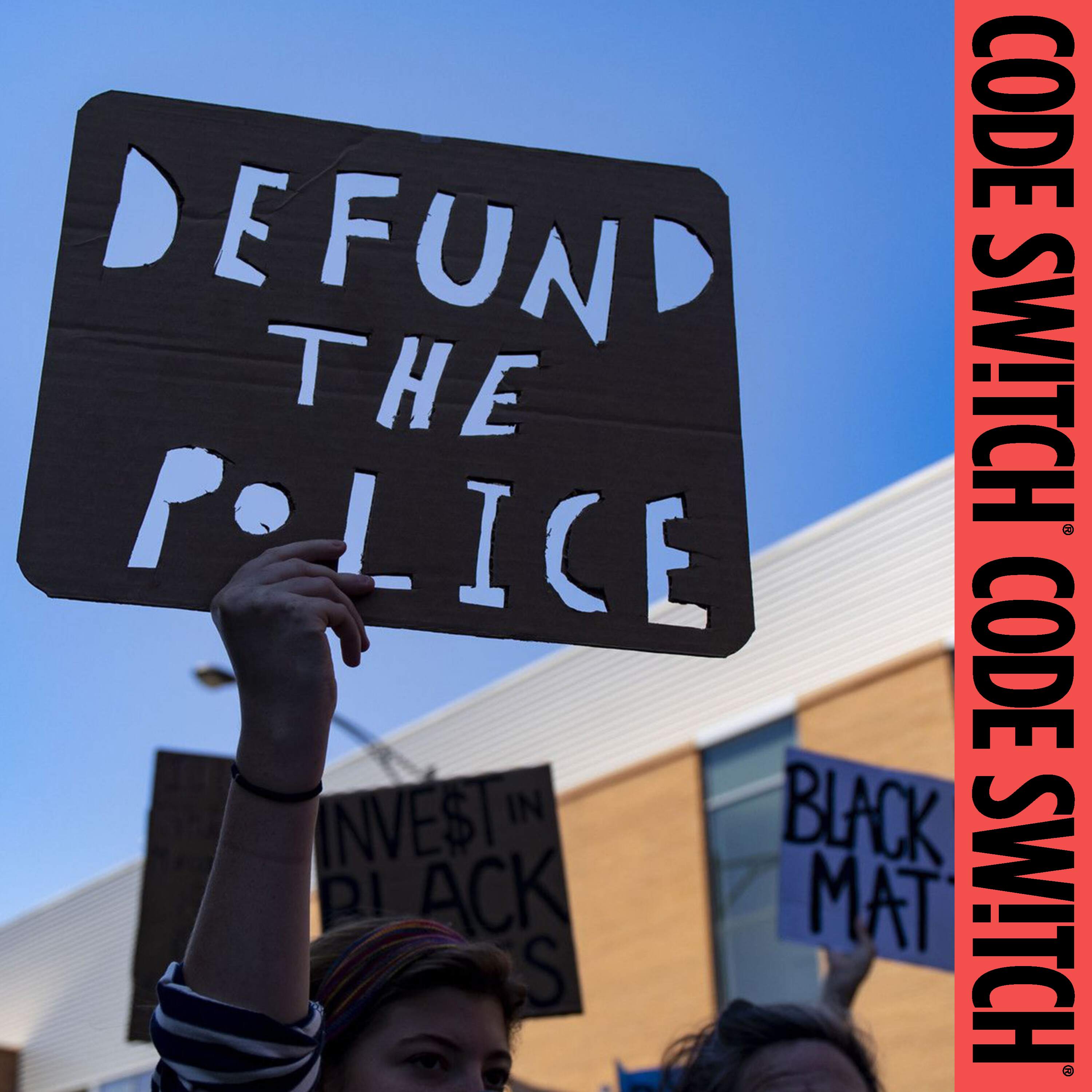
Overview of How "defund the police" became radioactive
In this Code Switch episode, NPR’s Gene Demby talks with journalist and scholar Chenjerai Kumanyika about how the slogan “defund the police” went from a defining demand of the 2020 racial justice protests to a political phrase nearly everyone now avoids. The conversation argues that while the branding became toxic, many of the ideas underneath it — shifting money toward housing, health, violence prevention, crisis response, and other social supports — may have helped reduce harm in U.S. cities.
What the episode is about
The episode centers on a big question: Did America “defund the police” in practice, even if not in name?
Rather than focusing only on the slogan, the discussion looks at:
- how policing became a major public issue in 2020,
- why politicians have since backed away from the phrase,
- what actually happened to police budgets and public safety programs,
- and why ICE, police unions, overtime, and surveillance technologies are now part of the same larger conversation.
The episode is framed by recent events in New York City involving ICE agents shooting Oscar Belgau and protests that brought police and federal immigration enforcement into the same political spotlight.
Key arguments and takeaways
The slogan became toxic, but the policy debate didn’t disappear
- “Defund the police” is now widely seen as politically radioactive.
- Even politicians who once embraced it, including high-profile progressives, are now distancing themselves from the phrase.
- But Kumanyika argues that the underlying questions never went away:
- Why are police the default response to so many problems?
- Why do cities spend so much on policing and overtime?
- What kinds of public investment actually reduce harm?
Police budgets were not broadly slashed
- The episode emphasizes that most cities did not literally defund police departments.
- Instead, many places slowed or limited budget growth.
- In some cities, the bigger change was the rise of:
- unarmed crisis responders,
- violence interruption programs,
- housing and eviction protections,
- and other social supports.
Crime drops may have been driven by social investment, not just policing
- Kumanyika argues that some of the reduction in violence seen in recent years likely came from non-police interventions.
- The episode points to factors such as:
- unemployment relief,
- eviction moratoriums,
- federal COVID aid,
- and local programs aimed at preventing crisis before it turns violent.
- In this view, safety investments helped more than simply increasing police presence.
Police are asked to do too much
- A major theme is that police are often used as a catch-all response for problems they are not trained to solve:
- mental health crises,
- noise complaints,
- loose dogs,
- homelessness,
- addiction,
- and other everyday disputes.
- Kumanyika argues that this reflects a deeper governance problem: cities rely on police to handle too many downstream consequences of social failure.
ICE, policing, and surveillance are linked
- The episode draws a strong connection between ICE and local policing.
- Kumanyika notes that ICE is deeply unpopular, especially when people see raids, detentions, and shootings in their communities.
- The conversation also highlights growing resistance to surveillance tools like automated license plate readers and “smart” policing systems.
- The point: many people who dislike ICE and surveillance are already uncomfortable with the broader policing system.
Why the slogan became “radioactive”
The episode suggests several reasons:
- Fear-based messaging: Opponents portrayed defund as meaning “no police,” even when organizers meant budget shifts and broader safety investments.
- Political risk: Candidates worry voters will hear the slogan as radical or anti-safety.
- Police union power: Police departments and unions remain strong political forces in cities.
- Bad branding: The phrase became a shorthand target, overshadowing the actual policy ideas behind it.
Kumanyika’s view is that the issue is less about the public rejecting the ideas and more about politicians and consultants being afraid to name them clearly.
Notable insights
“We should still keep talking about funding.”
Kumanyika’s core message is that the name can change, but the budget conversation must continue. He argues that people should ask:
- Who benefits from increased police spending?
- Why is overtime always a major budget line?
- Why are surveillance and enforcement prioritized over prevention?
Public opinion may be more open than politicians think
He suggests the public is often more receptive to:
- health care,
- paid leave,
- child care,
- violence prevention,
- and community investment
than political leaders assume. In his view, politicians often underestimate how much voters actually want safer, healthier communities — just not necessarily through more policing.
Black communities are not monolithic
Kumanyika pushes back on the idea that Black voters uniformly reject police reform. He argues that:
- Black people are often treated as a single political block,
- but Black communities have long had the clearest reason to question policing,
- and many Black people are open to deep police reform even if they dislike the slogan “defund.”
Main conclusion
The episode’s central conclusion is that “defund the police” failed as a slogan more than as an idea. The phrase became politically untouchable, but many of the policies associated with it — social investment, crisis response alternatives, violence prevention, and limits on police expansion — are still relevant and, in some cases, already showing results.
The broader message: if cities want safer communities, they may need to stop treating policing as the answer to everything and start funding the conditions that actually prevent harm.