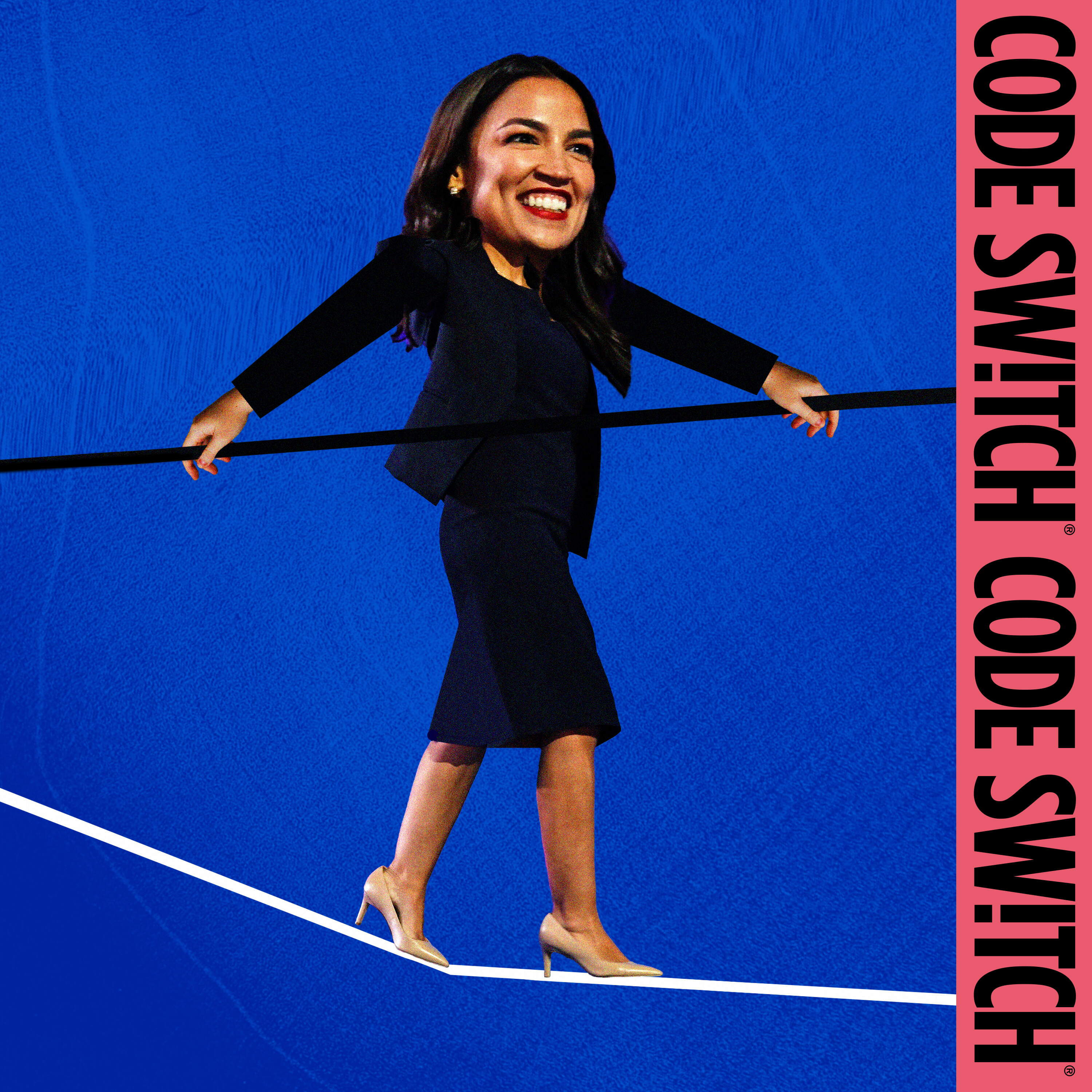
Overview of Code Switch from NPR
This Code Switch episode examines whether “woke” politics is actually unpopular with voters, or whether the real problem is the way progressive ideas are packaged, framed, and associated with identity. Hosts Gene Demby and P.A. Parker talk with New York Times columnist Jamel Bowie about Alexandria Ocasio-Cortez’s shifting political posture, the backlash to a Francesca Hong “cancel Thanksgiving” tweet, and how voters often react more to a candidate’s vibe and branding than to ideology itself.
Main Takeaways
-
“Woke” is treated as a catch-all insult, not a clear ideology.
- The term now lumps together very different things:
- symbolic gestures like Black squares and kente cloth performances
- serious policy goals like voting rights, reparations, public investment, and police reform
- Bowie argues that conservatives have blurred these distinctions on purpose.
- The term now lumps together very different things:
-
Voters often respond to presentation more than policy detail.
- People frequently judge candidates through vibes, tone, affect, and identity cues.
- Candidates of color and women are often read as more liberal than they may actually be.
- A candidate can have fairly moderate policies but still be perceived as extreme if they sound academic, hyper-online, or overly culture-war focused.
-
AOC’s recent positioning reflects political calculation, not necessarily ideological retreat.
- Her reluctance to endorse Francesca Hong is framed less as abandonment of the left and more as an attempt to avoid being pinned to “woke” excesses.
- Bowie suggests AOC is trying to balance her progressive identity with a broader electoral appeal.
-
Left-wing politics may be more electorally viable than many assume.
- Bowie argues that some ideas labeled “woke” are not actually unpopular.
- Public opinion often supports issues like DEI, affordability, civil rights, and voting rights, even if elite commentary treats them as toxic.
-
The left still faces a branding and coalition problem.
- The substance of progressive politics may be acceptable to many voters, but the language, style, and messenger can trigger backlash.
- Success may depend on whether left candidates can connect their values to everyday concerns without sounding ideological or performative.
Topics Discussed
AOC, Francesca Hong, and the “cancel Thanksgiving” controversy
- Francesca Hong’s 2020 tweet calling to “cancel Thanksgiving” became a political liability.
- AOC declined to stand behind Hong, which the episode uses as a case study in how progressives now navigate backlash.
- The episode treats this as a sign that “woke” politics has become politically risky, even for left-leaning Democrats.
Identity, ideology, and voter perception
- Bowie argues that identity often does the “heavy lifting” in how voters perceive ideology.
- Examples discussed:
- Black, Latina, or female candidates may be coded as more liberal.
- Some candidates can use identity to signal moderation or seriousness, depending on context.
- The episode emphasizes that this process is not fully rational or consistent.
Populism and whether non-white candidates can “do populism”
- The conversation asks whether a left populist style works differently depending on who is delivering it.
- Bowie suggests that in American politics, a “common sense” populist message is often more easily accepted when attached to a white male candidate.
- Still, he points to cases like Zohran Mamdani and Abdul El-Sayed as evidence that this dynamic may be changing.
The Democratic Party vs. the DSA
- The episode closes by zooming out to a bigger strategic question:
- Is the Democratic Socialists of America a pressure group inside the Democratic Party?
- Or is it a movement trying to build power from outside electoral politics?
- Bowie says this unresolved tension is a sign of the American left’s growing pains.
Notable Insights
“Woke” is mostly about vibe
Bowie’s core argument is that “woke” is less about a fixed ideology and more about the way voters feel about a candidate or movement.
Serious policies can be misread as fringe
Ideas like public investment, civil rights, and affordability can become coded as “woke nonsense” even when they are broadly popular in practice.
Branding matters as much as substance
Candidates who want to survive backlash may need to:
- speak in plain language
- emphasize everyday material concerns
- avoid sounding overly academic or performative
- show that they can “ball” politically, meaning they are effective, disciplined, and electable
Bottom Line
The episode’s central argument is that the problem with “woke” politics is not necessarily its substance, but its political packaging. Voters are often willing to support progressive goals when they are framed as practical, relatable, and grounded in everyday concerns. The real challenge for the left is learning how to communicate those goals without triggering the negative associations attached to “woke” as a label.