Overview of Banana Ball's racial minstrelsy past
This Code Switch episode examines the wildly popular Savannah Bananas and their revival of the Indianapolis Clowns name through the lens of Black baseball history, racial minstrelsy, and the uneasy legacy of turning Black athletic performance into entertainment. The conversation argues that the Clowns were both a real baseball team and a deeply controversial spectacle: beloved by some fans, but also criticized by many in Black baseball for reinforcing racist stereotypes at a moment when integration of Major League Baseball was being fiercely pursued.
The Savannah Bananas and the “Banana Ball” phenomenon
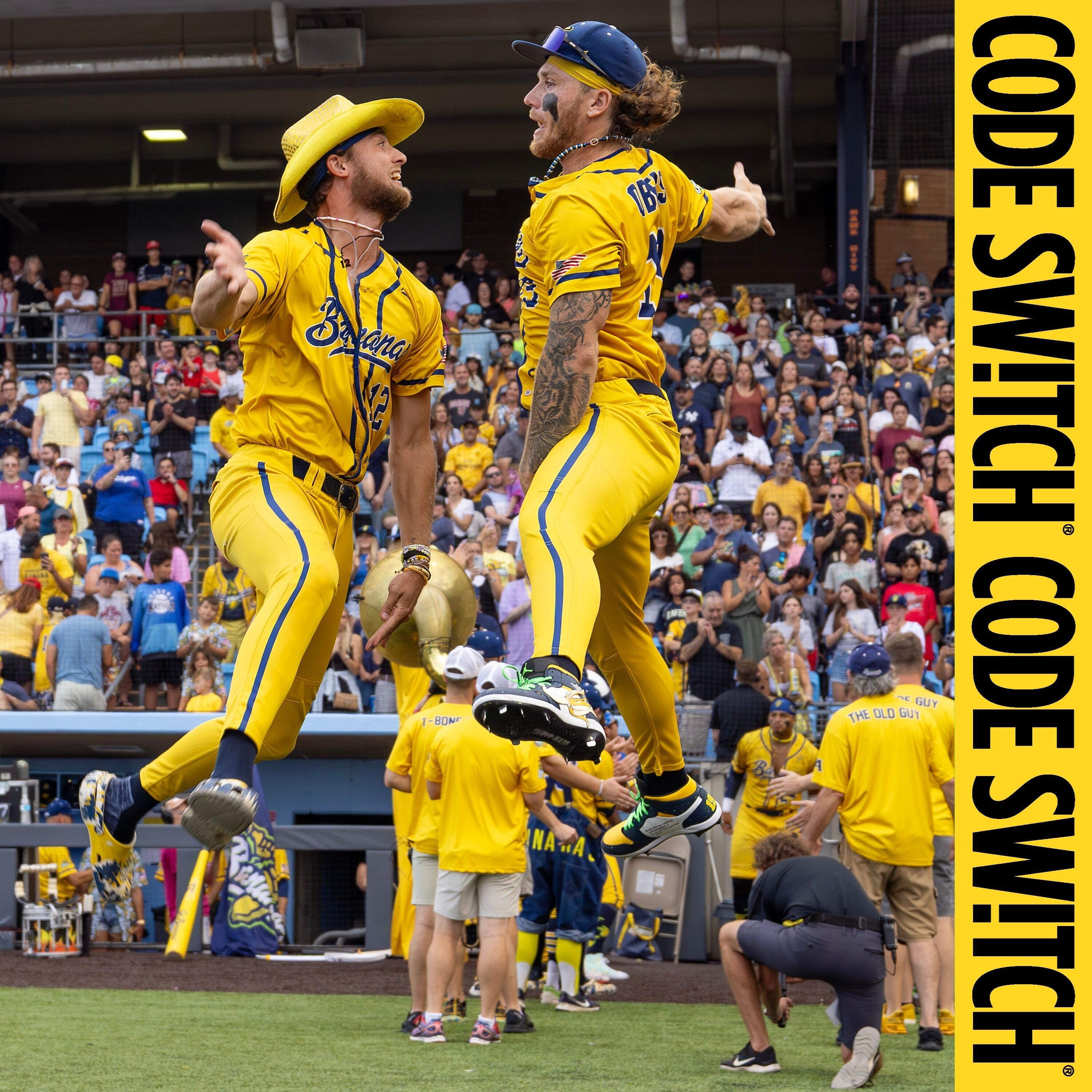
The episode opens by describing the Savannah Bananas as baseball’s answer to the Harlem Globetrotters:
- They blend baseball with choreographed dances, comedy bits, stunts, and crowd work.
- Their social media presence is enormous, and their live shows draw huge crowds.
- They present a highly accessible, family-friendly experience, with players mingling with fans and signing autographs.
The hosts use this phenomenon as a gateway into a deeper question: what happens when baseball becomes performance first, and how does that connect to older traditions in Black baseball?
The Indianapolis Clowns: baseball, comedy, and controversy
The central historical focus is the Indianapolis Clowns, a Negro League team that was recently revived by the Savannah Bananas as a nod to Black baseball history. But the episode stresses that the original Clowns were never a simple feel-good story.
Key historical points
- The team began in the 1930s as the Ethiopian Clowns.
- Earlier versions included names like the Zulu Cannibal Giants, reflecting grotesque racist imagery.
- Players sometimes wore clown makeup and performed comic routines alongside games.
- The team’s act was tied to racial minstrelsy—performance rooted in caricature and ridicule.
The episode highlights that the Clowns were commercially successful, but their success came with deep resentment from many Black writers, players, and owners who felt the team made Black baseball look unserious and undermined efforts to integrate the major leagues.
Why the Clowns were so controversial
The episode emphasizes that the criticism was not just about taste—it was political and economic.
Main criticisms from Black baseball figures
- The Clowns risked making Black players seem buffoonish or unserious.
- Their act could reinforce white stereotypes about Black incompetence.
- At a time when integration was being fought for, the Clowns seemed to some like they were hurting the cause.
Wendell Smith, a major Black sports columnist and integration advocate, famously saw the Clowns as a threat to the project of showing that Black players belonged in the majors.
At the same time, the episode notes that:
- The Clowns were also a job for players who needed work.
- Most of the roster were not comedians; they were baseball players.
- Economic realities often left Black athletes with limited options.
The Clowns’ complicated place in Black baseball history
The episode avoids treating the Clowns as either purely heroic or purely shameful. Instead, it presents them as a messy, contradictory part of the Negro Leagues’ history.
Important nuances
- Not every Black fan or writer hated the Clowns.
- They were a box-office draw and had loyal audiences.
- Their popularity helped them survive longer than many other Negro League teams.
- After Jackie Robinson integrated MLB in 1947, the Negro Leagues declined sharply, but the Clowns endured by leaning more into entertainment.
The episode also notes some remarkable intersections with Black baseball legends:
- Hank Aaron began his professional career with the Clowns.
- Toni Stone became the first woman to hold a sustained regular role on a big-league Black baseball team.
- Connie Morgan and Mamie “Peanut” Johnson also played for the team.
The Bananas’ revival and the problem of selective memory
A major theme of the episode is that the Savannah Bananas revive the Clowns’ name without fully engaging the history behind it.
The critique
- Their presentation leans on a sanitized, “Disney-fied” version of history.
- They celebrate the spectacle while avoiding the ugly racial context.
- The episode frames this as a sin of omission, not necessarily a direct falsehood.
In other words, the Bananas embrace the fun, the iconography, and the nostalgia, but not the racism, ambivalence, or conflict that made the original Clowns such a fraught symbol.
Broader takeaway: every generation remakes the clown
The episode closes by connecting the Clowns to the 1976 film The Bingo Long Traveling All-Stars & Motor Kings, which was loosely inspired by them and also softened their complicated legacy. That becomes part of the larger point:
- America keeps repackaging Black baseball through entertainment.
- Each generation creates a new version of the Clowns.
- The debate over whether they were joyful performers or harmful stereotypes never really goes away.
Key takeaway
This episode is ultimately about more than a quirky baseball team. It’s a conversation about:
- how Black performance has been shaped by racism,
- how entertainment and dignity can collide,
- and how modern sports brands often borrow from history without fully confronting it.
The central argument is that the Indianapolis Clowns were not just a novelty act—they were part of a long, painful American tradition of racial spectacle, even as they also existed inside Black baseball’s real economic and cultural history.