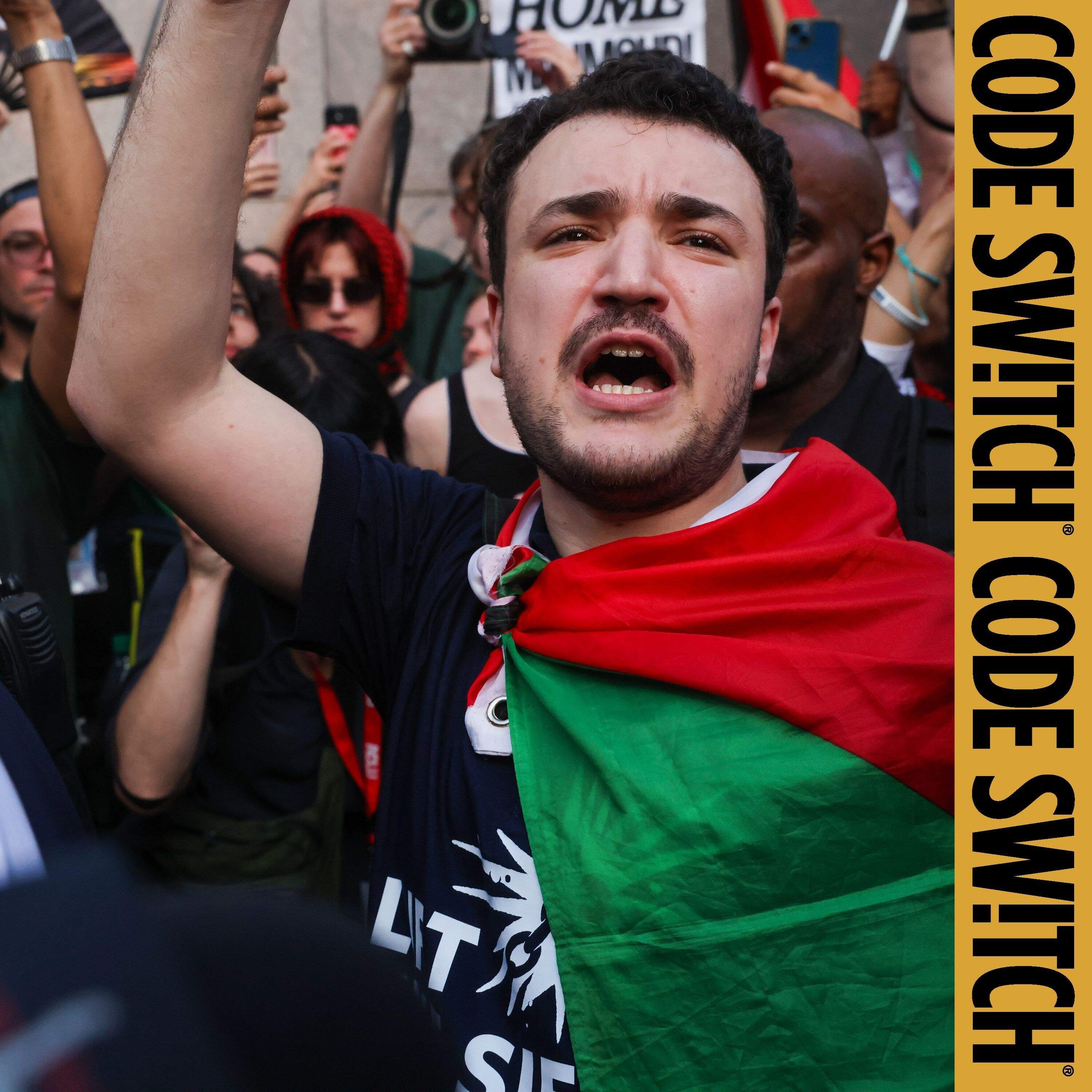
Overview of Code Switch — “An anti-KKK law is being used to sue the Trump admin. Will it work?”
This episode explains how Mahmoud Khalil, a Palestinian activist and former Columbia University organizer who was detained by ICE and targeted for deportation, is now suing the Trump administration under an old Reconstruction-era statute originally designed to combat Ku Klux Klan violence. The conversation traces the history of the Ku Klux Klan Act of 1871, how civil rights lawyers revived it in the 1980s, and why it may be a powerful tool for challenging politically motivated government crackdowns today.
What the episode is about
-
Mahmoud Khalil’s case:
Khalil argues that he was targeted because of his Palestinian identity and political advocacy for Gaza, not because of any legitimate immigration concern. -
The legal hook:
His lawsuit relies on the Ku Klux Klan Act, a law created to protect newly freed Black Americans from racial terror during Reconstruction. -
Why it matters:
The episode explores whether this old law can be used to challenge modern-day conspiracies between government actors and private organizations.
The history of the Ku Klux Klan Act
Why it was created
- Passed in 1871 during Reconstruction.
- Designed to give the federal government a way to respond to widespread violence against Black લોકોને in the South.
- Allowed people to sue in federal court when two or more people conspired to deprive them of:
- equal protection under the law
- equal privileges and immunities
What remedies it provides
- Damages: money to compensate victims for harm.
- Injunctions: court orders that stop future violations.
- If someone violates an injunction, they can be held in contempt of court.
Why it fell into disuse
- It was rarely used successfully by private parties for decades.
- Civil rights lawyers later rediscovered it as a tool against organized racial violence.
How civil rights lawyers revived it
Randolph McLaughlin, a civil rights lawyer and law professor, describes how the law was revived at the Center for Constitutional Rights in the 1980s.
The Chattanooga case
- The statute was used in a case involving Klan members who shot multiple Black women in Chattanooga.
- Civil rights lawyers won:
- damages for the victims
- an injunction against future Klan violence
Broader legal strategy
- The CCR turned that case into a model for future civil-rights litigation.
- The law can be used not just against the Klan, but against any group or government-private conspiracy aimed at suppressing constitutional rights.
Why Khalil’s lawsuit uses this law
The episode says Khalil’s complaint alleges a conspiracy involving:
- government actors
- private actors
- political organizations tied to efforts like Project Esther from the Heritage Foundation
Alleged theory of the case
- Khalil says he was targeted because:
- he is Palestinian
- he criticized Israel’s war in Gaza
- he was engaged in protected political advocacy
Why the “public-private partnership” language matters
- The Heritage Foundation reportedly used similar language in its own writings.
- McLaughlin argues that this kind of written coordination can help prove a conspiracy.
- That makes the KKK Act more usable, because it reaches conspiracies between public and private actors.
Other modern uses of the KKK Act
The episode points to other cases where the statute has been used:
- Charlottesville / Unite the Right
- Used against white supremacist groups involved in the 2017 violence.
- Heather Heyer was killed in the attack.
- January 6-related litigation
- Used in a D.C. case involving groups and government actors accused of terrorizing Congress members and Capitol police.
Main takeaways
- The KKK Act is not just a historical relic; it remains a potentially powerful civil-rights weapon.
- Its core purpose is to stop organized efforts to suppress rights through terror or conspiracy.
- Khalil’s case could:
- win him damages
- potentially produce an injunction limiting discriminatory immigration enforcement
- set a precedent for others facing politically or racially motivated government action
Bigger implications
If Khalil succeeds, the ruling could become a blueprint for people facing:
- discriminatory immigration enforcement
- suppression of pro-Palestinian activism
- coordinated intimidation by government and private groups
The episode also suggests the law may be relevant for broader struggles over:
- civil liberties
- protest rights
- racial and political targeting
- constitutional protections in an era of increasing authoritarian pressure
Notable insight
“It’s not like there’s some God figure up there bending the arc of history. We have to be engaged in that work.”
McLaughlin’s central message is that legal rights do not enforce themselves: people, lawyers, and institutions must actively fight to preserve them.
Bottom line
This episode frames Mahmoud Khalil’s lawsuit as more than a personal legal battle. It’s a test of whether a Civil War-era anti-Klan law can still protect people today from politically motivated government crackdowns and coordinated efforts to silence dissent.