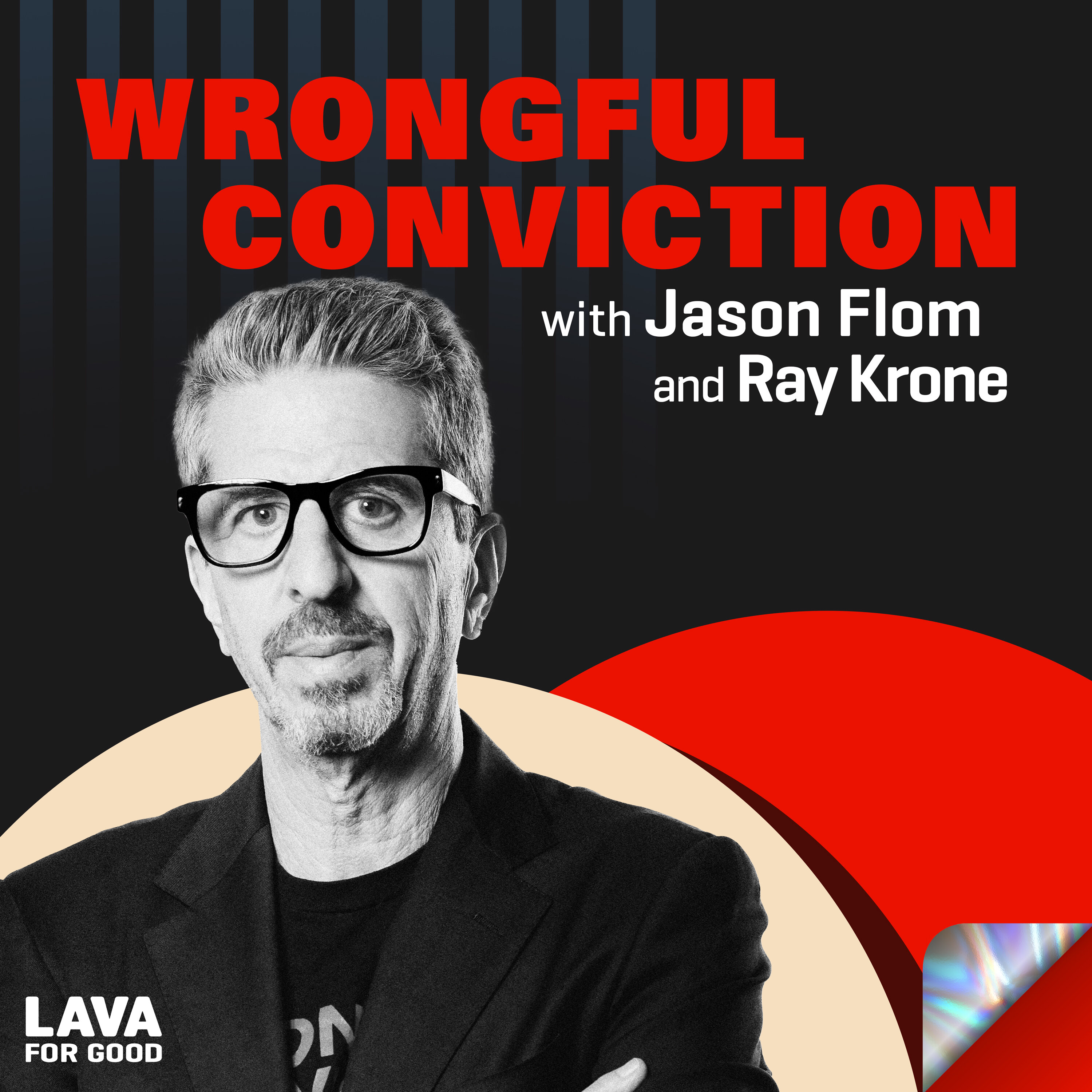
Overview of Wrongful Conviction #598: Jason Flom with Ray Krone
This episode tells the story of Ray Krone, the 100th person freed from death row in the United States after being wrongfully convicted in Phoenix, Arizona. He was convicted largely on the basis of bite mark evidence, a forensic method now widely regarded as unreliable junk science. After years of appeals and a second trial that still ended in conviction, later DNA testing excluded Krone and identified the real killer, leading to his release and eventual advocacy work against wrongful convictions and the death penalty.
The Crime and Early Investigation
- On December 29, 1991, a 36-year-old bartender was found murdered in the women’s bar restroom at the CBS Lounge in Phoenix.
- She had been sexually assaulted and stabbed to death.
- Investigators found:
- No semen
- Blood and saliva consistent only with the victim’s blood type
- Marks on the victim’s body that were interpreted as bite marks
- A witness suggested the victim may have been spending time with Ray Krone, a regular at the bar.
- Krone said he knew her casually from the bar but was not dating her and was at home with a roommate when the murder occurred.
How Ray Krone Became the Suspect
- Police visited Krone at home and interrogated him for hours.
- He cooperated fully and provided:
- Fingerprints
- Photos
- Shoes and clothing information
- A bite impression
- Blood and hair samples
- Despite his cooperation and alibi, detectives treated him as the prime suspect.
- He was later arrested on murder, kidnapping, and sexual assault charges.
The Trial and Bite Mark “Evidence”
- Krone’s public defender was replaced because of a conflict of interest; he was then assigned a new lawyer with no capital case experience and only $5,000 for defense.
- The prosecution’s central evidence was bite mark analysis by expert Ray Rosen.
- Rosen claimed:
- Krone’s teeth were uniquely identifiable
- The bite marks on the victim matched Krone’s dentition
- The bites were made at the time of death
- The episode strongly criticizes bite mark science as speculative and unreliable, especially since skin is an elastic, changing surface.
- Krone’s defense presented little effective counterevidence in the first trial.
- He was convicted after only a few hours of jury deliberation.
Sentencing and Death Row
- At sentencing, the prosecution argued the bite marks showed extreme brutality and depravity.
- Krone refused to let his family testify in mitigation because he believed it would only expose them to attack.
- He was sentenced to death and sent to Arizona death row within a week.
Appeal and New Trial
- Krone’s attorney failed to receive the prosecution’s bite mark videotape until right before trial.
- The Arizona Supreme Court later ruled that the defense should have been given time to prepare.
- The court reversed the conviction and ordered a new trial, stating the case depended on the disputed bite mark evidence.
The Second Trial and DNA Testing
- Krone’s family heavily supported him financially and emotionally during the appeal.
- His second trial in 1996 was much longer and included extensive defense evidence:
- Fingerprints and palm prints that did not match Krone
- Footprint evidence pointing to another shoe size
- DNA testing on saliva from the bite mark that excluded Krone
- Even with this exculpatory DNA evidence, the jury convicted him again.
- The sentencing judge, however, expressed serious doubt and noted “lingering doubt” about the killer’s identity.
- Krone received a severe prison sentence, though not death this time.
The Breakthrough: DNA Reveals the Real Killer
- In 2001, Arizona passed a law allowing post-conviction DNA testing.
- Additional testing on preserved evidence linked the crime to Kenneth Phillips, a convicted child molester and violent offender who lived nearby.
- Phillips was already incarcerated for another sexual assault.
- This DNA evidence finally cleared Krone completely.
Release and Exoneration
- On April 8, 2002, Krone was told he was being released.
- He walked out of prison after:
- 10 years, 3 months, and 8 days
- Being the 100th death row exoneree in the U.S. since capital punishment was reinstated in 1976
- The prosecution dropped the charges with prejudice, meaning he could never be retried.
Aftermath and Advocacy
- Krone became involved with Witness to Innocence, an organization led by exonerees who speak out against wrongful convictions and the death penalty.
- He emphasized that the system harmed not only him, but also the victim’s family, who had been misled by a flawed prosecution.
- He and others now travel and speak publicly to show how innocent people can be condemned by:
- Junk science
- Inadequate defense resources
- Prosecutorial overreach
- Confirmation bias in investigations
Key Takeaways
- Bite mark analysis played a central role in sending an innocent man to death row.
- The case shows how unreliable forensic science can overpower weak or missing physical evidence.
- Krone’s exoneration highlights the importance of:
- DNA testing
- Strong legal defense
- Preserving evidence for post-conviction review
- The episode is both a wrongful conviction story and a broader critique of the death penalty system and forensic misconduct.
Notable Themes
- Junk science can be devastating when presented confidently in court.
- Resource imbalance between prosecution and defense can shape outcomes.
- Persistence by family, lawyers, and innocence advocates can eventually correct a grave injustice.
- The victim’s family also suffered from the system’s failure, underscoring how wrongful convictions create more harm than justice.