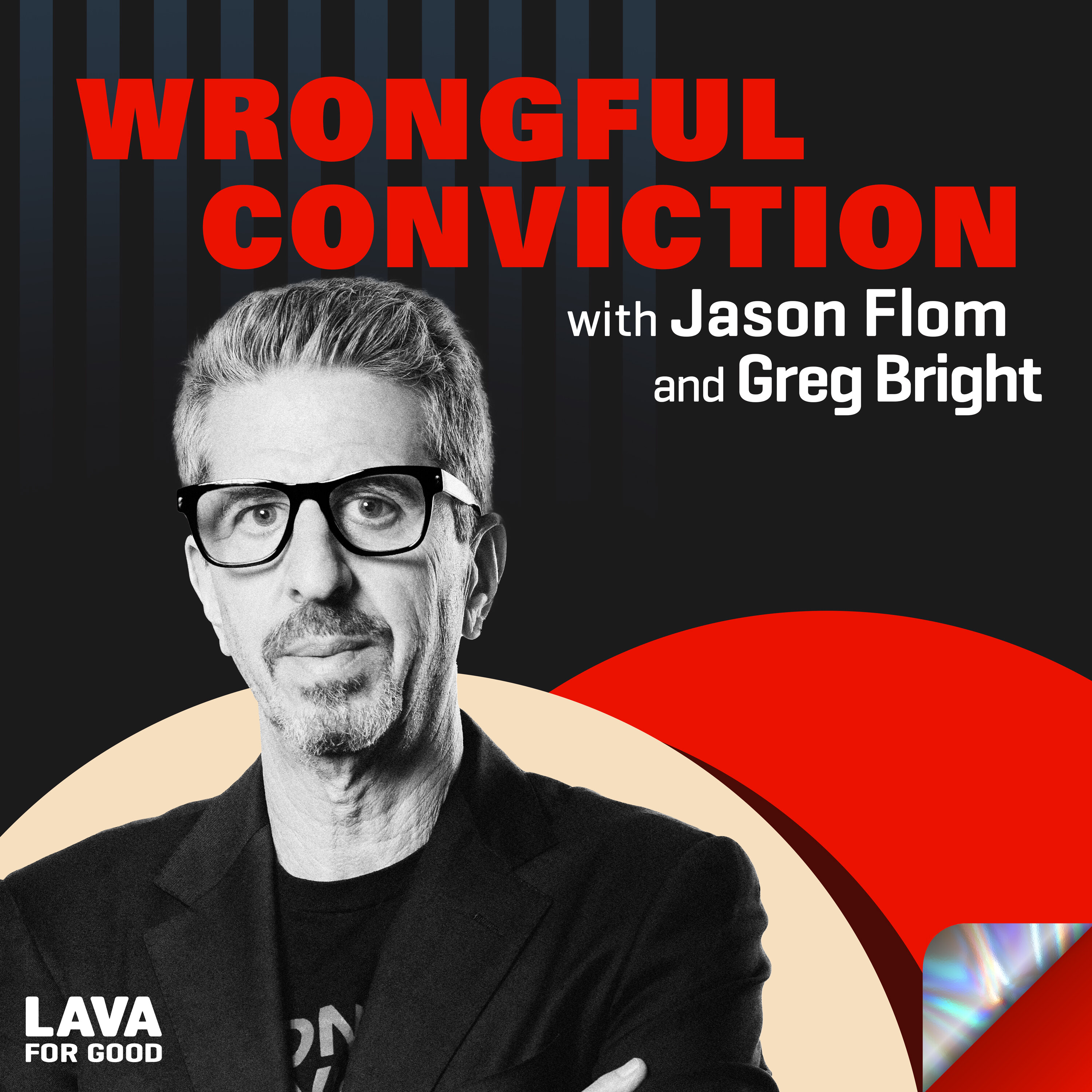
Overview of Wrongful Conviction — Greg Bright’s Story of Injustice, Survival, and Healing
This episode centers on Greg Bright, who spent 27 and a half years in Louisiana’s Angola prison for a murder he did not commit, and on the creative partnership that helped him turn that trauma into a powerful one-man show, Never Fight a Shark in Water: The Wrongful Conviction of Gregory Bright. Host Lauren Bright Pacheco speaks with Greg and writer/compassion trainer Lara Naughton about the case, the emotional toll of wrongful imprisonment, the path to exoneration, and the continuing fight for dignity and compensation after release.
The Wrongful Conviction Case
What happened
- In 1975, 15-year-old Elliot Porter was shot and killed in New Orleans.
- Gregory Bright, then 20, and a 17-year-old co-defendant he had never met before were charged after a state witness—described as a drug addict seeking reward money—implicated them.
- The trial was shockingly short:
- One-day trial
- 13-minute jury deliberation
- Conviction for second-degree murder
- Sentence: life without parole
Why the conviction was flawed
- Greg had no prior record and maintained his innocence.
- There was no physical evidence tying him to the crime.
- No murder weapon was ever found.
- His appointed defense was extremely weak:
- He met his public defender only once
- Witnesses were not properly investigated
- The defense rested without calling alibi witnesses
Exoneration
- Greg taught himself to read and study law while incarcerated.
- He pursued appeals up to the Louisiana Supreme Court.
- The Innocence Project of New Orleans eventually stepped in.
- His conviction was overturned, and charges were dismissed on June 24, 2003.
Life Inside Angola
Hard labor and survival
- Greg describes Angola as a brutal, dehumanizing place with a long legacy tied to slavery and violence.
- He was forced into hard labor, including field work, kitchen work, and other prison jobs.
- He also spent time working at the governor’s mansion, a surreal detail that underscored how arbitrary and corrupt the system was.
Emotional and psychological cost
- Greg says prison tried to break:
- his spirit
- his body
- his will
- A major source of pain was the death of his mother, which he learned about while still incarcerated.
- He says that loss nearly destroyed him, but it also became part of the emotional core of the play.
The Financial Injustice After Release
Louisiana’s compensation cap
- Louisiana capped wrongful conviction compensation at $400,000 total.
- Greg hit that cap, and the payments stopped.
- A bipartisan bill to increase the cap and extend compensation was unanimously passed by lawmakers but later vetoed by Governor Jeff Landry.
The harsh reality
- Greg was released with:
- A $10 check
- Bags of legal paperwork
- He was 47 when freed, with no real financial cushion and few options.
- Even now, he says the compensation cannot possibly match what he lost.
The Creative Collaboration with Lara Naughton
How they met
- Lara met Greg after he had been out of prison for about four years.
- She was working with the Innocence Project of New Orleans as a narrative consultant.
- Their work together eventually evolved into a deeply personal theatrical piece based on Greg’s own words.
Why the play matters
- Lara recorded and transcribed hundreds of pages of conversations with Greg.
- The play became a way to process:
- wrongful conviction
- incarceration
- grief
- trauma
- resilience
Lara’s own trauma and worldview
- Lara shares that she was violently attacked in Belize, and that surviving through compassion shaped her later work.
- Her belief that “hurt people hurt people” strongly parallels Greg’s story.
- She says working with Greg helped her better understand both incarceration and healing.
The Meaning of Never Fight a Shark in Water
Origin of the title
- The title comes from a fellow prisoner nicknamed Wing Ding, who told Greg:
- “Never fight a shark in the water.”
- Greg interprets this as a lesson about not fighting anger in a way that consumes you.
- In the play, it becomes a metaphor for surviving oppression without surrendering to rage.
Core message
- The play is not just about Greg’s individual suffering.
- It is also about:
- the humanity of incarcerated people
- the complexity of victims and perpetrators
- the possibility of healing
- refusing simplistic labels like “murderer” to define a whole person
Key Takeaways
- Greg Bright was wrongfully convicted and spent nearly three decades in prison for a murder he did not commit.
- The legal system failed him at every stage: investigation, defense, trial, and compensation after exoneration.
- Compassion and storytelling became essential tools for healing.
- Greg’s relationship with Lara turned into a meaningful creative partnership and friendship.
- The episode pushes listeners to rethink how society talks about:
- wrongful conviction
- incarceration
- trauma
- redemption
- justice
Notable Details and Updates
- Greg has appeared in productions including 12 Years a Slave, American Horror Story, and Treme.
- The play Never Fight a Shark in Water was scheduled for new performances in September as part of an exhibition on incarceration in Louisiana at the New Orleans Historic Collection.
- The episode also encourages support for local innocence organizations and wrongful conviction advocacy.
Overall Message
This episode is both a devastating account of a wrongful conviction and a deeply human story about what it takes to survive years of injustice without becoming consumed by bitterness. Greg Bright’s story, and his collaboration with Lara Naughton, shows how truth-telling, art, and compassion can become forms of resistance and recovery.