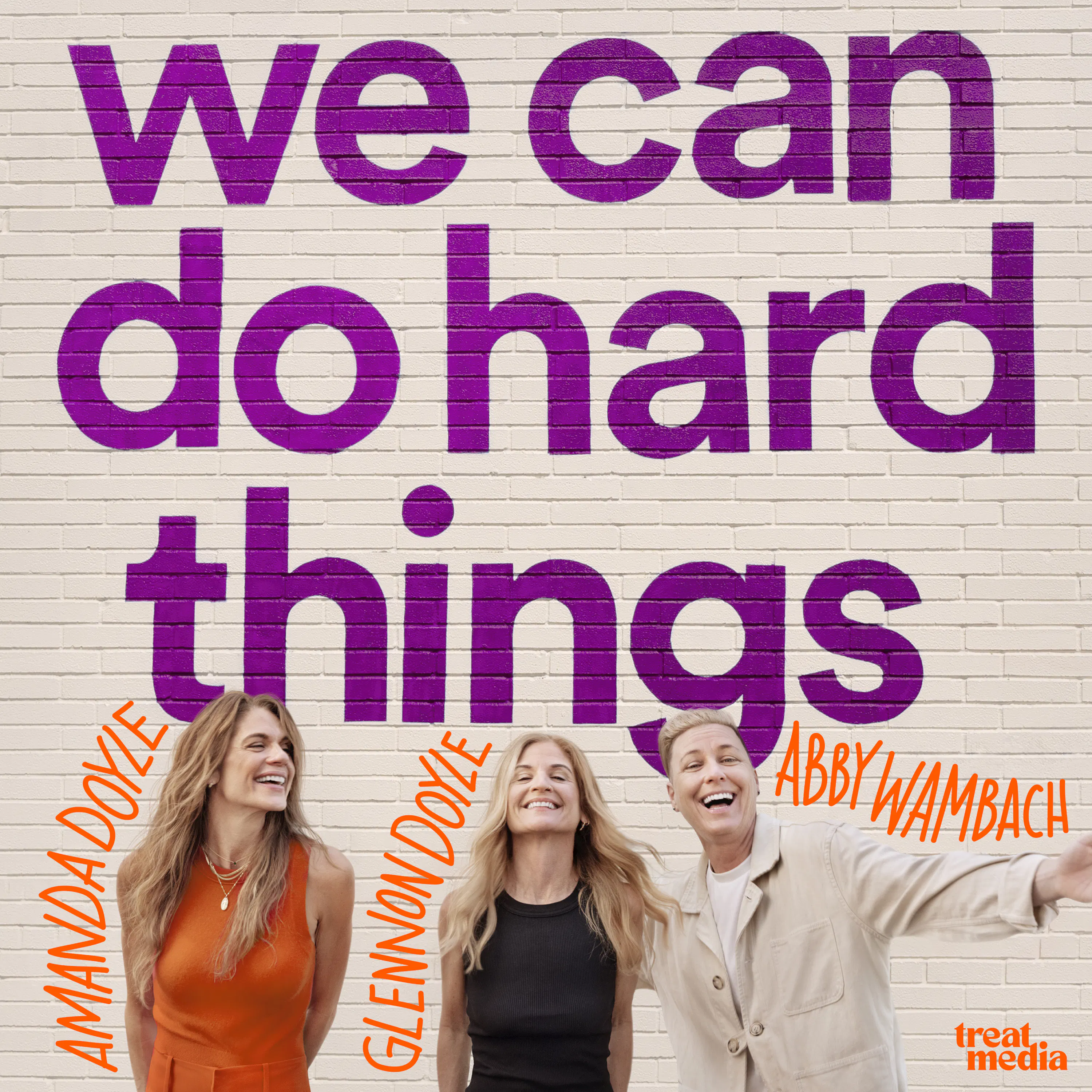
Overview of Our Oscars Stories & How to Stay Steady with Life Changes
This episode of We Can Do Hard Things (hosts: Glennon Doyle, Abby, Amanda) is a warm, conversational show that moves from a celebratory Oscars weekend recap into a listener Q&A about parenting, honesty in relationships, and navigating change. The hosts share behind-the-scenes moments from attending the Oscars as a creative team, then spend most of the episode answering a listener’s question about promising children “we will never get divorced,” offering practical guidance on talking with kids about uncertainty, modeling emotional honesty, and building resilience. The episode closes with a listener voicemail about joining activist efforts (“the Freedom Fleet”) and concrete encouragement to get involved locally.
Key segments and topics discussed
Oscars recap / film team experience
- The hosts attended the Oscars together as part of the producing team behind a documentary about poet Andrea Gibson and Meg Fowley (the film gave the subject wider public exposure).
- They did not win, and the group celebrated the loss with humor and gratitude — “we didn’t do it” dancing in the lobby — framing the experience as a win in other meaningful ways (visibility, community, honoring Andrea).
- Highlights and memorable moments: Tig Notaro’s candid reactions, Sara Bareilles walking the carpet with Amanda, Kevin Nealon’s humor, Ryan White (director) and his mother Peggy’s pride, and Meg Fowley’s luminous presence.
- Surprises/lows: perceived lack of political signaling by many attendees (one exception called out: Javier Bardem’s frank “no more wars / free Palestine”); a personal low moment when an expensive borrowed pair of shoes was chewed by a dog.
Listener question: promising “we will never get divorced”
- Listener Marissa noticed an apparent tension: Glennon previously said it was wrong to promise children “we will never get divorced,” yet she often tells her friend Abby she’ll never get divorced. The hosts unpack this.
- Distinction offered:
- Promising children “never” is risky and can create false safety; life is unpredictable and kids benefit more from honest, steady presence than absolute guarantees.
- Telling an adult partner you’re committed (in the language used with Abby) is a different context: it’s an expression of current ongoing commitment and values, not the same developmental message as one aimed at a child.
- Glennon describes two reasons people leave relationships: (1) leaving to not give up on the possibility of love (leaving to find the kind of connection they believe is possible); (2) leaving because love is too hard (giving up). She describes her current marriage as one she will not leave because leaving would feel like giving up on love.
Parenting & how to talk to kids about change, fear, and relationship uncertainty
- Key problem: parents often try to comfort kids by denying observable emotions (“No, Mommy’s not sad/angry”), which can invalidate children’s perceptions and teach them to distrust their own intuition or to fear certain emotions.
- Recommended approaches:
- Ask why the child is asking — find the trigger (something they heard or observed).
- Validate feelings first: acknowledge the scary thought (“That would be scary, huh?”) before answering.
- Use age-appropriate honesty: avoid absolute promises; instead say something like, “I don’t know what will happen in the future, but I can promise we’ll get through whatever comes together.”
- Model working-through-emotions: show children that adults can feel anger/sadness and still be okay and present.
- Expose children, gradually and safely, to manageable changes so they build resilience — especially important for kids who are strongly change-averse.
- Avoid gaslighting: don’t deny what the child has observed; instead invite their perspective (“What do you think you saw?”) and respond transparently.
- Teaching through proximity: let children experience change while feeling your steady presence (not by removing all change).
Activism, community, and the “Freedom Fleet”
- Voicemail from listener Heather: she resigned a government role to participate in activism (the hosts celebrate this).
- Metaphor: the “Freedom Fleet” = many boats (different causes: Palestine, LGBTQ rights, voter engagement, reproductive justice, climate, mutual aid) on the same river of justice.
- Rules for participation: get people off the shore into boats (invite, don’t shame), make activism joyful and inviting, and cooperate across causes (“many boats, one fleet”).
- Practical next step recommended: look up and join your local Indivisible chapter to find local grass-roots opportunities.
- Brief, specific ask: Virginians encouraged to vote early/no later than April 21 on a ballot measure related to gerrymandering (the hosts urge a “yes” vote).
Sponsors / brief notes
- Multiple sponsor reads interspersed (Hair Story, ZipRecruiter, Gatorade Lower Sugar, OneSkin, MidiHealth, DoorDash). These are ad segments and not the episode’s substance.
Main takeaways & practical recommendations
- Don’t promise children absolute outcomes (e.g., “we will never divorce”) — instead:
- Validate their fear, ask what prompted it, and answer honestly and age-appropriately.
- Reassure them of your presence and that the family will work through hard things together.
- Build children’s resilience to change by exposing them, in safe doses, to change while you remain a steady presence.
- Don’t deny emotions you or your partner are showing—label them and model healthy processing so kids learn it’s okay to feel and recover.
- If you’re feeling called to act politically or in community service:
- Find a local organization (Indivisible is a suggested starting point) and get involved.
- Aim to make activism inviting and collaborative — “the revolution should be irresistible.”
- Community and chosen family (the “lesbian Avengers” anecdote) can turn a public “loss” into an intimate win — celebrate together, even in disappointment.
Notable quotes & moments
- “While we can do hard things, we also can stay soft while we’re doing them.” — framing the episode’s tone.
- Celebrating loss: the group’s joyful “we didn’t do it” dancing as a model of communal resilience.
- “We are the river” (paraphrasing Michelle Alexander) — used to describe long-term arc-of-justice thinking.
- Advice to parents: don’t gaslight kids about observed feelings — validation > denial.
People mentioned / credits
- Hosts: Glennon Doyle, Abby, Amanda (We Can Do Hard Things; Treat Media).
- Film collaborators and guests referenced: director Ryan White, Jessica Hargrave, producers Steph Willen, Tig Notaro, Sara Bareilles, Brandi Carlisle, Catherine Carlisle, Kevin Nealon, Peggy (Ryan’s mother), Meg Fowley, and people in their community described as the “lesbian Avengers” / honorary lesbians.
- Listener contributors: Marissa (question), Heather (voicemail).
Tone & format note: conversational, supportive, and candid — the hosts position themselves as friends giving “best guesses,” not formal therapists. The episode blends pop-culture storytelling with practical parenting and civic engagement advice.